US-Israel Coordinated Attacks Kill Iranian Supreme Leader, Spark Regional Crisis
In a dramatic escalation of Middle East tensions, the United States and Israel launched coordinated military strikes over the weekend that killed Iran's Supreme Leader Ayatollah Ali Khamenei and dozens of other senior Iranian figures. The attacks have triggered a furious retaliatory response from Iran that now threatens to explode into a wider regional war with significant global consequences.
Leadership Vacuum and Immediate Fallout
The 86-year-old Khamenei was killed when his compound was bombed on Saturday morning, creating an unprecedented leadership crisis in the Islamic Republic. With no designated successor, Iran has established a three-member leadership council and Foreign Minister Abbas Araghchi has indicated a new supreme leader would be selected within "one or two days." The death of Khamenei, who had ruled since 1989, represents the most significant political disruption in Iran in over three decades.
US President Donald Trump has urged Iranians to seize this moment to overthrow the theocratic government that cracked down on nationwide protests earlier this year, though there are no immediate signs of such an uprising occurring. Internet restrictions within Iran have complicated efforts to monitor internal reactions, though scattered celebrations over Khamenei's death have been reported.

Iran's Retaliatory Strikes and Regional Impact
In retaliation for the attacks that also targeted ballistic missile sites, navy headquarters, warships, and the Natanz nuclear enrichment facility, Iran has launched hundreds of missile and drone strikes against multiple targets. These include direct attacks on Israel, where several people have been killed, and strikes on US military bases throughout the region that have resulted in the first confirmed US military casualties of this conflict with three service members killed.
The Lebanese militant group Hezbollah has claimed strikes on Israel for the first time in more than a year, prompting Israeli retaliation in Lebanon. Iranian attacks have also killed people in Gulf nations including the United Arab Emirates and Kuwait, while affecting hundreds of flights at some of the world's busiest airports including Dubai's main airport.
Military Buildup and Strategic Calculations
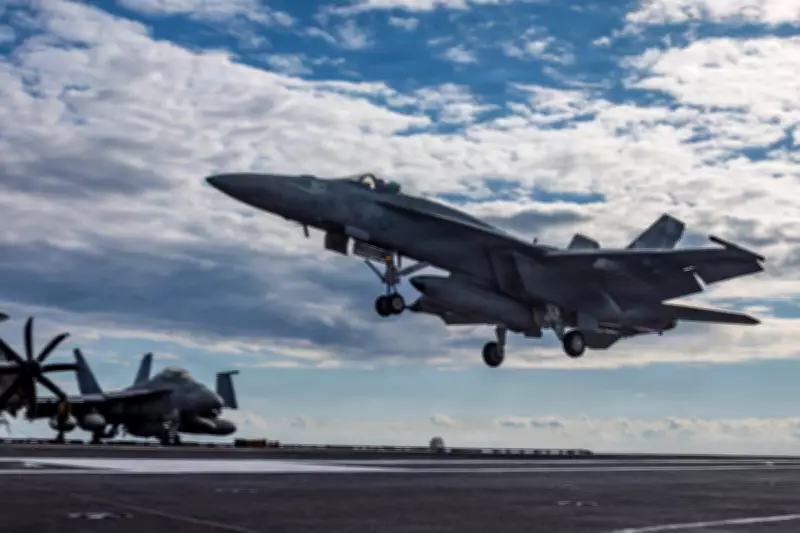
The coordinated strikes came after the United States built up its largest military presence in the region in decades, with Israeli and US authorities spending weeks tracking the movements of senior Iranian leaders. President Trump has stated that "heavy and pinpoint bombing" in Iran would continue through the week or longer, while Israel has pledged "nonstop" strikes with reports indicating 100 fighter jets simultaneously striking targets in Tehran at one point.
These attacks occurred just two days after the latest US-Iran talks aimed at controlling Tehran's nuclear program, echoing events from last year when similar talks were cut short by Israeli attacks that led to a 12-day war. Washington claims Iran has been rebuilding its nuclear program in recent months, while Iran maintains it hasn't enriched uranium since June but has blocked International Atomic Energy Agency inspectors from visiting sites previously bombed by America.
Regional and Global Consequences
The current conflict has already surpassed last year's Israel-Iran war in intensity, with hundreds of Iranian missile and drone strikes sending people scrambling across Gulf nations that had previously been relatively insulated from regional volatility. Saudi Arabia has intercepted attacks and summoned Iran's ambassador, while top diplomats from six Gulf states have asserted their "right to self-defense."
Oil prices rose sharply when market trading began Sunday as traders bet that supply from the critical region would slow or stop. Attacks on and near the Strait of Hormuz, the world's most critical oil chokepoint, have raised additional concerns about energy supply disruptions. In response, eight OPEC+ countries have announced plans to boost crude production to stabilize markets.

What Comes Next
The international community now watches several critical developments: further military strikes from all sides, the selection of Iran's new supreme leader, reactions from the Iranian population, effects on US bases and forces throughout the region, any diplomatic outreach to Iran's new leadership, ongoing attacks by Iranian-backed proxy groups including Houthi rebels in Yemen who have vowed to resume attacks on Red Sea shipping routes, oil price fluctuations, details about Iran's nuclear program from upcoming International Atomic Energy Agency meetings, and broader diplomatic efforts to contain the escalating crisis.
Prime Minister Benjamin Netanyahu, already under international criticism for Israel's war in Gaza, is claiming a security victory, but significant risks remain from multiple Iranian-aligned groups across the region. The United States has signaled eventual willingness to talk to Iran's new leaders, though some congressional leaders have protested the launch of strikes without proper authorization, highlighting domestic political tensions surrounding the conflict.