Critics Decry Lack of Clear Strategy in US-Israel Iran War, Foresee Decades of Chaos
As US and Israeli jets initiated a military campaign in Tehran on 12 March 2026, the reality of Donald Trump's hastily conceived regime change plan collided with the complexities of the largest US intervention in the Middle East since the 2003 Iraq war. The conflict, marked by shoddy preparations and ambiguous victory conditions, has unleashed widespread chaos, with critics warning it could stymie US military capabilities for decades.
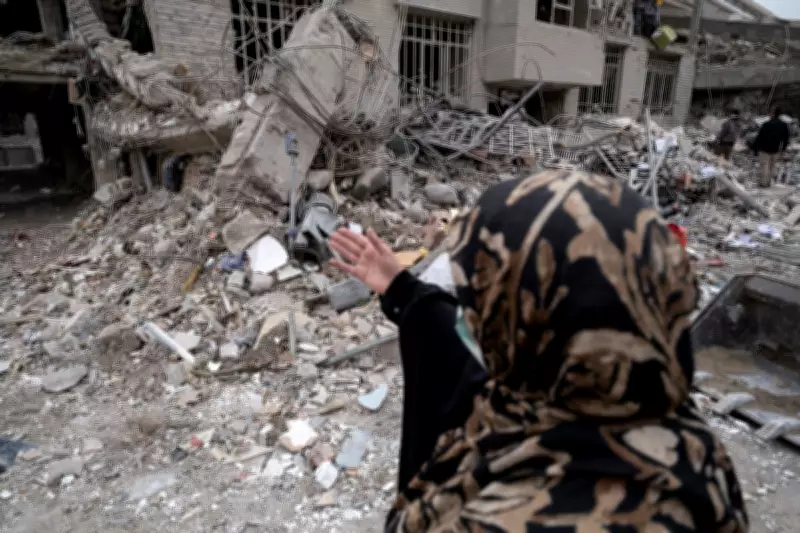
Immediate Consequences and Civilian Toll
The war's opening days saw devastating incidents, including a US Tomahawk missile strike on a girls' school that killed 175 people, attributed to outdated Pentagon targeting data. Iran's initial counterattack was largely parried, but a drone hit a makeshift command centre in Kuwait, resulting in six US troop fatalities and dozens of injuries. Tens of thousands of US citizens were stranded in the region, prompting a hurried state department evacuation taskforce.
Strikes that eliminated Ayatollah Ali Khamenei and many senior advisers also killed potential US-preferred successors, complicating post-conflict governance. In his first address, Trump merely instructed Iranians to "take over your government" without offering a practical roadmap, highlighting the administration's lack of foresight.

Financial and Economic Strain
The first six days of the war alone cost the US $11.3 billion, according to Pentagon briefings to Congress, though it remains unclear if this figure includes buildup or missile defense expenses. Iran's closure of the Strait of Hormuz has further threatened the global economy, driving oil prices above $100 per barrel and forcing the Trump administration to temporarily lift sanctions on Russian oil, reversing prior policy in a separate conflict.
Strategic Failures and Shifting Goals
Past administrations had extensively war-gamed Iran invasion scenarios, but Trump's closed circle of advisers, collapsed interagency processes, and erratic decision-making have made this campaign uniquely chaotic. Philip Gordon, former national security adviser to Kamala Harris, noted, "This is hard under any circumstances but especially with so little planning," adding that Trump's surprise at the Middle East chaos is itself surprising.
Michael Rubin, a senior fellow at the American Enterprise Institute, criticised the lack of clear objectives: "The military planning has been stellar. That said, politically, this is increasingly looking like a cluster fuck. The United States has this backwards. We have the targeting, but we don't have a clear goal."
The US mission's aims have shifted repeatedly—from supporting Iranian protesters to eliminating nuclear programmes, ballistic missiles, and now reopening the Strait of Hormuz. Michael Singh of the Washington Institute warned that each goal requires a distinct military strategy, and Iran's ability to close the strait allows it to potentially drag the US into a protracted conflict.
Administrative Breakdown and Long-Term Implications
Trump's attack on the "deep state" led to gutted agencies, including the National Security Council and State Department, under Secretary Marco Rubio. This resulted in poor coordination, with no evacuation plans for citizens or embassies at the war's onset. Mara Karlin, a former assistant secretary of defence, emphasised the need for preparedness despite operational security concerns.
The administration has also failed to articulate a clear plan for Iran's populace. Trump acknowledged that regime change is unlikely short-term, citing armed security forces as a significant hurdle. Meanwhile, Pentagon planners are diverting resources from other theatres, such as Asia, to address the expanding conflict, risking overextension.
Jennifer Kavanagh of Defense Priorities warned of long-term consequences: "The long-term effects of this will be just dumping US military power down the drain. I think that the implications of this are going to last for decades," highlighting potential erosion of US power projection capabilities.
As the war continues, the absence of a coherent strategy threatens not only regional stability but also the US's global military posture, with critics urging a reassessment of goals and methods to avert further chaos.