US and Iran Engage in Critical Nuclear Talks Amid Escalating Military Posturing
High-stakes indirect nuclear negotiations between the United States and Iran commenced in Geneva on Tuesday, with Oman acting as mediator, as former President Donald Trump continues to bolster American military forces across the Middle East. The talks aim to resolve the protracted nuclear dispute, which is further complicated by Iran's military ambitions and its recent violent suppression of domestic protests.
Key Figures and Diplomatic Framework
American envoys Steve Witkoff and Jared Kushner are participating in the discussions alongside Iranian Foreign Minister Abbas Araqchi. Trump has indicated he will be indirectly involved in the Geneva proceedings, expressing confidence that Tehran is motivated to secure an agreement. "I don't think they want the consequences of not making a deal," Trump stated on Monday, referencing previous military actions. "We could have had a deal instead of sending the B-2s in to knock out their nuclear potential. And we had to send the B-2s."
Historical Context and Recent Military Actions
A prior effort to revive negotiations in June last year was disrupted when Israel, a key US ally, initiated a bombing campaign against Iran, subsequently joined by American B-2 bombers targeting nuclear facilities. Iran has since declared a halt to its uranium enrichment activities, though Washington and Israel remain sceptical, alleging Iran seeks to develop nuclear weapons that could threaten regional stability. Iran maintains its nuclear programme is exclusively for peaceful purposes, despite enriching uranium to levels exceeding typical power generation requirements and approaching weapons-grade purity.

Military Buildup and Regional Dynamics
Concurrently, the US military is intensifying its presence in the region, with Trump describing a "massive naval armada" deployed near Iran. Satellite imagery has detected the USS Abraham Lincoln aircraft carrier in proximity to Iranian waters, and the USS Gerald R Ford, the world's largest warship, could arrive within three weeks. The US is preparing for potential extended operations against Iran should Trump order an attack.
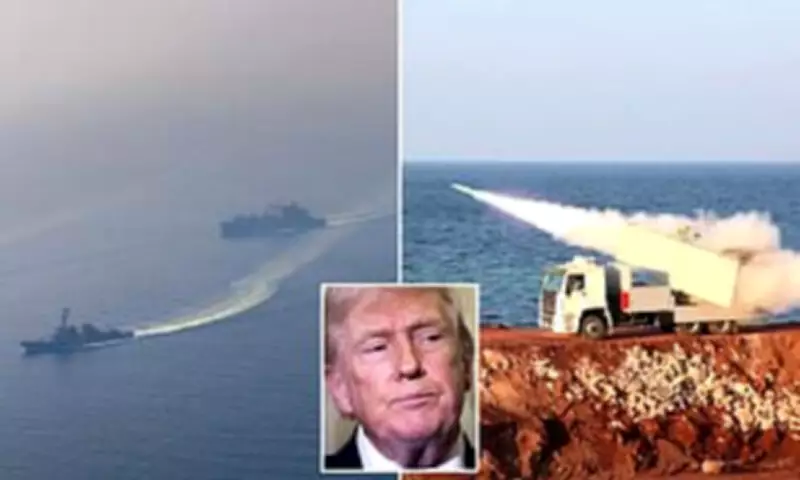
In response, Iran initiated military exercises on Monday in the strategically vital Strait of Hormuz, a crucial international waterway for oil exports from Gulf Arab states. These nations have advocated for diplomatic resolutions to the conflict. The domestic situation in Iran has also deteriorated, with street protests over economic hardships, partly driven by international sanctions that have crippled oil revenues, resulting in thousands of casualties during government crackdowns.
Negotiation Challenges and Expanded Agendas
Unlike previous rounds, the US is now pushing to broaden the dialogue to include non-nuclear issues, such as Iran's missile stockpile. However, Tehran has stated it will only discuss limitations on its nuclear programme in exchange for sanctions relief, refusing to completely abandon uranium enrichment or address its missile capabilities. US Secretary of State Marco Rubio acknowledged the difficulties in reaching an accord but affirmed Washington's willingness to pursue negotiations.
Parallel Diplomatic Engagements
On Monday, Iranian Foreign Minister Araqchi met with Rafael Grossi, Director General of the International Atomic Energy Agency (IAEA), in Geneva to discuss technical cooperation and aspects of the upcoming talks with the US. Additionally, on Tuesday afternoon, envoys Witkoff and Kushner will participate in trilateral discussions involving Russia and Ukraine, as the US attempts to facilitate an agreement to end Moscow's ongoing invasion of Ukraine, now in its fourth year.