US and Iran Set for Crucial Nuclear Talks in Oman Amid Regional Tensions
US-Iran Nuclear Talks in Oman: Key Issues and Background

US and Iran Prepare for Critical Nuclear Negotiations in Oman

Diplomatic efforts between Iran and the United States are set to intensify as both nations prepare for talks on Friday in Oman, focusing primarily on Tehran's contentious nuclear program. These discussions represent the latest attempt to address escalating regional tensions following Israel's 12-day war against Iran in June and the Islamic Republic's severe crackdown on nationwide protests.

President Donald Trump has maintained significant pressure on Iran, deploying aircraft carriers and additional military assets to the Gulf region. He has explicitly suggested that America could launch attacks in response to Iran's violent suppression of peaceful demonstrators or if mass executions occur. Trump's administration has also reinvigorated concerns over Iran's nuclear ambitions, especially after the June conflict disrupted five previous rounds of negotiations held in Rome and Muscat last year.

Agenda and Diplomatic Stances

As the Friday meeting approaches, numerous uncertainties surround the talks, particularly regarding the scope of the agenda. While negotiations are expected to centre on Iran's nuclear activities, Secretary of State Marco Rubio indicated this week that the US hopes to address broader issues. These include Iran's ballistic missile development, support for proxy networks across the Middle East, and the treatment of its own citizens. In contrast, Iran has insisted that discussions should be limited exclusively to nuclear matters.

Trump initiated this diplomatic outreach by sending a letter last year to Iran's 86-year-old Supreme Leader, Ayatollah Ali Khamenei, aimed at jumpstarting negotiations. Khamenei has warned that Iran would retaliate against any attack, especially as the theocracy faces internal instability following widespread protests.

Historical Context and Previous Communications

Trump dispatched the letter to Khamenei on March 5, 2025, and publicly acknowledged it in a television interview the following day. He stated, "I've written them a letter saying, 'I hope you're going to negotiate because if we have to go in militarily, it's going to be a terrible thing.'" Since returning to the White House, the president has advocated for talks while simultaneously increasing sanctions and hinting at potential military strikes by Israel or the US targeting Iranian nuclear facilities.

A previous letter from Trump during his first term provoked an angry response from the supreme leader. However, Trump's correspondence with North Korean leader Kim Jong Un in his first term did lead to face-to-face meetings, though no substantive agreements were reached to limit Pyongyang's atomic weapons or missile capabilities.

Oman's Mediating Role and Past Negotiations

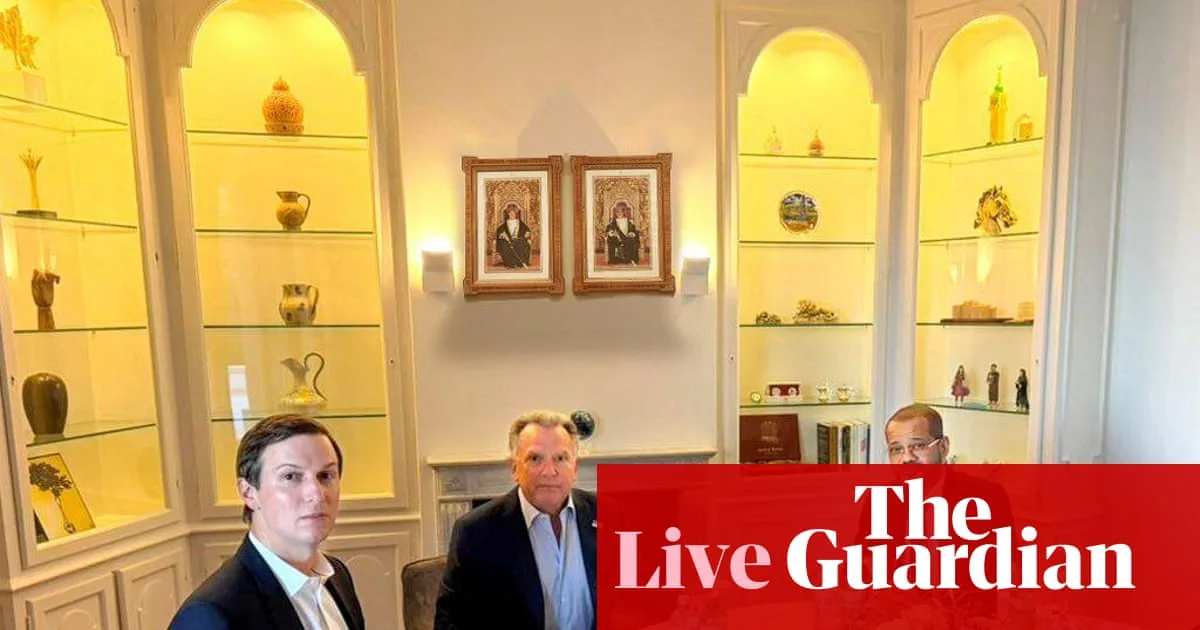
Oman, a sultanate on the eastern edge of the Arabian Peninsula, has previously mediated discussions between Iranian Foreign Minister Abbas Araghchi and US Mideast envoy Steve Witkoff. The two diplomats have engaged in direct talks following indirect negotiations, a rare occurrence given the decades of hostility between the nations.

These past talks have not been entirely smooth. Witkoff once suggested in a television appearance that 3.67% uranium enrichment for Iran could be a potential agreement point. This figure aligns precisely with the terms of the 2015 nuclear deal negotiated under former President Barack Obama, from which Trump unilaterally withdrew the United States. Since then, Witkoff, Trump, and other US officials have maintained that Iran cannot be permitted any enrichment under any future agreement, a stance Tehran firmly rejects.

Recent Conflicts and Domestic Unrest

Previous negotiations were abruptly halted when Israel launched a war against Iran in June. The 12-day conflict included US bombing of Iranian nuclear sites. Iran acknowledged in November that these attacks forced it to suspend all uranium enrichment activities, though International Atomic Energy Agency inspectors have been unable to access the bombed facilities.

Soon after, Iran experienced significant domestic turmoil. Protests erupted in late December over the collapse of the country's rial currency, quickly spreading nationwide. Tehran responded with a violent crackdown, resulting in thousands of deaths and tens of thousands of detentions.

Iran's Nuclear Program and International Concerns

Iran has long maintained that its nuclear program is purely for peaceful purposes. However, officials have increasingly threatened to pursue nuclear weapons. Iran currently enriches uranium to near weapons-grade levels of 60%, making it the only non-nuclear-armed country to do so.

Under the original 2015 nuclear deal, Iran was permitted to enrich uranium up to 3.67% purity and maintain a stockpile of 300 kilograms. The latest International Atomic Energy Agency report indicates Iran's stockpile now stands at approximately 9,870 kilograms, with a portion enriched to 60%.

US intelligence agencies assess that Iran has not yet initiated a weapons program but has undertaken activities that could facilitate the production of a nuclear device if desired. Israeli officials, close allies of the US, believe Iran is actively pursuing a weapon and advocate for the complete dismantling of its nuclear program, along with an end to its ballistic missile development and support for militant groups like Hezbollah and Hamas.

Decades of Strained US-Iran Relations

Iran was once a key US ally in the Middle East under Shah Mohammad Reza Pahlavi, who purchased American military equipment and allowed CIA technicians to operate secret listening posts monitoring the Soviet Union. The CIA had orchestrated a 1953 coup that solidified the shah's authority.

In January 1979, the shah, terminally ill with cancer, fled Iran amid massive protests against his regime. The Islamic Revolution, led by Grand Ayatollah Ruhollah Khomeini, established Iran's theocratic government. Later that year, university students seized the US Embassy in Tehran, demanding the shah's extradition and triggering a 444-day hostage crisis that severed diplomatic relations between the two countries.

During the Iran-Iraq war in the 1980s, the US supported Saddam Hussein. The "Tanker War" segment of this conflict saw the US launch a one-day assault that severely damaged Iran's naval capabilities, and the US military later mistakenly shot down an Iranian commercial airliner.

Since then, relations between Iran and the US have oscillated between hostility and reluctant diplomacy, reaching a high point with the 2015 nuclear agreement. However, Trump's unilateral withdrawal from the accord in 2018 reignited tensions that continue to affect the Middle East today.




