
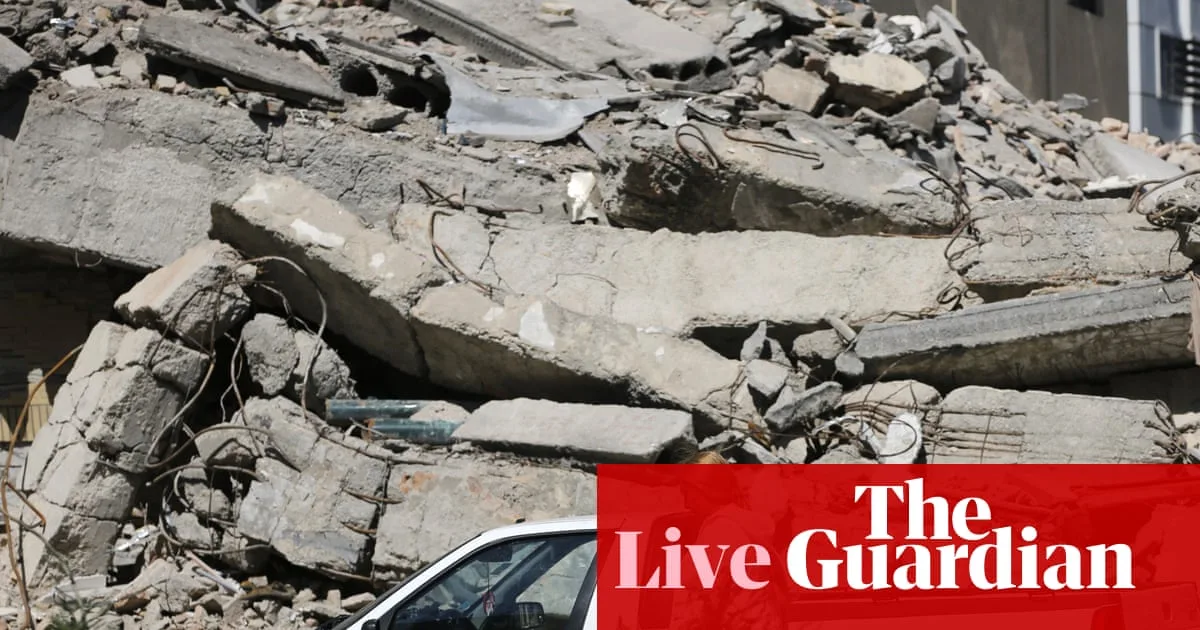
The United States has completed a second consecutive day of airstrikes across southern Iran, escalating the conflict that has seen a tanker attack and the downing of a US helicopter. The strikes, which the US says are now finished, mark the most severe breach of the April ceasefire between the two nations.
Oil prices surged more than $2 a barrel following the US strikes, while stock markets in Tokyo, Hong Kong, Shanghai, Singapore, Sydney, Wellington and Taipei fell. Seoul's market shed over 1% amid volatile trading. Investors remain concerned about the impact of the conflict on global economic stability.
Iran's Islamic Revolutionary Guard Corps claimed to have launched 12 ballistic missiles at the al-Azraq airbase in Jordan, which hosts US aircraft. Jordanian authorities said all missiles were intercepted and shot down, with debris causing no injuries or damage. Kuwait temporarily closed its airspace due to Iranian attacks, diverting some flights.
US President Donald Trump has warned of further attacks if necessary, while his defense secretary, Pete Hegseth, stated that any additional strikes would be 'strong and clear'. However, US officials have sought to downplay the significance of the attacks, insisting that the ceasefire remains in place and negotiations with Iran continue.
The White House has reportedly sent a message to Iran via Qatar, indicating that the strikes were a direct response to the helicopter downing and not a resumption of all-out war. Despite Trump's claims that a deal is close, significant obstacles remain, including restrictions on Iran's nuclear programme, unfreezing of Iranian assets, and Israel's war in Lebanon.




