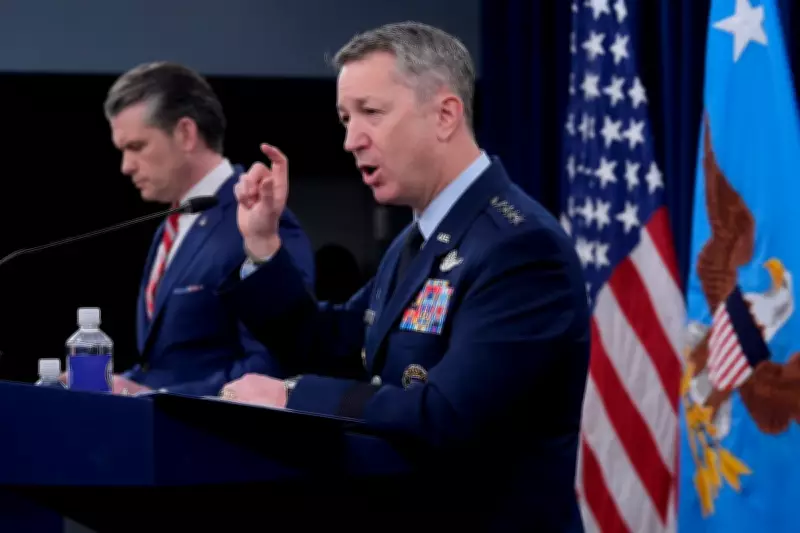
The United States has called on countries with an 'equity stake' in the Strait of Hormuz to provide assistance, as the US military works to reopen the strategic waterway to commercial shipping. General Dan Caine, chairman of the Joint Chiefs of Staff, made the remarks during a Pentagon briefing, emphasizing the need for collective action to ensure freedom of navigation.
US Launches Project Freedom
America has launched an operation known as Project Freedom, aimed at creating an 'enhanced security area' along the strait. This initiative is designed to enable shipping to pass through and release more than 1,500 vessels trapped by the conflict. The US has described the protective measures as 'a powerful red, white and blue dome,' involving destroyers, fighter jets, helicopters, drones, and surveillance aircraft.
Defence Secretary Pete Hegseth reiterated that the US expects the rest of the world 'to step up' and that responsibility would be handed over 'at the appropriate time and soon.' He dismissed efforts led by Britain and France to ensure the strait's security as 'silly,' urging them to have 'less fancy conferences in Europe and get in a boat.'

Background of the Crisis
The sea route, a major supply line for oil and gas, had been open prior to US and Israeli strikes against Iran. In retaliation, Tehran effectively closed the shipping lane and began charging hefty tolls for transit, sparking a global energy crisis that has seen prices rocket. The US responded by imposing its own blockade of Iranian ports, leading to a stand-off.
While the US operation has triggered fresh attacks by Tehran, Washington insists it falls 'below the threshold' for resuming hostilities and that the existing ceasefire still holds.
International Response
The White House has been deeply critical of the response by the UK and other allies, insisting that other nations need the strait more than the US. Secretary of State Marco Rubio made a veiled dig at the UK, noting that 'unfortunately' some countries with a navy only offered to become involved after the conflict was over. However, he acknowledged there could be 'some utility' in a post-closure mission as proposed by Britain and France.
The Prime Minister's official spokesman said: 'It's absolutely important that we get the Strait of Hormuz open, because that is directly impacting our economy in the United Kingdom.'