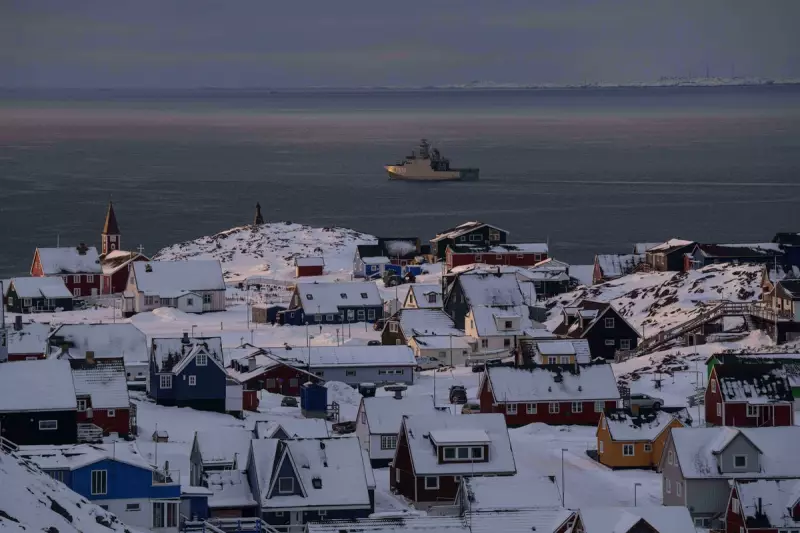
A tense diplomatic impasse over the future of Greenland continues, with the United States, Denmark, and Greenland's autonomous government unable to find common ground. The stalemate follows a high-level meeting at the White House on 14 January 2026, which concluded with all parties firmly entrenched in their original positions.
The Core of the Disagreement
Former US President Donald Trump, now in his second term, has repeatedly asserted that Washington must assume direct control of Greenland for reasons of 'national security'. He has framed the massive island as strategically vital, citing its wealth of critical rare earth minerals and its position as North America's gateway to the increasingly navigable Arctic. In a speech to Congress in February 2025, Trump declared, "We'll get it, one way or the other."
This stance is underpinned by a newly assertive US foreign policy doctrine, a modern revival of gunboat diplomacy focused on the Western Hemisphere. However, both Danish and Greenlandic officials have categorically rejected any notion of annexation. Greenland's government has consistently stated its desire to remain autonomous under the Danish realm.

European Response and Military Posturing
European leaders are taking Trump's threats seriously. In response, Denmark has launched 'Operation Arctic Endurance', a military initiative conducted with allies including France, Germany, Norway, and Sweden. Finland and the Netherlands are reportedly considering joining.
While largely symbolic from a military standpoint, the move carries profound political weight. It marks a historic nadir in transatlantic relations, with European troops effectively preparing to defend a NATO ally's territory from the alliance's own leading power, the United States. The European Commission has expressed solidarity but has been criticised for vague security assurances.
Three Potential Paths Forward
Analysts suggest the standoff could be resolved in one of three ways, each carrying significant geopolitical consequences.
1. US Backdown: Trump could abandon his ambition to "get Greenland" and accept the status quo. This is considered highly unlikely, as the President's public rhetoric has created a political imperative to secure a perceived victory for his base.
2. Military Escalation: The worst-case scenario involves a US military move to occupy Greenland, gambling that European allies will back down. This dangerous game of 'chicken' could trigger the collapse of NATO and severely fracture European unity. Some within Trump's own Republican party, like Senator Mitch McConnell, have expressed concerns that may act as a restraining influence.
3. Negotiated Compromise: The most plausible peaceful resolution would involve revising the 1951 US-Denmark bilateral agreement. A deal could grant Washington an expanded military footprint—such as a base for nuclear submarines—and special mining concessions. In return, Denmark and NATO allies would increase their own Arctic military presence. NATO Secretary General Mark Rutte is said to be actively pursuing this win-win outcome.
The appointment of Louisiana Governor Jeff Landry as special envoy for Greenland in December 2025 signalled Trump's serious intent. As the Arctic becomes a key theatre for great power competition, the world watches to see which path this unprecedented dispute will take.