US Accused of Blocking Venezuela from Funding Maduro's Drug Defense
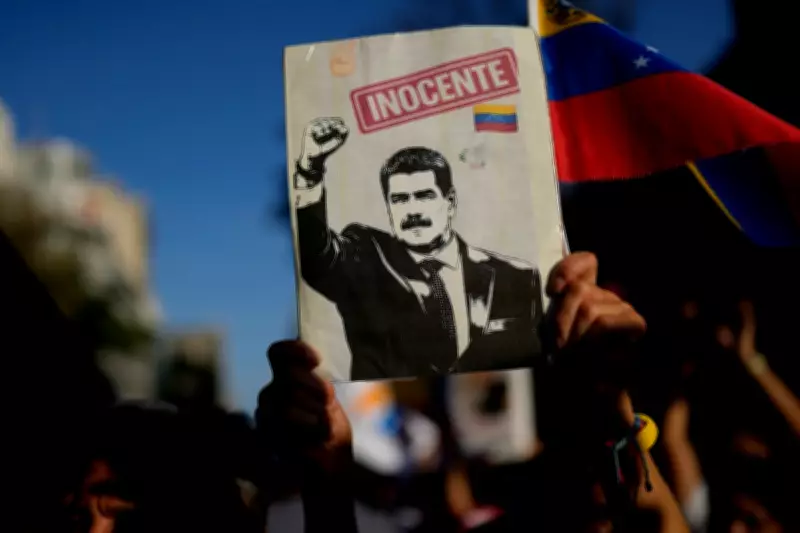
The attorney representing deposed Venezuelan leader Nicolás Maduro has publicly accused the United States government of obstructing Venezuela from covering the substantial legal expenses required for his defense against serious drug trafficking charges. This controversial move, according to legal experts, could potentially infringe upon Maduro's fundamental constitutional right to counsel, raising significant questions about judicial fairness and international legal norms.
Sanctions Office Revokes Authorization
In a detailed email submitted to a Manhattan federal judge and subsequently entered into the public court record, attorney Barry Pollack revealed that the US Treasury Department's Office of Foreign Assets Control (OFAC) initially granted permission on January 9 for the Venezuelan government to pay Maduro's legal fees. However, in a surprising reversal, this authorization was abruptly rescinded less than three hours later without any formal explanation. Notably, the license permitting payment for First Lady Cilia Flores's legal team remained intact, creating a perplexing disparity in treatment.
Pollack emphasized that under Venezuelan law and established custom, the government is legally obligated to finance the legal defense costs for both Maduro and his wife. He formally requested OFAC on February 11 to reinstate the original license, thereby allowing Venezuela to fulfill its statutory duty. The lawyer further contended that Maduro lacks the personal financial resources to afford counsel independently and may seek judicial assistance to secure funding for his defense.

High-Stakes Legal and Political Battle
Nicolás Maduro and Cilia Flores have been detained in New York without bail since their dramatic capture on January 3 during a covert nighttime raid by US military forces at their Venezuelan residence. Both have entered not guilty pleas to the charges outlined in a comprehensive 25-page indictment. This document accuses Maduro and associates of collaborating with drug cartels and military officials to facilitate the shipment of thousands of tons of cocaine into the United States. The indictment further alleges that Maduro and his wife ordered kidnappings, beatings, and murders of individuals indebted to them for drug money, including the killing of a local drug boss in Caracas.
If convicted, both face the possibility of life imprisonment. The dispute over legal fees is deeply intertwined with broader US foreign policy objectives. The Trump administration severed diplomatic relations with Maduro in 2019, recognizing the opposition leader of the National Assembly as Venezuela's legitimate head of state. The Biden administration maintained this policy stance. Allowing the current Venezuelan government under acting President Delcy Rodriguez to fund Maduro's defense could complicate prosecutors' efforts to counter arguments that his capture was illegal and that he possesses immunity as a foreign head of state under US and international law.
Broader Political Implications
The stunning capture followed an extensive military buildup in the Caribbean region and has enabled the Trump administration to exert considerable influence over Maduro's successor, Delcy Rodriguez. Under sustained US pressure, Rodriguez has implemented rapid policy shifts, including opening Venezuela's oil industry to American investment, releasing political prisoners, and reestablishing direct communications with Washington—a development not seen since the US embassy in Caracas was closed in 2019.
Pollack argues that the United States is "interfering with Mr. Maduro's ability to retain counsel and, therefore, his right under the Sixth Amendment to counsel of his choice." Requests for comment from the Treasury Department, White House, and Justice Department were not immediately returned, leaving the allegations unanswered by US officials. The case continues to unfold as a complex intersection of international law, diplomatic strategy, and constitutional rights.