UN Refugee Chief Warns of 'Very Difficult Moment' Amid Funding Cuts and Global Repression
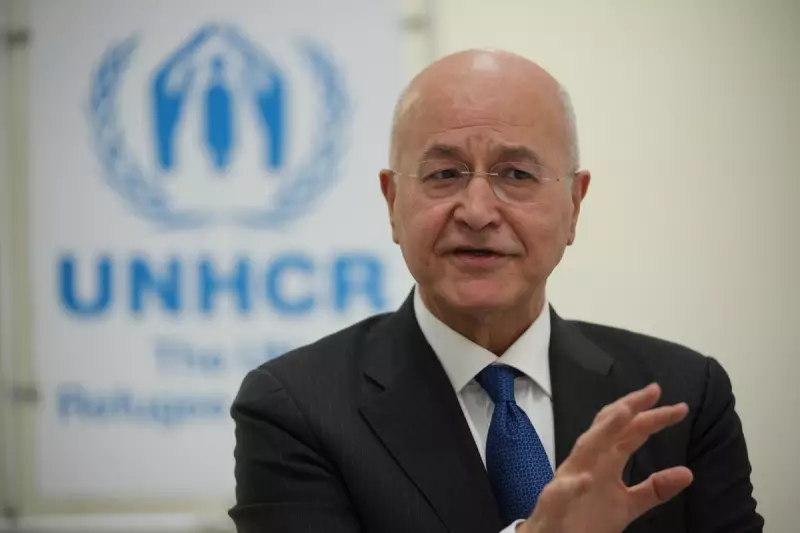
The first refugee to lead the United Nations refugee agency has declared that the world is facing a "very difficult moment in history", as he appeals to common humanity amidst dramatic global changes. Barham Salih, who assumed his role as High Commissioner for Refugees on January 1, made these remarks in an interview with The Associated Press on Monday, highlighting the severe challenges confronting displaced populations worldwide.
Funding Crisis and U.S. Support Decline
Salih emphasised that repression against immigrants is intensifying while funding for their protection is plummeting. Without directly referencing the Trump administration or its policies, he noted that his office must become more inventive to address the crisis, particularly after losing over $1 billion in U.S. support. In 2024 and 2025, funding from the United States dropped from $2.1 billion to $800 million, though the country remains the largest donor to UNHCR.
"Resources made available to helping refugees are being constrained and limited in a very, very significant way," Salih stated. He described the situation as both an international legal responsibility and a moral imperative, urging adaptation to a new global environment.

Upholding the 1951 Refugee Convention
Salih was adamant about the need to safeguard the 1951 Refugee Convention, as the Trump administration campaigns for other governments to join it in overhauling a decades-old system and redefining asylum rules. The administration is also reviewing the U.S. asylum system, suspending the refugee program in 2025 and setting a historic low entry limit of 7,500, mostly white South Africans, since the program's inception in 1980.
Additionally, tightened immigration enforcement has led to increased deportations, with criticism over deportations to third countries and incidents involving federal officers. Salih called for cost-effective measures to deliver assistance directly to those in need, rather than sustaining dependency on humanitarian aid.
Personal Experience and Global Outreach
Salih's own experience as a refugee shapes his approach to the role. He first fled Iraq to Iran as a teenager in 1974, and after being arrested and tortured under the Saddam Hussein regime, he escaped to the United Kingdom in 1979. He later returned to Iraq, serving as president from 2018 to 2022.
Since taking office, Salih has visited refugees from Sudan's civil war in Chad and those from Somalia, Congo, and Ethiopia in Kenya. He stressed that "refugees are not just numbers and victims", and with proper protection and opportunities, their situations can improve dramatically.
Support from the Vatican and Hopeful Outlook
Salih has already met with Pope Leo XIV at the Vatican, expressing gratitude for the pontiff's support. "The voice of the church and faith-based organizations in this endeavor is absolutely vital," he said, highlighting the importance of moral backing in these challenging times.
Despite the funding challenges and political pressures, Salih remains hopeful, calling his work a great honour. He concluded by reaffirming his commitment to advocating for the world's 117.3 million forcibly displaced people from 194 countries, with UNHCR supporting approximately 30 million refugees amid dwindling resources.