A high-level Ukrainian delegation has arrived in the United States for critical negotiations aimed at ending the four-year war with Russia, even as Moscow intensifies a brutal winter campaign targeting Ukraine's crippled energy infrastructure.
Kyiv Seeks 'Just Peace' in Washington Talks
The head of the Ukrainian president's office, Kyrylo Budanov, confirmed the delegation's arrival on Saturday, 17 January 2026. The team is set to meet with a US delegation that includes White House envoy Steve Witkoff, President Donald Trump's son-in-law Jared Kushner, and US Army Secretary Daniel Driscoll.
"Ukraine needs a just peace. We are working to achieve results," Mr Budanov, a former military intelligence chief, stated on Telegram. President Volodymyr Zelensky indicated that his team would seek clarity from the US on Russia's stance towards diplomatic efforts, noting that Moscow has refused to budge from its maximalist demands.
Diplomatic observers have raised concerns that the Trump-led negotiation body could act as a parallel alternative to the United Nations. Details of its mandate are expected to be unveiled at the World Economic Forum in Davos next week, where Zelensky suggested documents for a potential deal could be signed.
Energy Grid Under 'Serious Strikes' as Winter Bites
As diplomats talk, the situation on the ground in Ukraine grows increasingly dire. President Zelensky warned on Friday that allied supplies of air defence systems were insufficient, with Russia preparing new large-scale strikes.
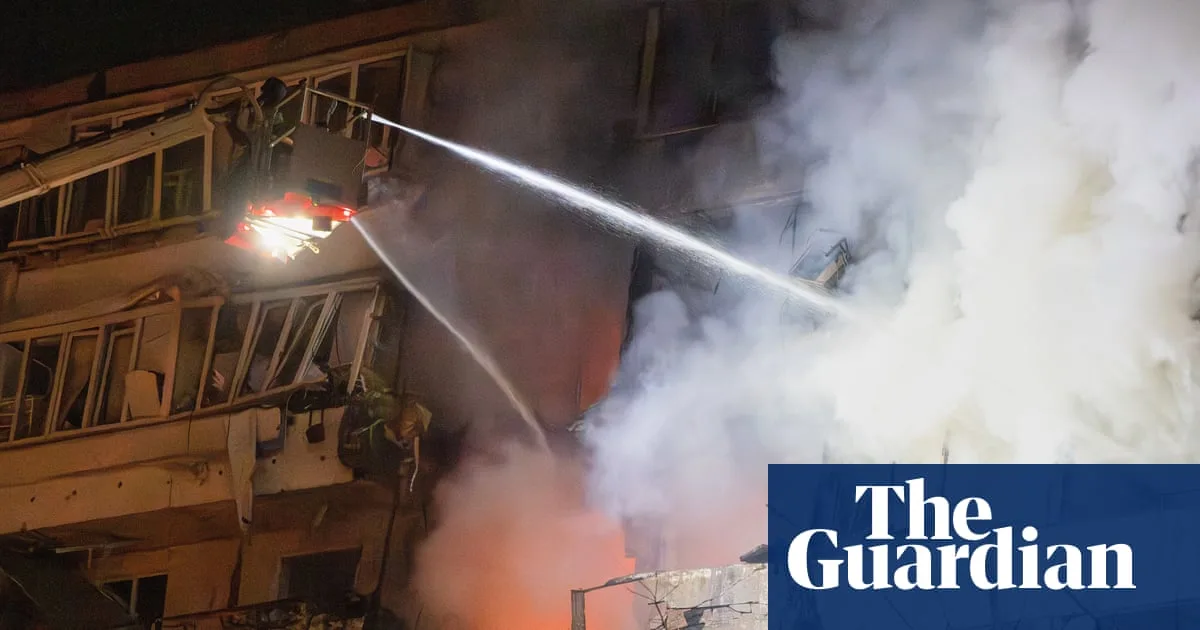
This warning proved prescient. Overnight strikes on Saturday hit energy facilities in the Kyiv and Odesa regions, leaving tens of thousands without power. More than 20 settlements in the Kyiv region were cut off. In Kharkiv, a strike on a critical infrastructure facility wounded three people and raised the risk of severe disruptions to electricity and heating.
"We are talking about serious strikes on the system that keeps the city warm and lit," said Kharkiv's mayor, Ihor Terekhov. He warned the network was operating at its limits, with each new attack prolonging recovery efforts.
On Sunday, Zelensky convened a special energy coordination meeting, naming Kyiv, Kharkiv, Zaporizhzhia and their surrounding regions as the worst hit. He stressed the urgent need to ramp up electricity imports and acquire additional equipment from partners.
Ukraine's new energy minister, Denys Shmyhal, revealed that Russia conducted 612 attacks on energy facilities in 2025 alone, with the intensity increasing as temperatures plummet to -18°C. He stated that not a single Ukrainian power plant has been spared since the full-scale invasion began.
Frontline Losses and Diplomatic Fallout
On the battlefield, Russia's defence ministry claimed on Saturday to have taken control of two settlements: Pryvillia in the Donetsk region and Pryluky in Zaporizhzhia. Ukrainian forces have yet to comment on these claims.
The human cost of the war remains staggering. A joint investigation by independent outlet Mediazona and the BBC's Russian service has confirmed the identities of 163,606 Russian military personnel killed in Ukraine. The true toll is believed to be far higher. In a rare disclosure, Ukraine's new defence minister, Mykhailo Fedorov, said around two million Ukrainians were wanted for evading mobilisation.
Despite the severe energy crisis and security threats, foreign embassies in Kyiv have confirmed they are not evacuating staff. At least eight missions have stated they will remain, a stark contrast to the mass evacuations seen at the start of the full-scale invasion in early 2022.
The conflict's ripple effects continue to be felt regionally. In Moldova, authorities reported that a hunter found a crashed Russian Gerbera-type drone in the village of Nucareni, roughly 54km from the Ukrainian border. Moldova's foreign ministry condemned the airspace breach as a threat to national security and a violation of sovereignty.






