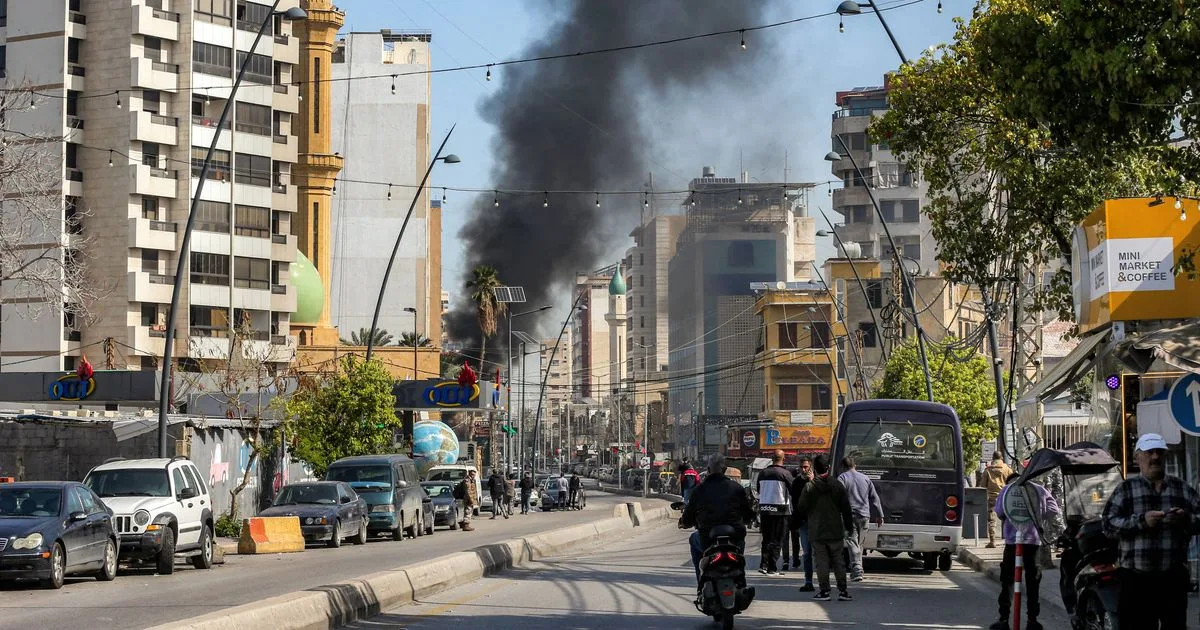
The UK Foreign, Commonwealth and Development Office has escalated its travel guidance, issuing fresh advisories for thirty-one nations as the Middle East conflict intensifies. This comprehensive update, released earlier this afternoon, reflects the severe and expanding regional instability that has already grounded thousands of flights and claimed over two thousand lives.
Escalating Conflict Triggers Widespread Disruption
The advisory explicitly states that the escalation in the Middle East has caused widespread travel disruption, including airspace closures and numerous delayed and cancelled flights. British citizens are warned that their travel plans may be affected, even if their final destination is not within the Middle East region itself, due to the complex ripple effects on global aviation and shipping routes.
Critical Advice for UK Travellers
The FCDO strongly advises all UK passport holders to take several precautionary steps before any travel. These essential measures include checking the specific travel advice for any countries or territories they plan to transit through, seeking the latest updates directly from their airline or tour operator prior to departure, and thoroughly reviewing their travel insurance policy to confirm coverage under the current volatile circumstances.
Furthermore, travellers are urged to monitor both local and international media for the most recent developments and to sign up for official FCDO travel advice email alerts to receive real-time updates.
List of Countries with Updated Travel Advice
The updated FCDO guidance covers a diverse range of nations across Asia and the Pacific, indicating the broad geographical impact of the conflict. The full list includes:
- Singapore
- Vietnam
- Philippines
- Tuvalu
- Laos
- Thailand
- Uzbekistan
- New Zealand
- Bangladesh
- Australia
- Indonesia
- Brunei
- Japan
- Georgia
- Tajikistan
- Nepal
- Maldives
- Fiji
- Malaysia
- India
- Papua New Guinea
- Cambodia
- South Korea
- Samoa
- Solomon Islands
- Tonga
- Nauru
- Vanuatu
- Marshall Islands
- Kiribati
- Sri Lanka
Human and Economic Toll of the War
The conflict, which began with Israeli and US strikes on Iran three weeks ago, has resulted in a devastating human cost. Official reports indicate more than 1,300 fatalities in Iran, while Israeli strikes against Hezbollah in Lebanon have displaced over one million people—approximately twenty percent of Lebanon's population—and killed more than a thousand. Israel reports the deaths of over five hundred Hezbollah militants.
Within Israel, fifteen people have been killed by Iranian missile fire, and an additional four fatalities occurred in the occupied West Bank due to an Iranian missile strike overnight. The conflict has also claimed the lives of at least thirteen US military personnel.
Regional Retaliation and Global Repercussions
In a significant escalation, Iran has intensified attacks on oil and natural gas facilities around the Gulf, a direct retaliation for an Israeli strike on a key Iranian gas field. This strategic targeting has sent global fuel prices soaring and risks drawing Iran's Arab neighbours directly into the widening conflict.
Tehran's focus on energy infrastructure further strains global supplies, exacerbated by Iran's effective stranglehold on the Strait of Hormuz—a critical maritime chokepoint through which one-fifth of the world's oil is transported. Recent strikes have forced the shutdown of this vital waterway.
Despite the degradation of Iran's military capabilities and the loss of its top leaders in airstrikes since the war's inception on February 28th, the nation, now under new leadership, retains significant capacity for missile and drone attacks. This continued capability poses a persistent threat to Gulf Arab neighbours and the global economy, which remains heavily dependent on regional energy production.
In a related domestic development, Iran's judiciary announced the execution of three men detained during January's nationwide protests, marking the first known executions carried out in connection with those demonstrations.