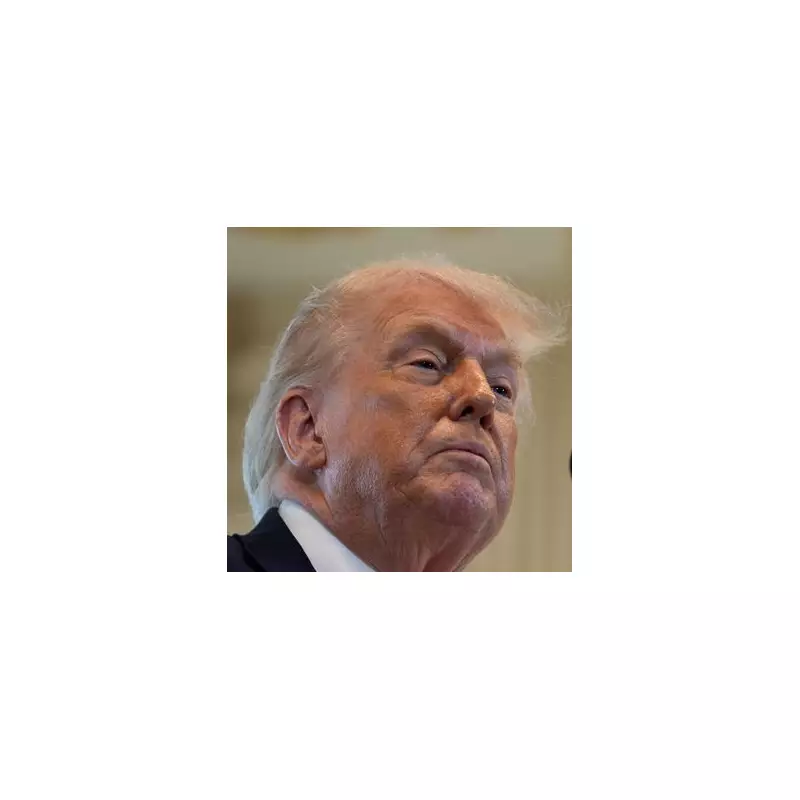
The UK government has taken a firm and public stand against former US President Donald Trump's threats to impose punitive tariffs, declaring its position on the future of Greenland as 'non-negotiable'. The defiant statement from Culture Secretary Lisa Nandy comes in direct response to Trump's warning that he would slap a 10% tariff on imports from the UK and several other NATO countries for opposing his push to acquire the Arctic territory.
Trump's Tariff Ultimatum and UK's Firm Rebuttal
On Saturday evening, Donald Trump issued a stark ultimatum, stating that eight nations, including the UK, Denmark, Norway, Sweden, France, Germany, the Netherlands, and Finland, would face a 10% tariff on all imports to the US. His condition was their continued opposition to his ambition to seize Greenland. Trump further threatened to escalate these levies to 25% by 1 June if a deal to purchase the territory was not finalised. He justified the move by claiming these nations had 'journeyed to Greenland, for purposes unknown'.
In a series of media appearances, Lisa Nandy, speaking for the government, firmly rejected this approach. While emphasising the critical importance of the UK's relationship with the United States, she left no room for ambiguity on the core issue. 'Our position on Greenland is non-negotiable, that we've made that very clear, and we'll continue to make that clear,' she stated on the BBC's Laura Kuenssberg programme. She echoed Labour leader Keir Starmer's earlier criticism, labelling the proposed tariffs as 'completely wrong', 'deeply unhelpful and counterproductive'.

International Backlash and Strategic Concerns
The UK's stance is part of a broader wave of European resistance. French President Emmanuel Macron vowed not to bow to 'intimidation', while Sweden's Prime Minister Ulf Kristersson asserted 'we will not let ourselves be blackmailed'. The European Union summoned ambassadors for emergency talks to coordinate a response to what is seen as a direct economic threat.
Strategic experts have raised alarms about the wider geopolitical ramifications of such a rift. The EU's foreign policy chief cautioned that the tariffs would ultimately impoverish both the US and the EU while strengthening global rivals. Former Estonian Prime Minister Kaja Kallas summarised the concern starkly: 'China and Russia must be having a field day. They are the ones who benefit from divisions among Allies.'
UK's Arctic Involvement and Diplomatic Stance
The controversy follows a significant UK military move earlier in the week, which saw Britain deploy a military officer to Greenland. This action aligned with Denmark's efforts to bolster its military presence in the strategically sensitive Arctic and High North region, highlighting the area's growing geopolitical importance.
When pressed on potential UK retaliation, Nandy struck a measured tone, prioritising diplomacy over escalation. 'Before we talk about raising the temperature I think we need to remember the relationship with the US is incredibly important to us and always has been,' she advised. She reiterated the UK's official position, first stated by the Prime Minister, that 'the future of Greenland depends on the wishes of the people of Greenland and the people of the kingdom of Denmark'. This principled stand, rejecting unilateral territorial acquisition, now places the UK squarely in the crosshairs of Trump's protectionist trade threats, setting the stage for a tense diplomatic period ahead.