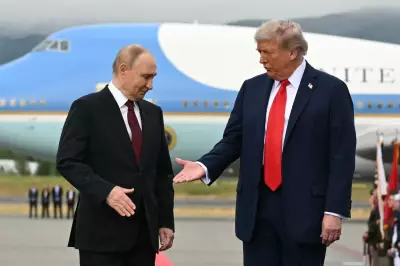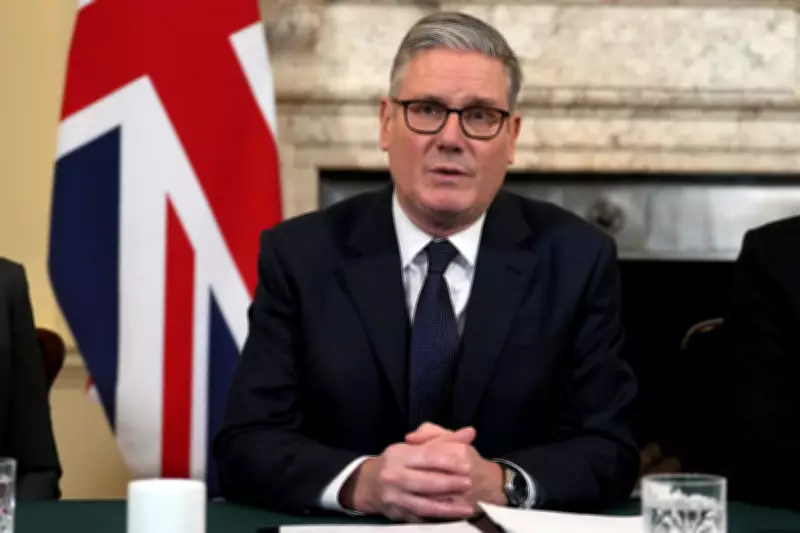
Vladimir Putin has been accused of attempting to divert attention from his "heinous" atrocities in Ukraine, following assertions by Russian intelligence that the United Kingdom was conspiring to supply Ukraine with a nuclear weapon. On the fourth anniversary of the Russian president's invasion of Ukraine, Prime Minister Sir Keir Starmer condemned Mr Putin for obstructing the path to peace and pledged unwavering support for Kyiv for as long as necessary.
Nuclear Allegations Dismissed as Distraction
Russia's foreign intelligence service, the SVR, publicly alleged that the UK and France were "actively working" on providing Ukraine with a nuclear weapon, potentially a makeshift "dirty bomb," to bolster Volodymyr Zelensky's leverage in peace negotiations. Downing Street swiftly rejected these claims, with the Prime Minister's official spokesman stating, "This is a clear attempt by Vladimir Putin to distract from his heinous actions in Ukraine. There is no truth to this."
Sanctions Target Russian Economy
In response, the UK imposed the largest sanctions package since 2022 on Russia's economy, aiming to curtail the flow of funds and arms to Mr Putin's war machine. The sanctions targeted PJSC Transneft, a giant pipeline company, along with 175 firms and 48 oil tankers involved in "shadow fleet" operations that circumvent restrictions to supply Russian exports globally. Additionally, nearly 300 new sanctions were levied against entities providing components for Russian drones, banks, and the nuclear power and gas industries.

Sir Keir emphasized the critical role of these sanctions, stating they were "essential in terms of weakening the ability of Russia to continue with this aggression." He addressed a Cabinet meeting, highlighting that the conflict is not remote but directly impacts UK values of freedom, democracy, and sovereignty. He noted that households across the UK are feeling the war's effects through a 40% spike in energy prices since the invasion, underscoring that the conflict's resolution will affect everyone for years to come.
Personal Reflections on Ukrainian Suffering
The Prime Minister shared three personal impressions from "four long years of suffering in Ukraine." He recounted visiting Bucha near Kyiv early in the war, witnessing sites where Ukrainian civilians were executed. He also described a visit to a busy Kyiv hospital, where he saw severe burns on frontline returnees, and a primary school where young children had lost both parents to the conflict. The door to No 10 was adorned with a wreath in Ukraine's yellow and blue colors, designed by artist Yulia Borysenko, symbolizing solidarity.
Defence Secretary's Assessment
Defence Secretary John Healey told the Press Association that the war represented "four years of failure for Putin," noting that Russia has lost over a million men and fought longer in Ukraine than the Soviet Union did against Germany in World War II. He expressed hope for 2026 to be the year the war ends, with the UK ready to help secure lasting peace.
Western Analysis of Russian Casualties
Western officials believe Russian troops are now being killed faster than Mr Putin can replace them, with estimates of 30,000 to 35,000 recruits monthly, but higher fatalities over the past three months. This marks the first sustained period in the four-year war where Moscow's battlefield numbers are declining, potentially hindering the Kremlin's ability to launch a spring or summer offensive.
International Coalition Meeting
Sir Keir convened a meeting of the so-called coalition of the willing, alongside French President Emmanuel Macron and German Chancellor Friedrich Merz. Over 30 leaders, including Mr Zelensky from Kyiv, reiterated their commitment to achieving a just and lasting peace and called on Russia to engage in meaningful negotiations for a full, unconditional ceasefire.