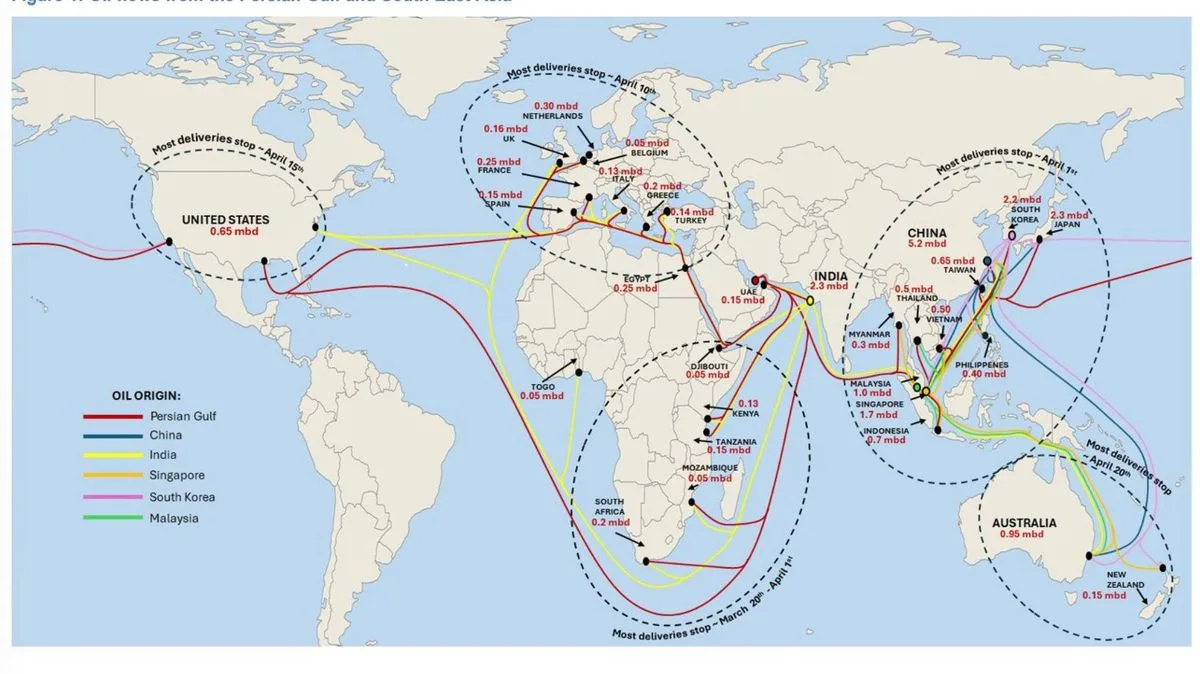
A map produced by investment bank JP Morgan indicates that the UK may receive its last deliveries of Gulf oil as early as next week, with most shipments to the nation expected to cease on April 10. The map, which shows when final tankers will reach destinations worldwide, highlights the impact of Iran's ongoing blockade of the Strait of Hormuz.
According to JP Morgan analysts, the global oil system is 'shifting from a flow shock to a stock depletion problem', meaning existing reserves are being steadily drained. The map notes that the last tanker departed the Strait of Hormuz on February 28, the day hostilities began, with traffic largely grinding to a halt thereafter.
Other regions face even earlier cut-offs: parts of Asia and Africa will see deliveries stop from April 1, while the US is expected to receive its last shipments on April 15. However, due to substantial domestic oil output, shortages in the US are considered unlikely. Across Europe, supply shortages are also deemed improbable, though motorists are expected to face further price hikes.
The crisis has driven up oil prices significantly. Brent crude surged more than 3 per cent to $117 a barrel on Monday, levels unseen since 2022. Diesel prices have rocketed to their highest since December 2022, with the average cost of a litre at UK forecourts reaching 181.2p, a 27 per cent increase since the conflict began. Average petrol prices have climbed to 152.0p per litre, a 14 per cent rise.
Prime Minister Sir Keir Starmer has summoned senior figures from the energy, shipping and banking sectors to Number 10 to address the blockade. Representatives from Shell, BP, Maersk, Lloyd's of London, HSBC and Goldman Sachs were briefed that the Government is developing a 'viable plan' for the Strait of Hormuz.