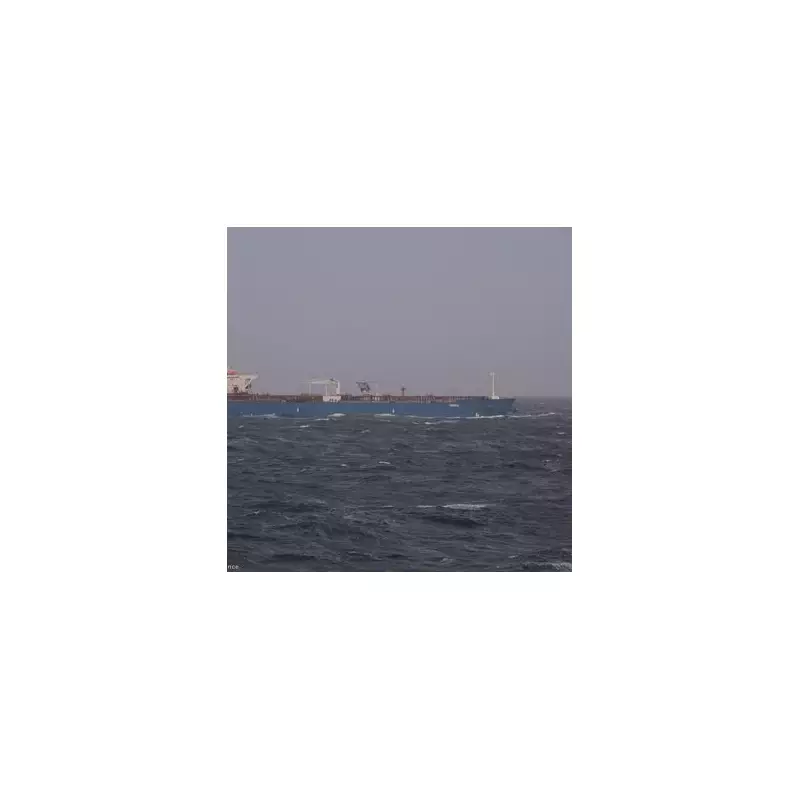
In a significant joint maritime operation, British military forces have provided crucial support to the French navy in intercepting a Russian oil tanker suspected of operating under a false flag in the Mediterranean Sea.
International Cooperation Against Sanctions Evasion
The vessel, identified as the 'Grinch', was reportedly transporting oil from Russia while subject to international sanctions. French maritime authorities confirmed the tanker had been stopped following suspicions it was sailing with fraudulent registration documents, a practice commonly known as flying a false flag.
High-Seas Operation with Allied Support
French President Emmanuel Macron publicly acknowledged the operation through a social media statement, revealing that the interception occurred on the high seas in the Mediterranean region. "This morning, the French Navy boarded an oil tanker coming from Russia, subject to international sanctions and suspected of flying a false flag," Macron declared.

The French leader emphasized that the operation was conducted "with the support of several of our allies" and strictly adhered to international maritime law, specifically referencing compliance with the United Nations Convention on the Law of the Sea.
Strategic Importance of the Interception
This coordinated action represents a notable demonstration of international cooperation in enforcing sanctions against Russia. The involvement of British forces highlights the ongoing strategic partnership between the UK and France in maintaining maritime security and upholding international regulations.
The Mediterranean Sea has become an increasingly monitored region for sanctions enforcement, with numerous attempts to circumvent restrictions on Russian oil exports through various deceptive shipping practices.
Maritime security experts suggest that false flag operations typically involve vessels:
- Registering under different nationalities to conceal true ownership
- Manipulating documentation to hide cargo origins
- Using complex shipping routes to avoid detection
- Engaging in ship-to-ship transfers to obscure the supply chain
The successful interception of the 'Grinch' demonstrates enhanced surveillance capabilities and intelligence sharing between allied nations, potentially signaling a more robust approach to sanctions enforcement in international waters.