Government Mobilises Support for Stranded Britons as Limited Flights Resume from Abu Dhabi
Prime Minister Sir Keir Starmer has declared that the UK Government is "looking at all options to support our people" as a small number of flights have begun departing from Abu Dhabi, carrying stranded British nationals back to London's Heathrow Airport. This development comes amid widespread airspace closures across the Middle East, triggered by the intensifying conflict between Iran and US-Israeli forces.
Flight Operations and Passenger Guidance
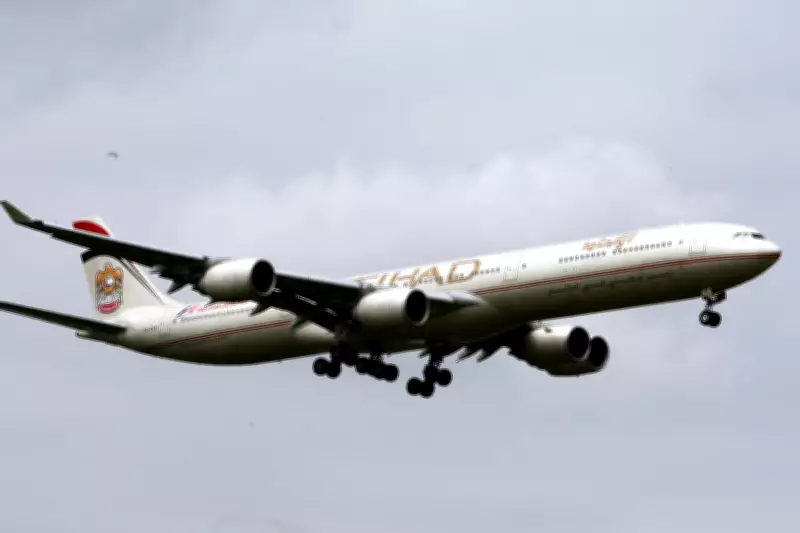
On Monday, Etihad Airways flight EY67 departed from the United Arab Emirates capital, bound for Heathrow's Terminal 4, with an expected arrival time of 7.14pm. This flight is likely transporting UK citizens who have been trapped in the region since the conflict escalated. Notably, 15 Etihad Airways flights left Abu Dhabi within a three-hour window, which flight tracking service Flightradar24 suggested were primarily aimed at clearing transit passengers stranded since hostilities began.
However, Etihad Airways has maintained its suspension of all scheduled commercial flights to and from Abu Dhabi until 14:00 UAE time on Wednesday, March 4. The airline has issued strict instructions, advising passengers not to travel to the airport unless they have been directly contacted and instructed to do so. Similarly, the Government of Dubai Media Office announced that Emirates and Flydubai would commence limited flight operations, prioritising customers with earlier bookings.

Government Response and Consular Support
Addressing the House of Commons, Prime Minister Starmer emphasised the challenging ground situation, which he warned "may remain challenging for some time." In response, the Government is deploying rapid deployment teams to the region to provide on-the-ground assistance to British nationals. Starmer urged all UK citizens in the affected areas to register their presence with the Foreign, Commonwealth & Development Office (FCDO) to facilitate support and to monitor regularly updated travel advice from the Home Office.
Foreign Secretary Yvette Cooper revealed that approximately 102,000 British nationals have registered their presence in the region, with an estimated total of 300,000 UK citizens residing in Gulf countries targeted by Iran. The FCDO has opened phone lines to offer consular support, and ministers are available to meet with MPs to discuss individual cases.
Widespread Flight Cancellations and Travel Advisories
The airspace closures have led to significant disruptions in commercial aviation. According to analytics firm Cirium, 49 out of 144 flights scheduled to depart from the UK to the Middle East on Monday were cancelled. Major airlines have been forced to adjust their operations:
- British Airways cancelled a number of flights to the Middle East and some services to Cyprus following a drone strike on RAF Akrotiri.
- Virgin Atlantic axed two Heathrow-bound flights from Dubai and Riyadh, with other flights being rerouted.
- EasyJet also cancelled flights to Cyprus due to the security situation.
In a significant escalation, the Foreign Office has now advised against all but essential travel to Jordan, a country traditionally viewed as one of the Middle East's most stable nations. British nationals in Bahrain, Israel, Kuwait, Palestine, Qatar, and the UAE are being urged to register online with the Foreign Office and to follow local authority instructions.
Expert Travel Advice for Affected Passengers
Rory Boland, editor of Which? Travel, provided crucial guidance for travellers affected by the disruptions. He emphasised that airlines cancelling flights must offer passengers the choice of a refund or rerouting on alternative carriers still operating. Boland strongly advised against passengers cancelling bookings themselves, as this would likely invalidate refund claims. Instead, he recommended closely monitoring updates from airlines and adhering to Foreign Office travel advice as the situation continues to evolve rapidly.

The Government remains in close contact with travel industry representatives and regional governments, particularly with UAE authorities given the high concentration of British nationals in the country. The overarching objective, as stated by Prime Minister Starmer, is to ensure that stranded UK citizens "can return home as swiftly and safely as possible" during this period of heightened regional tension.