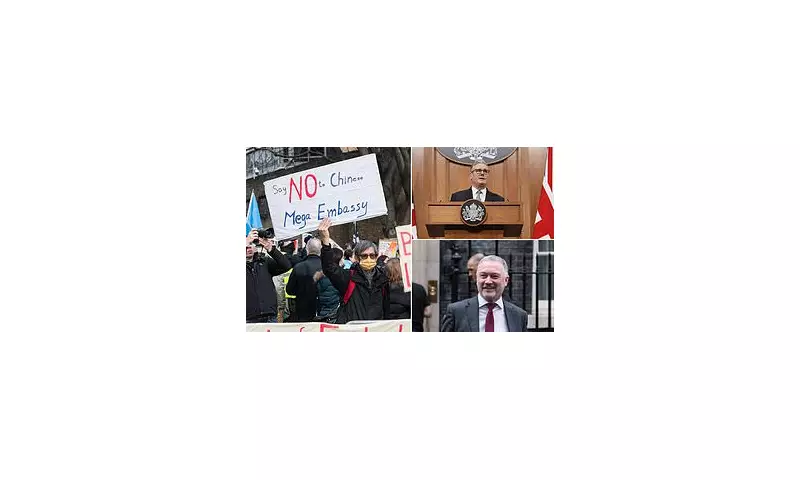
The UK government is expected to grant final approval today for China's controversial new diplomatic compound in London, a decision taken despite significant security concerns and fierce opposition from MPs across the political spectrum.
Security Fears and Secret Chambers
The proposed development, often dubbed a 'mega-embassy', is set to consolidate China's diplomatic presence from seven separate buildings into one large site. However, the plans have alarmed critics due to their reported inclusion of 208 secret rooms and a hidden chamber. A major point of contention is the site's proximity to critical data cables that underpin the operations of the City of London, raising fears of potential espionage or disruption.
Luke de Pulford, who leads the Inter-Parliamentary Alliance on China, issued a stark warning. He stated that years of campaigning highlighting the 'obvious and manifold risks' had been insufficient against the government's apparent desire for Beijing's investment. He predicted the approval would trigger an 'embarrassing and potentially catastrophic' legal challenge in the form of a judicial review.

Political Opposition and Legal Battle Looms
Opposition to the project is not confined to the government's backbenches. MPs from within the Labour Party have voiced fears that the new embassy could be used to intensify the intimidation of Chinese dissidents living in the UK. These critics have directly urged Communities Secretary Steve Reed, who holds responsibility for the planning system, to block the application.
Nevertheless, the government appears set to proceed. Foreign Office minister Seema Malhotra addressed the Commons, asserting that national security had been the 'core priority' throughout the process, with continuous input from the security and intelligence agencies. She expressed 'full confidence' in their ability to manage any risks posed by foreign spies.
Diplomatic Ramifications and Starmer's Stance
This contentious decision carries significant diplomatic weight. It is believed the green light for the embassy could pave the way for Labour leader Keir Starmer to confirm an official visit to Beijing in the coming months. Such a move would likely attract accusations from political opponents that he is 'kowtowing' to the Asian superpower in an effort to secure economic benefits for the UK.
In a notable intervention last week, Ciaran Martin, the former head of GCHQ's National Cyber Security Centre, sought to allay public fears. Writing in The Times, he argued that the plans would have undergone rigorous scrutiny from UK security services and that no government would ignore advice if the risks were deemed too high.
As the final sign-off is anticipated this morning, the long-running saga is far from over. The announcement is expected to mark the beginning of a fresh and major legal battle, as campaigners and political opponents prepare to challenge the government's decision in the courts.