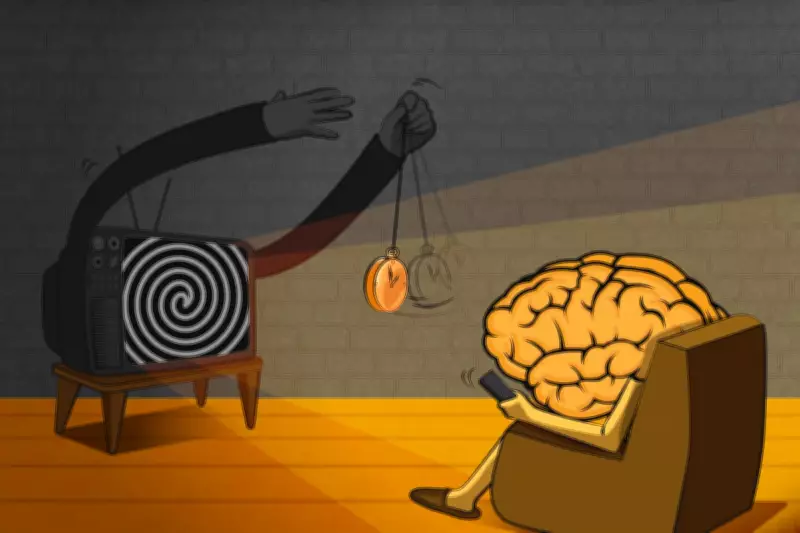
TV's 'Brain Rot': How Streaming Prioritises Second-Screen Viewers Over Quality
Is television becoming increasingly simplistic? In today's entertainment landscape, dwindling attention spans and disengaged audiences are being viewed not as challenges to address, but as commercial opportunities to exploit. This week, former Doctor Who star Christopher Eccleston asserted that television executives "think the audience is stupid." This sentiment echoes broader industry concerns about a perceived decline in intellectual rigour.
Netflix's Approach to Distracted Audiences
In January, actors Ben Affleck and Matt Damon, while promoting their Netflix film The Rip, appeared to confirm long-standing rumours about Netflix's production strategies. They suggested creators are explicitly instructed to accommodate "second-screen viewers" – those who treat television as background noise while focusing primarily on smartphones, social media, or online shopping. Damon quipped that Netflix advised him: "It wouldn't be terrible if you reiterated the plot three or four times in the dialogue because people are on their phones while they're watching." He added, "It's really going to start to infringe on telling stories."
Although Netflix has disputed Damon's claims, the revelation hardly comes as a surprise. Even without reading reports about creative constraints imposed on modern showrunners, the effects are often palpable in the final product. Viewers can detect this influence in major streaming hits like Wednesday, Stranger Things, and the recent Harlan Coben adaptation Run Away. While not every instance of repetitive dialogue or clumsy exposition stems from a deliberate strategy, consistent patterns emerge across streaming content.

The Impact on Engaged Viewers
The primary issue lies with audiences who genuinely wish to immerse themselves in a programme, whether for artistic appreciation or pure escapism. For these viewers, unnecessary reiteration results in a dull and patronising experience. Historically, television has always adapted to passive viewing habits. In the pre-streaming era, shows accounted for latecomers and advertising breaks by incorporating recaps, though the best series managed this with elegance and humour. For example, The Simpsons famously parodied this trope when Homer detailed plot points after an ad break, prompting Bart to remark, "What an odd thing to say."
Television's Narrative Regression
However, television's gradual decline in sophistication extends beyond this single issue. As an art form, TV appears to be regressing on multiple fronts. Consider the lasting legacy of The Wire, David Simon's expansive and sophisticated crime drama, often hailed as one of the finest screen works of the 21st century. Despite universal acclaim, its influence on subsequent television has been minimal. Unlike The Wire, which pushed storytelling boundaries, few modern shows attempt similar ambition.
Other classics from television's "golden age," such as The Sopranos, Deadwood, or Mad Men, exhibited narrative complexity that current series rarely match. An episode of The Sopranos, for instance, wove intricate, literary-level storytelling within an hour. Even acclaimed recent hits like Succession, while smart and well-acted, lack comparable narrative ingenuity, often prioritising straightforward plots and meme-friendly content over depth.
The Shift in Cultural References
Television's intellectual retreat is also evident in its use of cultural references. In the past, popular sitcoms like Cheers casually referenced foreign filmmakers, classical musicians, and Russian novelists, assuming a broader base of viewer knowledge. Today, TV rarely ventures into such allusions, favouring accessibility over adventurousness. This shift partly reflects our fragmented monoculture, where shared reference points are scarce, but it also highlights a reluctance to challenge audiences.

Exceptions to the Rule
Despite these trends, exceptions exist. In their interview on Joe Rogan's podcast, Affleck and Damon cited the Netflix series Adolescence as proof that uncompromised, high-quality television can still thrive. Recent shows like The Pitt, Pluribus, and The Chair Company have also demonstrated that intelligent, original programming can attract substantial audiences without succumbing to streaming-era pressures. These examples offer a glimmer of hope that television need not cater solely to the uninterested.
Ultimately, there is no long-term advantage in producing television that appeals to distracted viewers. The medium does not require simplification to succeed – it merely demands that those in charge recognise the value of engaging, thoughtful storytelling.