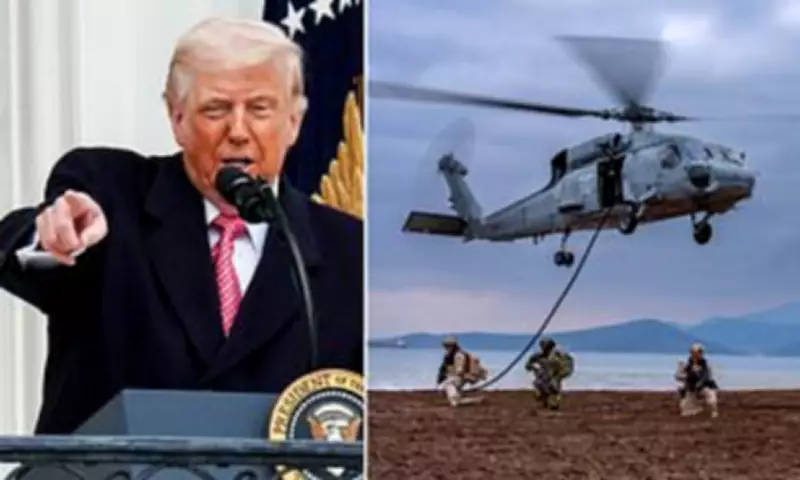
President Donald Trump is actively considering a radical overhaul of the NATO alliance, proposing a strict "pay-to-play" system that would fundamentally alter how member states participate in critical decision-making processes. Under this controversial plan, nations that fail to meet a newly established defence spending target of five per cent of their Gross Domestic Product (GDP) would be explicitly barred from voting on key strategic matters.
Exclusion from Vital Alliance Decisions
The proposed NATO restructuring would effectively block allies who do not achieve the ambitious five per cent spending benchmark from participating in pivotal votes. This includes decisions on when the alliance collectively goes to war, as well as votes concerning expansion initiatives and joint military missions. Most significantly, it would extend to the triggering of Article 5, the mutual defence clause that commits all members to respond if one is attacked.
A Response to European Frustrations
This initiative emerges as one of several strategic plans the US President is evaluating, following a notable rejection by NATO allies of his demand to deploy warships to reopen the strategically vital Strait of Hormuz. An administration source conveyed to The Telegraph, "The frustration we've had with the Europeans has been very real." The source elaborated on the core principle, stating, "Any country that's not paying 5 per cent shouldn't be allowed to vote on future expenditures at NATO."

Another US official emphasised the need for a fundamental reassessment, adding, "We need to start the conversation about what is a threat and what does the alliance do. We have to send the message that what Spain and the UK did is unacceptable," referencing the reluctance to commit naval assets to the Hormuz situation.
Current Spending and the New Target
NATO members currently adhere to a guideline of spending at least two per cent of their GDP on defence, a target established after President Trump's vigorous campaign in 2018 urging allies to double their military investments. According to NATO's most recent annual report, the United Kingdom spent 2.33 per cent of its GDP on defence last year, placing it just above nations like Romania, Bulgaria, and North Macedonia. While Britain meets the current two per cent target, it proportionally spends less on defence than thirteen other NATO allies.
NATO Secretary-General Mark Rutte has indicated that alliance leaders will be required to outline concrete plans for achieving the new, more demanding five per cent target at an upcoming summit scheduled to be held in Turkey later this year.
Strained Transatlantic Relations
The proposal arrives amidst notably strained relations between President Trump and UK Prime Minister Keir Starmer. The relationship has been turbulent since the onset of the Middle East conflict, exacerbated by Starmer's initial decision to block the United States from using the Diego Garcia military base in the Chagos Islands. President Trump publicly expressed being "very disappointed" with the UK's response to the Iran conflict, criticising Starmer for taking "far too long" to authorise strikes from UK bases.
Prime Minister Starmer has faced significant political pressure, attempting to navigate a path that avoids angering the White House while also managing dissent from left-wing MPs within his own party since the Middle East crisis intensified. Conservative MP Kemi Badenoch has accused Starmer of being "scared" of influential voter blocs whose "loyalties are swayed by conflicts in the Middle East."
Broader Strategic Context and Challenges
President Trump's consideration of this "pay-to-play" model is part of a broader strategic reevaluation. This includes potential plans that could see the removal of American troops from Germany, signalling a significant shift in US force posture in Europe. Furthermore, the President's recent decision to deploy thousands of additional US troops to the Middle East, in preparation for a potential ground invasion, was made directly after NATO countries refused the request for naval support in the Strait of Hormuz.

Implementing such a profound change to NATO's governance would require unanimous consensus from all member states. Given that many European allies are likely to oppose President Trump's stringent proposal, its advancement could precipitate a major diplomatic confrontation and a further battle within the alliance. The plan underscores a deepening divide over burden-sharing and strategic priorities, setting the stage for a contentious debate on the future of the transatlantic partnership.