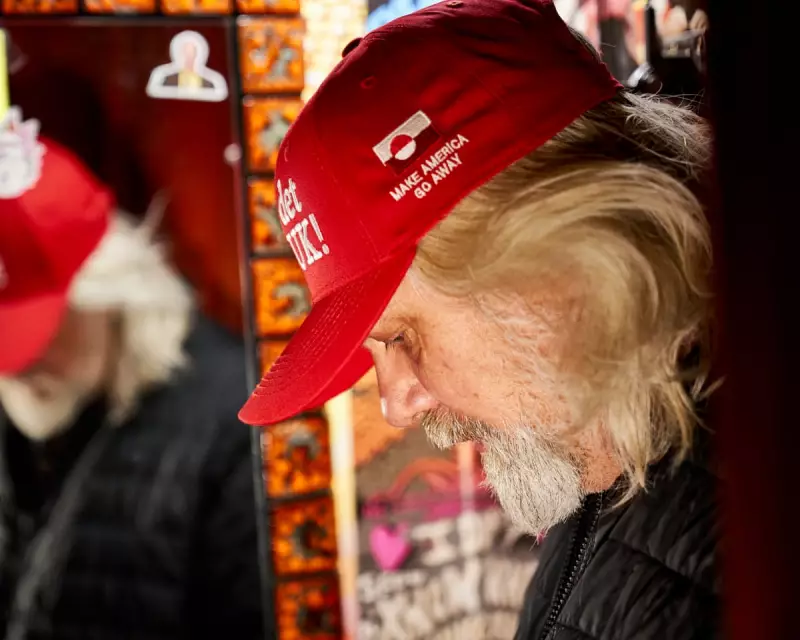
The spectre of a second Donald Trump presidency, marked by open disdain for international law and a declared doctrine of imperial plunder, is sowing dread far beyond America's borders. For Mira Kamdar, an American writer of Danish and Indian heritage based in Paris, the personal terror is multifaceted, touching every strand of her complex family history.
A Family's Multinational Fear
Kamdar's horror stems from Trump's recent boast to the New York Times on 7 January that he doesn't "need international law," a sentiment she equates to a modern "Donroe doctrine" of unfettered profiteering in the western hemisphere. While she finds a grim refreshment in his honesty about using military power for plunder, the reality for her family is chilling.
On her Danish-American side, relatives in Denmark are anguished by the US's sudden turn against Greenland, a loyal ally. As a French resident, she feels a profound solidarity with European neighbours now potentially viewing America as a fascistic threat, a stark reversal from the gratitude felt for its 1944 liberation of France.

The Old Wounds of Empire Reopened
The most poignant fear resides with her 95-year-old Indian-born father. A naturalised US citizen since the 1960s who worked as an aeronautical engineer on the Apollo missions, he now lives in an American care home. In December, he confided a terrifying thought: that ICE agents might come, seize him in his wheelchair, and deport him. "He's brown. He knows he is no longer wanted in Trump's US," Kamdar writes, identifying this manufactured fear as a tactic the Trump regime, aided by far-right European parties, seeks to export.
This personal anxiety mirrors the situation of immigrants in Denmark facing eviction under a controversial "ghetto law"—a policy the UK government has expressed interest in emulating. Kamdar notes that breaking the law to remove unwanted, dark-skinned foreigners "sounds more like Trump than what one would hope from Denmark."
Denmark's Imperial Past and Greenland's Uncertain Future
Kamdar contextualises the current crisis by examining Denmark's own imperial history. It once had an East India Company with a factory in Tranquebar, India, and trafficked enslaved Tamil servants. In 1721, it sent missionary Hans Egede to Greenland, beginning centuries of colonial civilising efforts that included forced sterilisation and removing children from Indigenous families.
Denmark's current claim to sovereignty over Greenland rests on a 1916 deal with the US, which purchased Denmark's Caribbean islands in exchange for not objecting to Danish interests in Greenland. Kamdar warns that Trump's "manifest destiny" ideology shows no respect for native rights, posing a grave threat to Greenlanders should US influence expand. "Wait until US ICE units, finally appropriately named, arrive in Greenland," she cautions.
For Kamdar, the essential bulwark against this new imperial aggression is a steadfast commitment to the rule of law—in Minneapolis, Brussels, or Greenland's capital Nuuk. She concludes that preserving this principle is an affront Europe must be prepared to deliver to Trump's power to ensure its own survival.