Trump's Greenland Threat Unites Denmark and Greenland in Unprecedented Solidarity
Trump's Greenland Threat Unites Denmark and Greenland

Trump's Greenland Threat Unites Denmark and Greenland in Unprecedented Solidarity

The United States president, Donald Trump, has inadvertently fostered a remarkable sense of unity between Denmark and Greenland through his recent threats to annex the largely self-governing territory. For the past three weeks, Denmark has been gripped by intense discussions over the possibility of an invasion by its closest ally, the US, leading to widespread public engagement and protest.

A Wake-Up Call for the Danish Population

Linea Obbekjær, a 64-year-old resident of Copenhagen, encapsulated the national mood, stating that the situation served as a wake-up call, prompting Danes to reflect on what truly matters to them. Many citizens have been spurred into action, moving beyond passive observation to active participation in public discourse and demonstrations.

The country is collectively processing a profound sense of anger and bewilderment, which has bruised national pride and shaken its collective identity. However, Trump's martial rhetoric, often delivered via social media during the early hours due to the transatlantic time difference, has also had an unexpected effect: easing long-standing tensions between Denmark and Greenland.

Protests and Symbolic Acts of Defiance

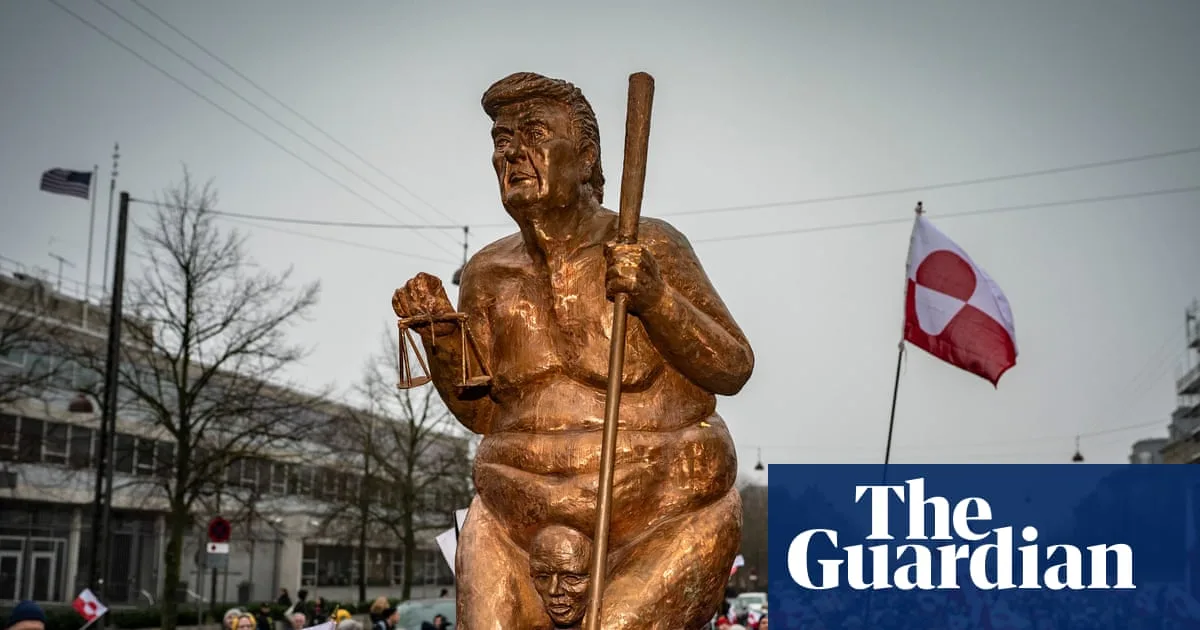
Last weekend, thousands of protesters took to the streets of Copenhagen, waving Greenlandic and Danish flags in a powerful display of solidarity. Many participants wore red hats inspired by Trump's 'Maga' style, emblazoned with the slogan "Nu det NUUK!", a clever play on the Danish phrase "nu det nok" (now it's enough) that incorporates the name of Greenland's capital, Nuuk.

Julie Rademacher, a member of Uagut, the national organisation for Greenlandic people in Denmark and one of the protest organisers, was deeply moved by the overwhelming support. She described an emotional scene where a vast crowd gathered in front of City Hall, cheering during speeches. Rademacher, who has family members who fought alongside US soldiers in conflicts such as Afghanistan and Iraq, expressed disbelief at the threat from a close ally, emphasising the need to fight against such actions.

She believes Trump has achieved the opposite of his intended goal, pushing Greenlanders away from him while fostering a process of reparation in relations between Greenlanders and Danes. Rademacher cited a touching encounter where a Danish stranger apologised to a Greenlandic individual for Denmark's colonial abuses, highlighting a newfound respect and trust.

Creative Responses and Cultural Shifts

Jesper Rabe Tonnesen, a 58-year-old vintage shop owner and creator of the "Nu det NUUK!" hats, observed that Denmark has transitioned from disagreement to unity in response to the threat. He noted a feeling of wartime solidarity between Denmark, Greenland, and the European Union, acknowledging Denmark's limitations as a small economy that requires support from larger nations like France.

Tonnesen's caps, initially unsold when created eight months ago, went viral recently and sold out within two hours, with thousands more in production. In a further act of defiance, his cafe now refers to Americanos as "Canados", referencing Canada as another target of Trump's erratic foreign policy whims. He reflected on the US's historical influence on Danish culture, from fashion to democratic ideals, lamenting the current shift away from those values.

Tina Henriksen, a 58-year-old nurse of mixed Greenlandic and Danish heritage, emphasised the necessity for Greenland and Denmark to stand together, noting that Danish people are opening their minds to Greenland in unprecedented ways.

Colonial Wounds and Contemporary Controversies

Despite signs of unity, the deep colonial wounds between Denmark and Greenland remain evident. Recent issues include the IUD scandal, where thousands of Greenlandic women and girls were forcibly fitted with contraceptive coils without consent, leading to a legal victory for victims in December. Additionally, "parenting competence" tests for people with Greenlandic backgrounds were only banned last year after being criticised as culturally unsuitable and racist.

In January, Icelandic singer Björk sparked controversy by urging Greenlanders to declare independence on social media, drawing attention to these scandals. Her post divided opinion in Denmark, with RecordPusher in Odense boycotting her music, while Rekords, a hip-hop store in Copenhagen, stocked her records in support of free speech. Jakob Hejnfelt Thoren, the store's owner, expressed solidarity with Greenland, describing it as trapped between colonisers.

Public Engagement and Economic Reactions

Danish students Emily Jensen and Rikke Nielsen, both 26, reported that the crisis dominates daily conversations, with many feeling frustrated and scared by Trump's unpredictable actions. Nielsen highlighted increased awareness of Denmark's colonial history following Prime Minister Mette Frederiksen's apology for the IUD scandal.

Public outrage has also manifested economically, with a 1,400% surge in usage of the Made O'Meter app, which helps identify US products in Danish supermarkets. Ian Rosenfeldt, the app's creator, noted that the shock has turned into clarity, with Danes realising the need to reduce reliance on US technology and products due to untrustworthy alliances.

However, not everyone believes US-Danish relations are permanently damaged. Mette Jensen, a 76-year-old, suggested that while repairs are possible, they cannot occur under Trump's presidency. This sentiment underscores a broader European realisation of the need for greater independence and unity in the face of unpredictable global politics.