Prime Minister Sir Keir Starmer has joined a chorus of condemnation from European leaders against former US President Donald Trump's controversial proposal to impose sweeping tariffs on several NATO allies. The move is reportedly intended to pressure Denmark into selling Greenland to the United States.
Transatlantic Tensions Over Arctic Ambitions
In a significant escalation of tensions, Mr Trump announced that from February 1, the United Kingdom would face a 10% tariff on all goods exported to America. This levy is set to rise sharply to 25% from June 1. The same punitive measures are to be applied to Denmark, Norway, Sweden, France, Germany, the Netherlands, and Finland. Mr Trump justified the action by claiming these nations had "journeyed to Greenland, for purposes unknown".
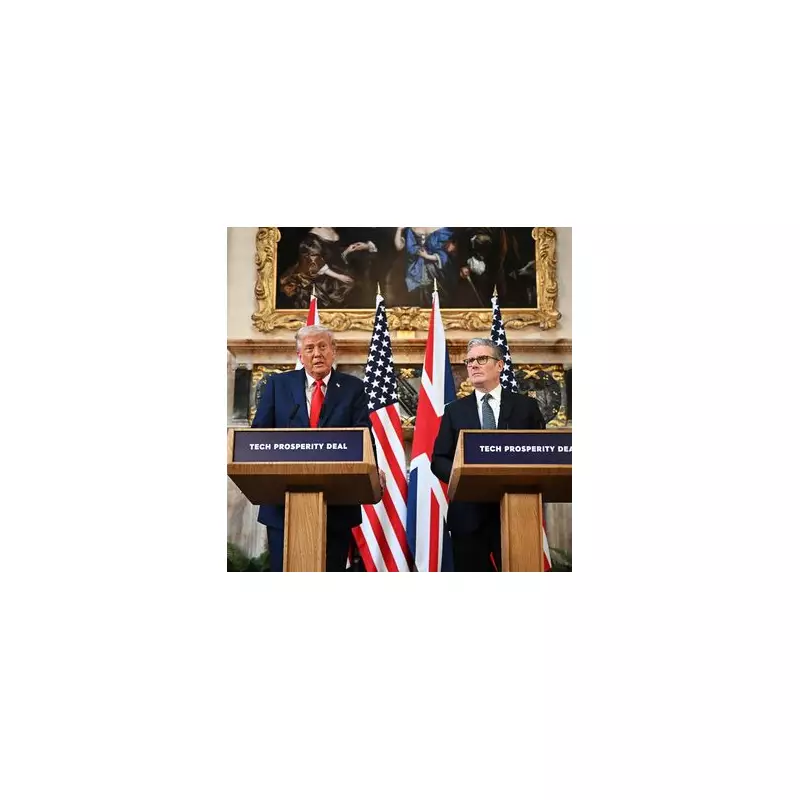
Sir Keir Starmer was swift to label the plan "completely wrong". He stated, "Applying tariffs on allies for pursuing the collective security of NATO allies is completely wrong. We will of course be pursuing this directly with the US administration." The Prime Minister reiterated the UK's stance that Greenland is part of the Kingdom of Denmark and its future is a matter for its people and the Danish government.

A United European Front
The announcement, which reportedly came without prior warning to the affected nations, has galvanised a coordinated European response. Sweden's Prime Minister, Ulf Kristersson, revealed his country was engaged in "intensive discussions" with European partners to formulate a joint reaction. French President Emmanuel Macron declared he would not submit to "intimidation", while Mr Kristersson asserted "we will not let ourselves be blackmailed".
Finnish President Alexander Stubb echoed the sentiments of his Prime Minister, Petteri Orpo, emphasising that matters between allies should be resolved "through discussion and shared rules of the game, not by creating pressure". Norway's Prime Minister Jonas Gahr Store posted online that "threats have no place among allies".
The European Union's top leadership, including Commission President Ursula von der Leyen and Council President Antonio Costa, issued a strong statement of solidarity with Denmark and Greenland. They warned that tariffs "would undermine transatlantic relations and risk a dangerous downward spiral", adding that the EU remains "united, coordinated, and committed to upholding its sovereignty".
Economic and Political Fallout
The proposed tariffs have sparked immediate concern within British political and business circles. The British Chambers of Commerce warned that the new duties, if stacked on top of existing tariffs, could have a "greater impact" on UK exports than previous measures. William Bain, its head of trade policy, highlighted the potential severity of the economic blow.
Opposition leaders in the UK were united in their criticism. Tory leader Kemi Badenoch stated the tariffs would be a "burden for businesses across our country", while Liberal Democrat leader Sir Ed Davey accused Mr Trump of "punishing" the UK. Reform leader Nigel Farage conceded the measures would "hurt" the country.
The geopolitical ramifications were also starkly outlined. The EU's foreign policy chief cautioned that such tariffs would financially harm both the US and EU, while handing an advantage to global rivals. Former Estonian Prime Minister Kaja Kallas posted, "China and Russia must be having a field day. They are the ones who benefit from divisions among Allies."
Public dissent was visible on the streets of Greenland and Denmark. In Nuuk, Greenland's capital, hundreds rallied in support of self-governance. Simultaneously, thousands demonstrated across Denmark in opposition to any potential US takeover of the vast Arctic territory.
The UK government confirmed it had deployed a military officer to Greenland at Denmark's request, as part of preparations for an Arctic endurance exercise. Downing Street officials were keen to stress this did not constitute a formal "deployment", but rather participation in a reconnaissance group.

In a post on his Truth Social platform, Mr Trump defended his stance, writing, "It is time for Denmark to give back", and arguing that "China and Russia want Greenland, and there is not a thing that Denmark can do about it." He declared the US "immediately open to negotiation" but insisted "strong measures" were necessary to protect global peace. As the standoff continues, the Prime Minister has intensified discussions on Arctic security, raising the issue directly with Mr Trump, Danish PM Mette Frederiksen, and NATO Secretary-General Mark Rutte.