Trump's Decade-Long Feud with Popes Escalates in Clash with Pope Leo
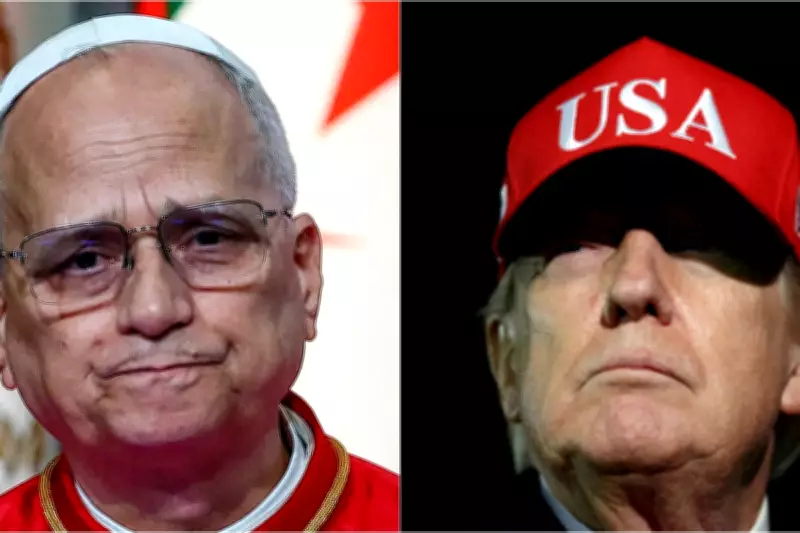
President Donald Trump has launched fresh criticism against Pope Leo XIV, characterising him as "WEAK" on crime and "terrible" on foreign policy. This latest exchange marks just the most recent episode in a decade-long series of clashes between the American president and leaders of the Catholic Church.
Latest Exchange Over Nuclear Policy and Crime
In Truth Social posts on Sunday night, Trump claimed the pope "thinks it's OK for Iran to have a Nuclear Weapon" and suggested Leo was elected "because he was an American, and they thought that would be the best way to deal with President Donald J. Trump." These comments came in response to Pope Leo's earlier criticism of Trump's warning about Iran, which the pontiff described as "truly unacceptable" and driven by a "delusion of omnipotence."
While addressing the comments during a Monday morning flight to Algiers, Pope Leo stated, "I don't want to get into a debate with him" and emphasised he has no fear of the Trump Administration. This diplomatic response contrasts sharply with Trump's aggressive social media rhetoric.

Pattern Extends Beyond Current Pontiff
The current dispute continues a pattern that began with Trump's predecessor, Pope Francis. Their relationship was marked by fundamental disagreements over migration policies from the very beginning. In 2016, Francis stated that anyone building walls to keep out migrants was "not Christian," a comment Trump labelled "disgraceful."
Trump responded at the time by blaming Mexico for influencing the pope's remarks and defending his proposed immigration policies. He wrote, "For a religious leader to question a person's faith is disgraceful. I am proud to be a Christian and as President I will not allow Christianity to be consistently attacked and weakened."
Broader Policy Disagreements
Beyond migration, Pope Leo has criticised other aspects of Trump's administration. Following the U.S. capture of Venezuelan leader Nicolás Maduro in January, the bishop of Rome decried what he called a "diplomacy based on force" and warned of a "new Orwellian-style language" fuelling hyper-partisanship.
Last September, Leo questioned whether hardline immigration policies aligned with the Church's pro-life teachings, stating, "Someone who says, 'I am against abortion but I am in agreement with the inhuman treatment of immigrants in the United States', I don't know if that's pro-life." He called for "deep reflection" about migrant treatment in America.
Political Consequences for Trump
Unlike Trump's turbulent relationships with other world leaders, a complete break with the pontiff could have significant political consequences. Trump's base relies considerably on conservative, religious voters, including Catholics. According to a Fox News national poll conducted 20-23 March, Trump's approval rating among Catholic voters is now underwater, with 48 percent approving and 52 percent disapproving of his presidential performance.
The effects of a fallout might even reverberate within his executive branch, where Catholics include Vice President JD Vance, the majority of the Supreme Court, and Press Secretary Karoline Leavitt, who is known to regularly pray with her staff before briefings.
Historical Context and Future Implications
Trump initially welcomed Leo's election to the papacy as a "great honour" for the U.S., but their relationship has deteriorated rapidly. The pattern of disputes—spanning migration, foreign policy, and religious values—suggests fundamental differences in worldview between the American president and Vatican leadership.
As the 2026 political landscape evolves, this escalating feud could influence both domestic politics and international diplomacy, particularly given the Catholic Church's global influence and Trump's reliance on religious conservative voters.