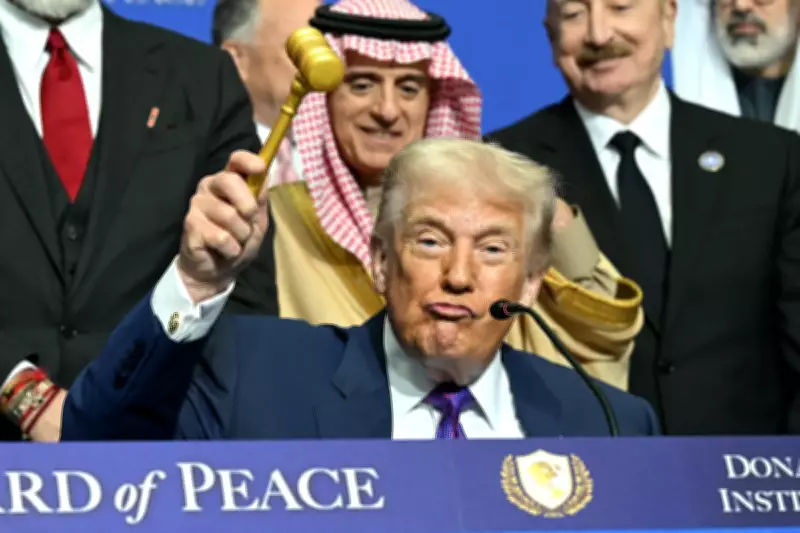
Trump's Board of Peace Debut: $7 Billion Gaza Pledge Amid Iran Tensions
U.S. President Donald Trump convened the inaugural meeting of his newly established Board of Peace in Washington on Thursday, announcing a significant international commitment of $7 billion towards a Gaza reconstruction fund. This ambitious initiative aims to rebuild the war-torn enclave, which has endured two years of devastating conflict, but it remains critically dependent on the disarmament of Hamas—a condition that currently appears far from being realised.
International Contributions and Funding Shortfalls
The substantial $7 billion sum for Gaza's recovery was reportedly pledged by a coalition of nations, including Kazakhstan, Azerbaijan, the United Arab Emirates, Morocco, Bahrain, Qatar, Saudi Arabia, Uzbekistan, and Kuwait. In a further announcement, President Trump declared that the United States would contribute an additional $10 billion to the Board of Peace, though he provided no details regarding the source of these funds or whether congressional approval would be sought.
Additional pledges included $75 million from FIFA for football-related projects in Gaza and $2 billion from the United Nations for humanitarian assistance. Despite these commitments, the total figures fall dramatically short of the estimated $70 billion required to comprehensively rebuild Gaza, highlighting the immense scale of the devastation and the challenges ahead.

Board Membership and Geopolitical Dynamics
The Board's membership is predominantly composed of Middle Eastern nations, alongside leaders from outside the region who may be seeking to cultivate favour with the Trump administration. Notably, some key Western allies, expressing concerns about the initiative's scope and implications, are absent from the roster. While Israel holds a membership position, Palestinian representatives are not included, raising questions about the inclusivity and effectiveness of the peace-building efforts.
President Trump's suggestion that the Board's remit could extend beyond Gaza to address other global "hotspots" has sparked anxiety among international observers, who fear it might undermine the established role of the United Nations in global diplomacy. Despite these concerns, Trump asserted, "We're going to strengthen the United Nations," even as the United States continues to face arrears in its payments to the global body. Norway, initially cited by Trump as a potential host for a Board event, later clarified that it would not be joining the initiative.
International Stabilisation Force and Security Plans
A significant component of the reconstruction plan involves the deployment of an International Stabilisation Force to Gaza. President Trump stated that several nations are preparing to send thousands of troops, with Indonesian President Prabowo Subianto announcing a contribution of up to 8,000 personnel. This force, to be led by a U.S. general with an Indonesian deputy, is intended to begin operations in Israeli-controlled areas, starting with Rafah, with the primary objective of training a new police force.
The ultimate goal, according to Trump, is to prepare 12,000 police officers and deploy a total of 20,000 troops to ensure stability and security in the region. This military component underscores the complex interplay between reconstruction efforts and ongoing security challenges.
The Critical Issue of Hamas Disarmament
The disarmament of Hamas remains a critical and highly contentious issue at the heart of the Board of Peace's agenda. President Trump expressed hope that force would not be necessary, claiming that Hamas had promised to disarm and "looks like they're going to be doing that, but we'll have to find out." However, Israeli Prime Minister Benjamin Netanyahu issued a stark warning, stating, "Very soon, Hamas will face a dilemma - to disarm peacefully or disarmed forcefully."
In Gaza, Hamas spokesperson Hazem Qassem indicated that any international force must "monitor the ceasefire and prevent the (Israeli) occupation from continuing its aggression," adding that disarmament could be discussed without a direct commitment. Hamas, which has resumed administration of the enclave, claims it is ready to hand over to a U.S.-backed committee of Palestinian technocrats, but alleges that Israel has blocked their entry into Gaza.

Heightened Tensions with Iran and Political Theatre
The Board of Peace meeting unfolded against a backdrop of significantly heightened tensions with Iran. Even as President Trump presented himself as a proponent of peace, he maintained a hawkish stance towards Tehran, stating he expected to know within 10 days whether a "meaningful deal" to end the standoff was possible. This dual approach of promoting peace in Gaza while escalating threats against Iran highlights the complex geopolitical landscape.
The event itself reportedly bore the hallmarks of a Trump campaign rally, complete with blaring music from his eclectic playlist and attendees receiving red Trump hats, blending political theatre with diplomatic proceedings.
Path Forward and No Plan B
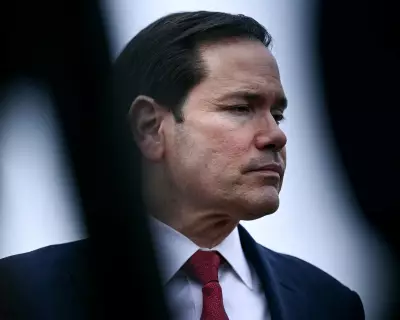
U.S. Secretary of State Marco Rubio underscored the gravity of the situation, stating, "We have to get this right. There is no plan B for Gaza. Plan B is going back to war. No one here wants that." The path forward for the Board of Peace presents considerable challenges, particularly regarding the disarmament of Hamas, the mobilisation of sufficient reconstruction funds, and navigating the broader geopolitical tensions with Iran.
As the initiative moves forward, the international community will be closely watching to see whether the Board of Peace can translate its ambitious pledges into tangible progress on the ground, or whether it will become another chapter in the long and troubled history of Middle East peace efforts.