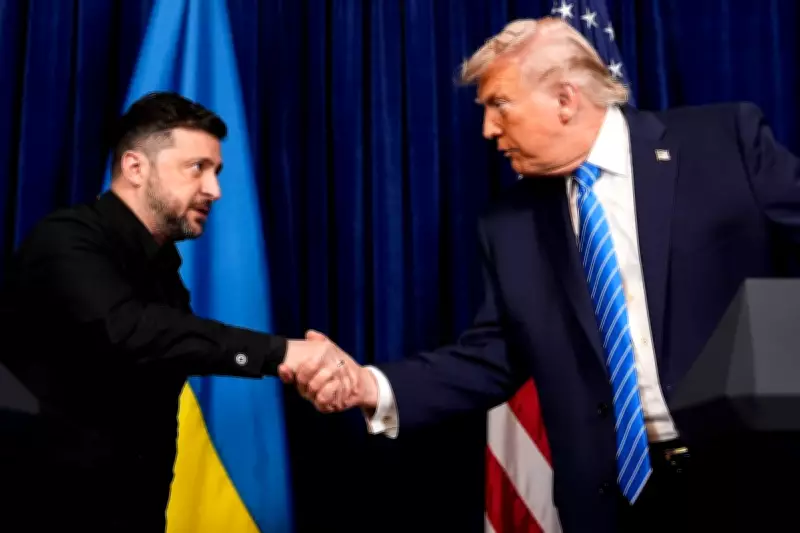
As the fourth anniversary of Russia's full-scale invasion of Ukraine draws near, the peace process mirrors the grinding stalemate on the battlefield. Negotiations in Geneva, brokered by the United States with apparent bias toward Moscow, ended abruptly after just two hours, marked by acrimony and tension. Neither side appears close to victory, yet both are determined to avoid being seen as losing.
Diplomatic Tensions and Trump's Approach
Ukrainian President Volodymyr Zelensky has described the situation as "difficult," echoing Russian characterisations of "very tense" conditions. In a notable departure from his typically restrained public comments on the Trump administration, Zelensky openly criticised President Trump's handling of the peace talks as "not fair." This remark signals a serious rift in US-Ukraine relations, stemming from Trump's appointment of known Putin sympathisers to the American delegation, including envoys Steve Witkoff and Jared Kushner.
Territorial Disputes and Strategic Stakes
The core issue remains territory, particularly the Donbas region, which Russia seeks for prestige and strategic advantage in any future advance toward Kyiv. Ukraine cannot cede the land it still controls, creating an intractable deadlock. Zelensky's criticism of Trump's unfairness, while justified, risks antagonising the US president, potentially leading to a withdrawal of remaining American support, such as intelligence sharing and equipment sales via European allies.

In a worst-case scenario, Trump might fully pivot toward Moscow by lifting trade and diplomatic sanctions, aiming to normalise relations. To counter this, Zelensky has taken the unconventional step of inviting British and French representatives to the peace conference, seeking alternative diplomatic avenues.
Europe's Role and Challenges
European nations must step up to replace US support with robust arms supplies and meaningful security guarantees. However, the European Union has proven ineffective due to its reliance on Russian hydrocarbons and internal dissent. Hungary and Slovakia have shown willingness to veto anti-Russian measures, while Poland, despite its defiance of Putin, refuses to commit troops to Ukraine over fears of weakening its own defences.
Across the continent, a combination of complacent electorates, populist politicians, and frugal finance ministries hinders efforts to rearm and adequately support Ukraine. This lack of unity threatens to prolong the conflict and undermine Ukraine's chances of success.
Path to Victory and Regional Implications
Contrary to Trump's scepticism, Ukraine can win this war by exhausting Russian forces, making further progress unsustainable and forcing genuine peace negotiations. Intelligence suggests Russia may struggle to sustain monthly battlefield casualties exceeding 30,000 indefinitely, especially if the Kremlin avoids politically sensitive recruitment in major cities like Moscow and St Petersburg.
The Russian economy is under significant pressure, with rising living costs and military expenditures posing long-term challenges. Historically, smaller powers like Japan and Finland have humbled Russia, demonstrating that victory is achievable. While Putin currently relies on Chinese support, this alliance may not be unconditional or permanent.
The EU, as a far more valuable trading partner than Russia, could leverage its economic influence to advantage. By providing advanced weaponry such as air defence systems, drones, and long-range rockets, European leaders could empower Ukraine to secure a decisive victory. Failure to act promptly, however, risks enabling Putin to overcome Ukraine and advance toward further targets, threatening continental domination.
Future generations may struggle to comprehend why so little was done to prevent this outcome, making urgent and coordinated European action imperative.