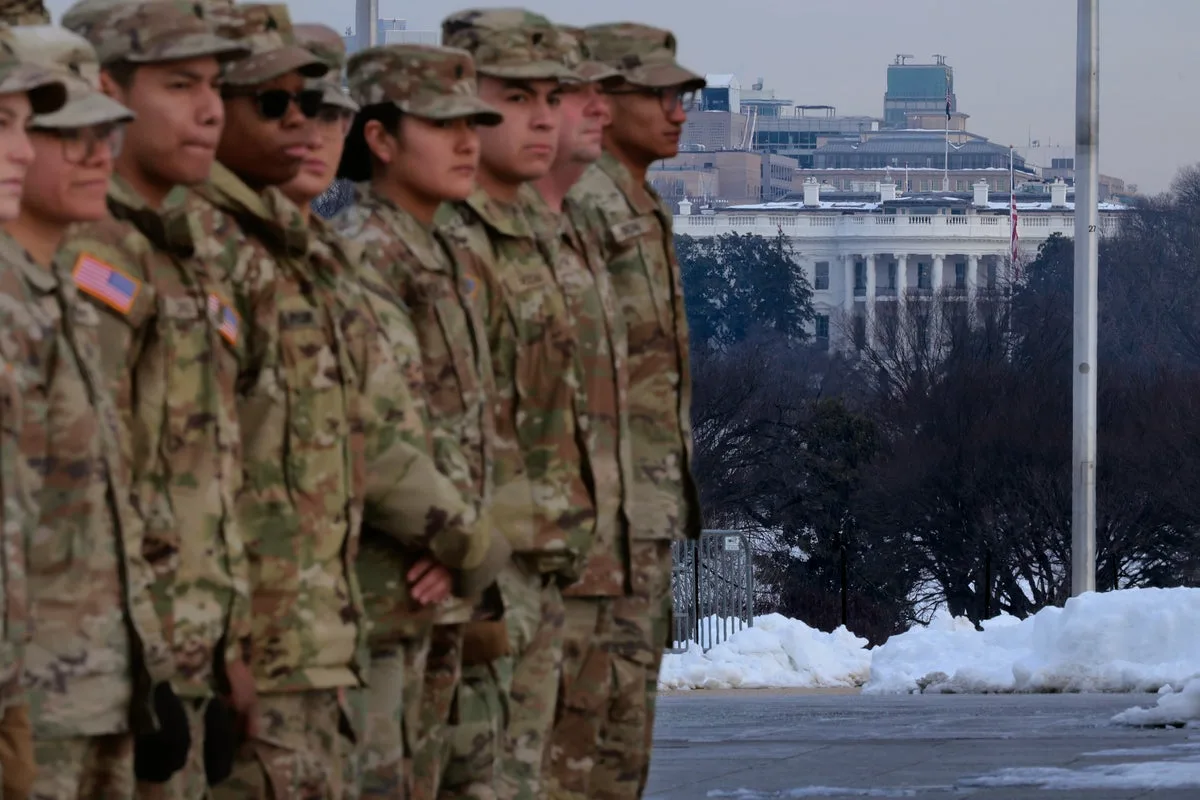
Donald Trump has refused to rule out sending American ground troops into Iran after launching a major bombing campaign that the president says could last weeks or longer. Speaking to The New York Post, Trump said he does not have the “yips” when it comes to committing US forces to war, while Defence Secretary Pete Hegseth told reporters the administration would not be “dumb about it”. Neither leader, however, has excluded the possibility of boots on the ground in a conflict that experts warn could escalate into a wider regional war.
Without clear objectives and with dubious justifications, the administration is seeking “regime implosion” fuelled by Trump’s “wishful thinking” that a relentless military campaign will allow the Iranian people to fill a power vacuum, according to Trita Parsi, co-founder of the Quincy Institute for Responsible Statecraft. “The difficulty the administration is having is not necessarily that they don’t have that goal — it’s that they can’t find a justification for it,” Parsi said. “They’re grasping at straws.”
The administration has struggled to define its objectives, with Hegseth declaring the conflict is not a “regime change war” while Trump says the goal is “freedom for the people”. Middle East experts have compared the post-attack justifications to the run-up to the Iraq War. “Back then, we were sold a bill of goods: fabricated intelligence about weapons of mass destruction, dire warnings of mushroom clouds over American cities, and assurances that toppling Saddam Hussein would be quick, cheap and transformative for the region,” said US Army veteran Naveed Shah, political director for Common Defense.
Kelsey Davenport, director for nonproliferation policy at the Arms Control Association, said there is “no evidence to justify military strikes based on the grounds of nuclear weaponization”. Iran’s ballistic missile capacity does not pose an imminent threat to the US, and there is no evidence Iran is enriching uranium to weapons-grade levels. “Iran’s nuclear program cannot be bombed away, Iran’s nuclear knowledge cannot be bombed away, and even if there’s regime change, Iran’s program will still pose a proliferation risk,” she said.
Secretary of State Marco Rubio claimed the strikes were in response to an “imminent threat” and described the campaign as preemptive. “We were not going to sit there and absorb a blow before we responded,” he said. But Davenport warned the administration has put itself in a position where nuclear scientists and materials could end up in the wrong hands without boots on the ground to secure them. Experts say Trump’s mission to target both Iran’s missile program and its proxies in Lebanon, Yemen, Iraq and Syria would necessarily require ground troops. “The entire premise of doing this entirely without any boots on the ground to achieve these objectives is just fantasy at this point,” Shah said.