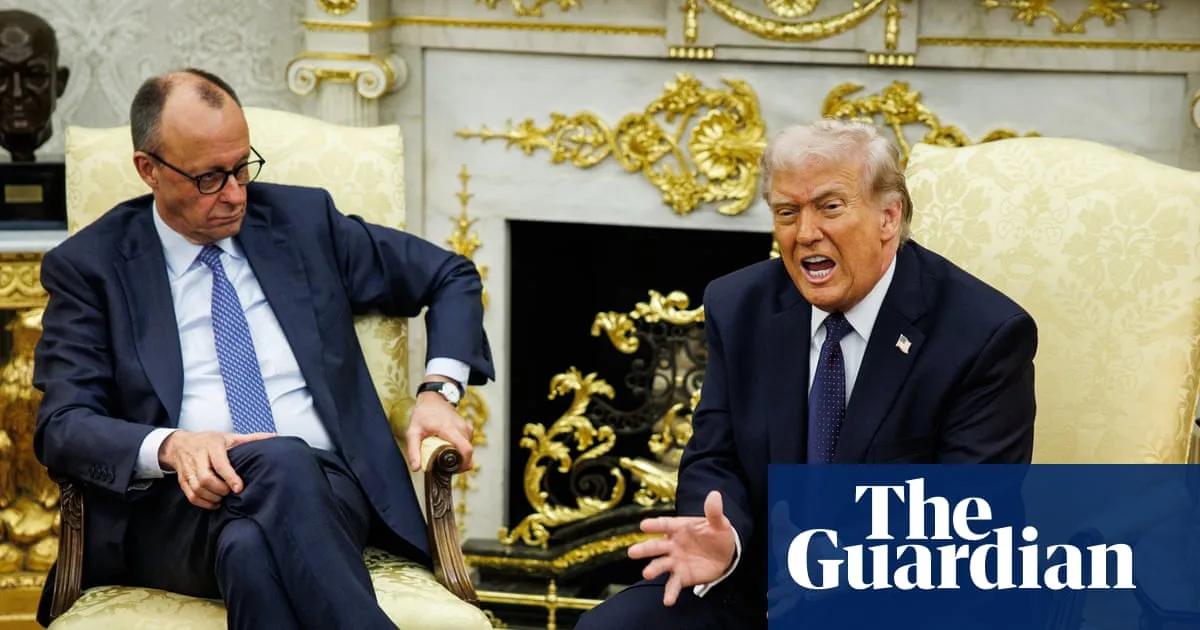
During a press conference at the Oval Office with German Chancellor Friedrich Merz, former US President Donald Trump addressed the aftermath of the assassination of Iran's supreme leader, Ayatollah Ali Khamenei. Trump highlighted his primary apprehension regarding the ongoing US-Israeli military campaign against Iran, suggesting that the worst outcome would be a regime change resulting in leadership equally oppressive as the previous administration.
Trump's Concerns Over Iran's Future Leadership
When questioned about the potential risks following Khamenei's assassination, Trump admitted that while he is confident in the superior military strength of the US and Israel, his biggest fear is that Iran's next leader could be "as bad as the previous person." He elaborated, "I guess the worst case would be we do this and then somebody takes over who's as bad as the previous person, right? That could happen. We don't want that to happen. It would probably be the worst." Trump emphasized the desire for a new government that would benefit the Iranian people, rather than perpetuate repression.
Caution Advised Amidst Security Threats
Trump urged caution for Iranians considering protests against the regime, warning that it remains "very dangerous out there" due to the persistent state security apparatus. He stated, "We'll see what happens with the people. You know, they have their chance. And we've said, don't do it yet. If you're going to go out and protest, don't do it yet." This advice comes after Trump previously called for mass uprisings against the Iranian government.
Disputes with European Allies
Trump also turned his attention to Europe, particularly criticizing Spain for refusing to allow US forces to use jointly operated bases in southern Spain for strikes on Iran. He threatened to sever all trade relations with Spain, declaring, "Spain has been terrible. We're going to cut off all trade with Spain. We don't want anything to do with Spain." This threat followed Spain's assertion that the bases are sovereign and operate under treaty agreements, with Foreign Minister José Manuel Albares downplaying any potential consequences.
Spain's Response and NATO Spending Criticisms
Spanish government sources countered Trump's remarks, highlighting Madrid's significant contributions to European defence and its role as a key trade partner. They stressed that any review of the relationship must respect international law and bilateral agreements. Additionally, Trump attacked Spain for not meeting NATO's proposed defence spending target of 5% of GDP, a criticism echoed by Chancellor Merz during the conference.
Comments on the UK and Broader Geopolitical Issues
Trump expressed dissatisfaction with the United Kingdom, criticizing Prime Minister Keir Starmer for delays in allowing US forces to use UK bases, remarking, "I'm not happy with the UK. It's taken three, four days for us to work out where we can land. This is not Winston Churchill that we're dealing with." Meanwhile, Merz, the first European leader to visit Trump since the conflict began, focused on common ground regarding Iran while redirecting discussions to Ukraine's security as a priority for Europe.
Merz's Diplomatic Approach
Chancellor Merz avoided direct criticism of Operation Epic Fury and instead emphasized alignment with Trump on removing the Iranian regime. He stated, "We are on the same page in terms of getting this terrible regime in Tehran away. And we will talk about the day after, what will happen then if they are out." Merz also underscored the importance of addressing the war in Ukraine, noting, "There are too many bad guys in this world, actually. And this is an issue we have to talk about because we all want to see this war coming to an end as soon as possible."
Overall, Trump's remarks at the press conference revealed deep concerns about potential outcomes in Iran, alongside escalating tensions with European allies over military cooperation and trade policies.




