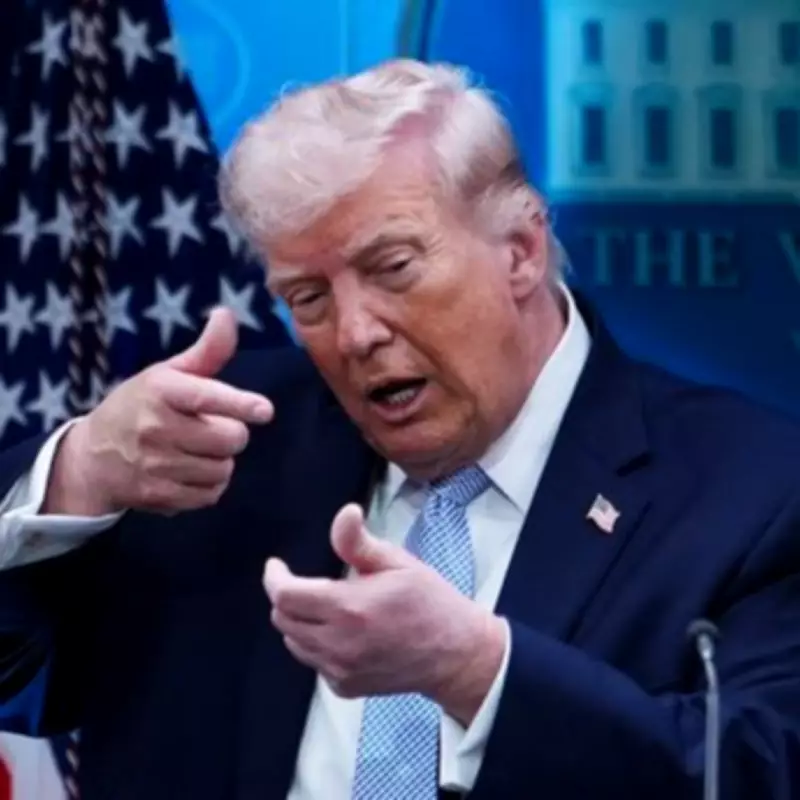
Former President Donald Trump has issued a stark warning that American warships are actively "reloading" with advanced weaponry, poised to resume military strikes against Iran should crucial peace talks fail within the next 24 hours. In an exclusive interview with the New York Post, Trump stated, "We're going to find out in about 24 hours. We're going to know soon," regarding the success of upcoming negotiations in Islamabad, Pakistan.
Cryptic Social Media Post Precedes High-Stakes Diplomacy
The interview follows a cryptic message Trump posted on his Truth Social platform, declaring "WORLD'S MOST POWERFUL RESET!!!" Elaborating, Trump explained, "We have a reset going. We're loading up the ships with the best ammunition, the best weapons ever made - even better than what we did previously and we blew them apart." He emphasised the preparedness, adding, "But we're loading up the ships. We're loading up the ships with the best weapons ever made, even at a higher level than we use to do a complete decimation. And if we don't have a deal, we will be using them, and we will be using them very effectively."
Regional Tensions Threaten Fragile Ceasefire
This development unfolds against a backdrop of extreme regional instability. The ceasefire in Iran remains precarious as Vice President JD Vance travelled to Pakistan for high-level discussions with Iranian officials. Concurrently, Israel and Hezbollah continued to exchange fire, while Tehran maintains its strategic control over the vital Strait of Hormuz, through which 20% of the world's traded oil once passed.

Multiple factors jeopardise the truce and the broader negotiations aimed at establishing a permanent peace. Iran's semiofficial Tasnim news agency, affiliated with the Revolutionary Guard, asserted that Saturday's talks would be cancelled unless Israel halts its attacks in Lebanon. Trump further criticised Iran, stating the nation was "doing a very poor job" by restricting maritime traffic through the strait.
Escalating Violence and Diplomatic Maneuvers
Kuwait reported being targeted by seven drone attacks since Thursday, attributing them to Iran and its regional militia allies, though the Guard denied responsibility. As preparations for the US-Iran talks advanced, with Vance en route to Islamabad, security forces locked down key areas of the Pakistani capital.
Simultaneously, negotiations between Israel and Lebanon are scheduled to begin next week in Washington D.C., according to anonymous US officials. Before his departure, Vice President Vance expressed cautious optimism, stating he believes negotiations with Iran will be "positive," but warned, "If they're going to try and play us, then they're going to find that the negotiating team is not that receptive."
Strait of Hormuz: A Critical Economic Chokepoint
Iran's blockade of the Strait of Hormuz has triggered severe global economic repercussions, sending oil prices soaring and destabilising financial markets. The spot price for Brent crude reached approximately $97, marking a more than 30% increase since the conflict began. Prior to the war, over 100 ships transited the strait daily; the ceasefire has seen only 12 passages recorded.
Trump vocally condemned the situation, posting on social media, "Iran is doing a very poor job, dishonorable some would say, of allowing Oil to go through the Strait of Hormuz. That is not the agreement we have!" regarding the limited maritime traffic.
Human Cost and Unresolved Issues
The human toll continues to mount. An Iranian officer reported over 3,000 fatalities in Iran, though the government has not provided an official death toll. In Lebanon, more than 1,888 people have been killed and one million displaced, with additional casualties in Gulf states, the West Bank, and Israel, including thirteen US service members.
Substantial questions persist regarding Iran's missile and nuclear programs. The US insists Iran must never develop nuclear weapons and demands the removal of Tehran's stockpile of highly enriched uranium. Iran maintains its nuclear ambitions are purely peaceful. Trump has indicated the US would cooperate with Iran to remove the uranium, though Tehran has not confirmed any such agreement.

In a related development, Ukrainian President Volodymyr Zelenskyy revealed that Ukrainian forces successfully shot down Iranian-designed Shahed drones in several Middle Eastern countries during the conflict, using domestically produced interceptor drones as part of efforts to assist regional partners.