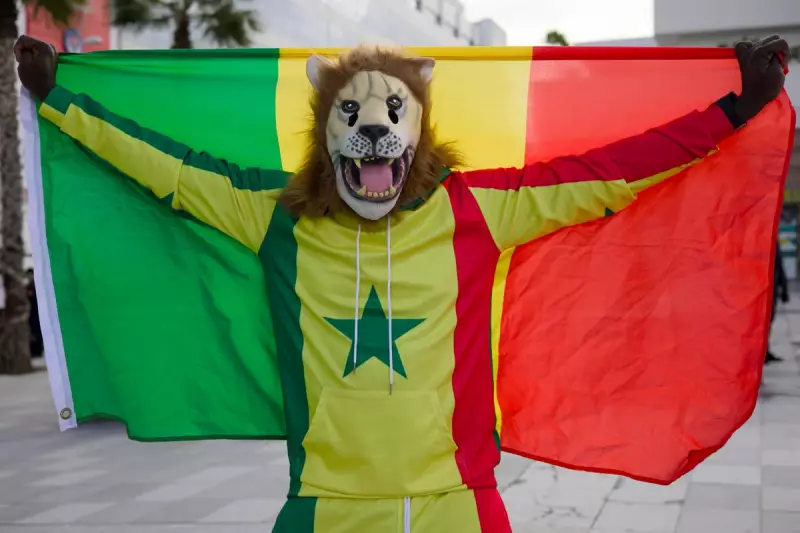
Supporters from two of Africa's footballing powerhouses face the crushing disappointment of being unable to follow their teams to the 2026 World Cup, following the reinstatement of a controversial travel ban by the Trump administration.
Fans' Dreams Dashed by Visa Restrictions
Plans for passionate followers of Senegal and Ivory Coast have been thrown into disarray after both nations were added to a list of countries facing partial US entry restrictions in December. The policy effectively bars fans who do not already possess visas from travelling to the United States, which is co-hosting the tournament with Canada and Mexico from June 11 to July 19.
The news has caused dismay among supporters currently at the Africa Cup of Nations in Morocco. Senegal fan Djibril Gueye questioned the decision, telling the Associated Press, "I don’t know why the American president would want teams from certain countries not to take part. If that’s the case, they shouldn’t agree to host the World Cup."

President Donald Trump cited "screening and vetting deficiencies" as the rationale for the suspensions. While an exception is made for players, team officials, and immediate relatives, no such allowance exists for ordinary supporters. Fans from other qualified nations, namely Iran and Haiti, also face exclusion under the earlier iteration of the ban.
Teams and Supporters Hold Out Hope for a Solution
Both national teams face the prospect of playing key group stage matches in near-empty stadiums, supported only by expatriates or those with dual nationality. Senegal, having reached the Africa Cup semi-finals, is scheduled to play France on June 16 and Norway on June 20, both at MetLife Stadium in New Jersey.
Ivory Coast will open their campaign against Ecuador in Philadelphia on June 14. Their coach, Emerse Faé, remained optimistic, recalling that Ivorian fans overcame visa hurdles to reach the Africa Cup in Morocco. "I think things will be sorted out by the time of the World Cup," Faé stated. "Football is a celebration, and for me, it would be a real shame not to let our supporters come and experience this."
This sentiment was echoed by team captain Franck Kessie, who said finding a solution was a matter for politicians and football federations. However, winger Yan Diomande struck a pragmatic note, focusing the squad's attention on the pitch: "It’s OK for us, we can play without supporters. The most important thing is to win every game."
Beyond the Ban: The Prohibitive Cost of Attendance
The travel ban is not the only significant obstacle. Even for those eligible to travel, the exorbitant cost of World Cup tickets is a major deterrent. Ivorian supporter Tan Detopeu feared her team would have little backing in the US, telling the AP, "Even if there was no ban issue, I don’t think that many people would have gone to the World Cup either because it’s kind of expensive."
One Senegalese fan, who goes by Pape and holds French citizenship, said he would boycott the event "as a matter of political conviction" and due to the high prices, criticising organisers for ignoring the grassroots aspect of the sport.
With the tournament fast approaching, supporters like Fatou Diedhiou, president of a group of female Senegal fans, are left in an agonising wait. "Now we just wait because the World Cup isn’t here yet, maybe they’ll change their minds," she said. "We don’t know. We wait and see."