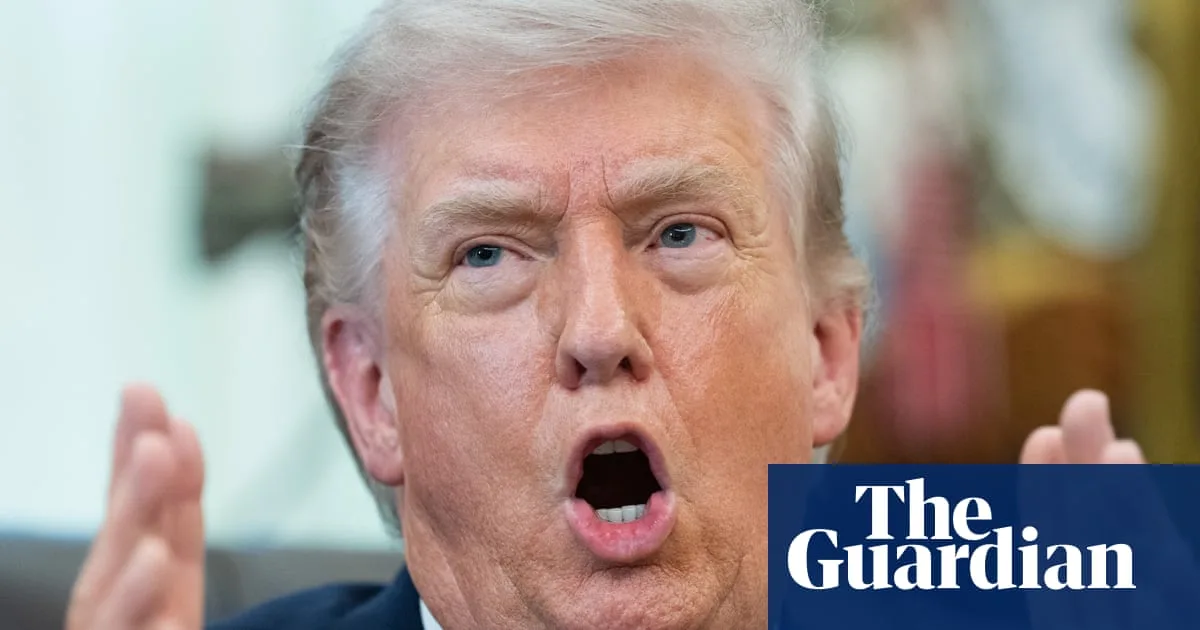
In a stark escalation of his long-standing criticism, former US President Donald Trump has issued a severe warning that he is strongly considering withdrawing the United States from the North Atlantic Treaty Organization (NATO). In an exclusive interview with The Telegraph, Trump declared that removing America from the 77-year-old military alliance is now "beyond reconsideration," intensifying his attack on what he describes as a "paper tiger" bloc.
Trump's Scathing Critique of NATO Allies
Trump expressed profound frustration with NATO's response to the ongoing war with Iran, which began in late February. The United States has reportedly made unsuccessful attempts to persuade its NATO allies to join the military conflict. A key point of contention is the alliance's reluctance to assist in reopening the Strait of Hormuz, a vital maritime chokepoint through which approximately 20% of the world's daily oil supply normally flows.
"I was never swayed by NATO. I always knew they were a paper tiger, and Putin knows that too, by the way," Trump stated, referencing Russian President Vladimir Putin. Since Iran established a blockade, the Strait has been effectively closed for weeks, causing global oil and gas prices to surge dramatically.
Accusations of Abandonment and Weakness
Trump's ire appears particularly directed at what he perceives as NATO's failure to reciprocate US support. "Beyond not being there, it was actually hard to believe. I just think it should be automatic," he remarked. He contrasted this with US actions in Ukraine, stating, "Ukraine wasn't our problem. It was a test, and we were there for them, and we would always have been there for them. [NATO] weren't there for us."
In a pointed criticism aimed at the United Kingdom, Trump accused the nation of being weak and questioned the operational readiness of the Royal Navy. "You don't even have a navy. You're too old and had aircraft carriers that didn't work," he claimed.
International Response and Diplomatic Moves
Shortly after Trump's incendiary comments, UK Prime Minister Sir Keir Starmer offered a robust defence of the alliance. He described NATO as "the single most effective military alliance the world has ever seen." However, Starmer also emphasized a cautious approach to the Middle East conflict, asserting, "This is not our war, and we're not going to get dragged into it."
Instead, the UK government announced it will host an international diplomatic conference this week focused on strategies to reopen the Strait of Hormuz. Starmer revealed that 35 countries have already signed a statement committing to collaborative efforts aimed at restoring maritime security to this crucial oil transport route.
Foreign Secretary Yvette Cooper is set to lead the conference, with military planners concurrently developing security plans for the post-conflict period. Starmer underscored the necessity of "a united front of military strength and diplomatic activity" to reestablish stability in the region.
Escalating Violence and Regional Attacks
The geopolitical tensions have been accompanied by a series of violent incidents across the Middle East. In northern Iraq, multiple drone attacks targeted a fuel warehouse in Irbil, the capital of the Kurdish region, linked to British energy giant BP through its subsidiary Castrol. The Sardar Group, which operates the facility, reported that the attacks started a massive fire, though no casualties were confirmed.
Further attacks were reported in Kuwait and Bahrain. A drone strike hit a fuel tank at Kuwait International Airport, igniting a large fire, while Bahrain authorities worked to extinguish a blaze at a business facility following an Iranian attack. An Indian citizen was also wounded by shrapnel during a drone interception in the United Arab Emirates.
Trump's Shifting Stance and Iranian Defiance
Trump's position on the Iran war has appeared inconsistent, oscillating between claims of diplomatic progress and threats to escalate military action. He expressed frustration with allies unwilling to bolster the US war effort, telling them bluntly to "go get your own oil." He suggested the US could conclude its offensive in Iran within two to three weeks and announced plans to shift responsibility for securing the Strait of Hormuz to the nations that depend on it for oil and shipping.
"We will not have anything to do with what happens next," Trump stated regarding the vital waterway, placing the onus on Gulf states that rely on it for exports, imports, and food security.
Iranian Foreign Minister Abbas Araghchi, in an interview with Al Jazeera, acknowledged receiving direct messages from US envoy Steve Witkoff but denied any direct negotiations were taking place. He asserted that Iran has "no faith" in talks with the US, declaring "the trust level is at zero." Araghchi dismissed the possibility of a US ground invasion, warning, "Very heavy casualties would await them," and accused Gulf states of using their populations as "human shields."
Supreme Leader's Vow and Israeli Strikes
Iran's new Supreme Leader, Ayatollah Mojtaba Khamenei, who has not been seen publicly since the war began, vowed in a statement to continue supporting anti-Israeli forces in the Middle East. His message, read on state television, reaffirmed Iran's policy of "continuing to support the resistance against the Zionist-American enemy." US and Israeli officials believe Khamenei was wounded and remains in hiding.
In a separate development, Israel claimed it struck a factory in Iran, alleging it supplied fentanyl for a chemical weapons program. Iran countered that the Tofigh Daru facility only produced "hospital drugs" for medical use. Both Israel and the US have previously warned about Iranian research into fentanyl-based munitions.
The White House has announced a prime-time presidential address for Wednesday evening concerning the war, as global leaders grapple with the escalating crisis and the potential ramifications of a US withdrawal from its foundational transatlantic security alliance.






