Former US President Donald Trump has once again raised the spectre of invoking a powerful and historic piece of legislation, the Insurrection Act of 1807, signalling a potential aggressive use of federal military power if he returns to office.
What is the Insurrection Act of 1807?
This foundational American law, enacted over two centuries ago, grants the sitting US president significant authority to deploy military forces within the country's own borders. Specifically, the Insurrection Act permits the president to use land or naval forces, including federalising a state's National Guard units, to suppress insurrections or to enforce federal law when state authorities are unable or unwilling to do so.
The Act functions as a critical exception to the Posse Comitatus Act of 1878, which generally prohibits the federal military from acting in a law enforcement capacity within the United States. The legal prerequisites for its use, however, must be strictly observed.

Trump's History and Recent Threats
Trump has suggested he would invoke this act on multiple occasions, both during his first term and in his current campaign for a second. His recent rhetoric has brought the law back into sharp focus.
In a statement made on Thursday 15 January 2026, Trump indicated he was waiting for "accurate" numbers of protesters killed in Iran before he would "act accordingly," though the direct connection to the Insurrection Act in this international context was not fully elaborated.
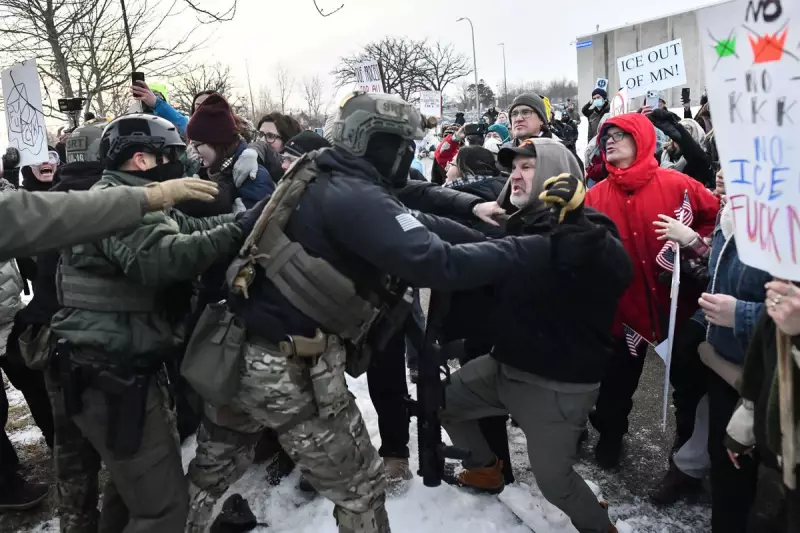
More directly, Trump has issued a domestic threat, warning that he would use the Act if the state of Minnesota does not stop what he described as "attacking ICE agents." This follows a precedent he set during his presidency. In October of a previous year, Trump told reporters he was "allowed" to send National Guard troops to Portland, Oregon, under the provisions of this very measure, showcasing his willingness to consider it for civil unrest.
Implications and Constitutional Scrutiny
The potential invocation of the Insurrection Act by any president is a momentous decision, fraught with political and constitutional consequences. It represents a dramatic federal intervention in state affairs and the use of the military for domestic policing, a concept that sits uneasily with American traditions of civil authority.
Legal scholars and political analysts closely watch such threats, as they test the boundaries of presidential power and the delicate balance between federal and state authority. Trump's repeated references to the act highlight its role as a potent symbol of executive power in modern political discourse.
As the political landscape evolves, the nearly 220-year-old Insurrection Act remains a powerful tool in the presidential arsenal, its potential use continuing to spark debate about law, order, and the limits of executive authority in the United States.