
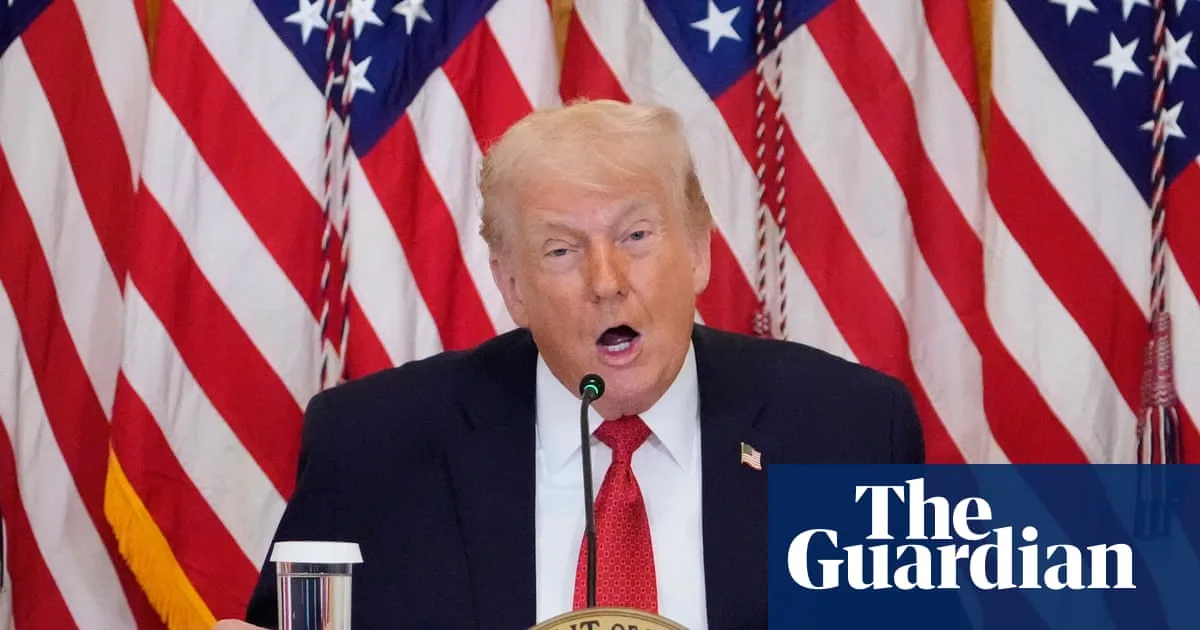
Donald Trump has threatened to impose tariffs on countries that do not “go along” with his plan to annex Greenland, intensifying pressure on European allies who have opposed his efforts to take over the Arctic territory. The US president raised the idea during a healthcare event at the White House on Friday, saying he might target countries that do not support his bid to acquire Greenland, which he described as a national security necessity.
Trump pointed to previous threats he made against France and Germany over drug pricing, recalling that he had warned them of 25 per cent tariffs if they did not pay more for prescription drugs. He suggested he could take the same approach with Denmark, saying he “may do that for Greenland too”.
His comments came after his special envoy to Greenland, Jeff Landry, said a deal for Washington to take over the island “should and will be made”. Landry, who plans to visit Greenland in March, told Fox News: “The president is serious. I think he’s laid the markers down.”
A bipartisan delegation of 11 US lawmakers travelled to Copenhagen to show solidarity with Denmark and Greenland against Trump’s threats. The group, including Republican senators Thom Tillis and Lisa Murkowski and Democrat senator Chris Coons, met Danish and Greenlandic leaders Mette Frederiksen and Jens-Frederik Nielsen. Speaking at a joint press conference, Coons thanked Denmark for “225 years of being a good and trusted ally and partner”, while Murkowski said the majority of Americans did not want a US takeover, adding: “Greenland needs to be viewed as our ally, not as an asset.”
Denmark announced it would provide support for Greenland’s emergency preparedness. Torsten Schack Pedersen, the Danish minister for public safety, said: “It is important that we stand together.” Meanwhile, Greenlanders in the capital, Nuuk, said they were so fearful of the US threat that they were monitoring the skies and seas themselves, with many left to devise their own emergency plans in the absence of official support.




