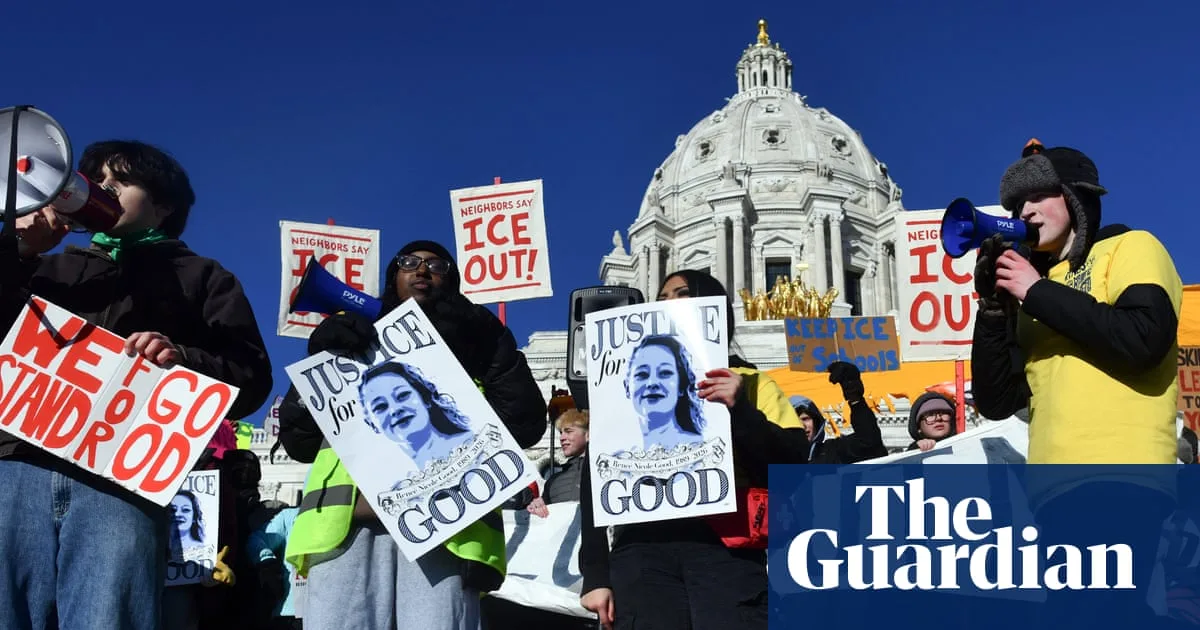
Former US President Donald Trump has issued a stark threat to resurrect a powerful and historic law, the Insurrection Act, escalating a bitter political dispute with officials in the state of Minnesota. The row centres on immigration enforcement and the role of federal agents.
The Core of the Conflict: ICE and State Authority
The confrontation stems from ongoing tensions between Trump and Minnesota's political leadership regarding the operations of Immigration and Customs Enforcement (ICE). While specific details of the latest provocation are still emerging, the former president's rhetoric signals a dramatic hardening of his stance. Trump's threat, made on 15 January 2026, explicitly targets what he calls a "travesty" in the state's approach to federal immigration law.
What is the Insurrection Act?
The Insurrection Act of 1807 is a formidable piece of legislation that grants the US President sweeping authority to deploy the military or federalise the National Guard within the United States to suppress civil disorder, insurrection, or rebellion. Its use is rare and highly controversial, as it bypasses the normal prohibition on using the military for domestic law enforcement. Trump's suggestion of invoking it against a state government represents an unprecedented escalation in federal-state relations over immigration policy.
Historically, the Act has been used during events like the Civil Rights era, but a threat to employ it in a policy dispute with a state is an extraordinary development. Legal experts are likely to scrutinise whether the conditions for its use could be legally met in this context.
Potential Ramifications and Political Fallout
This threat carries significant implications, both domestically and for observers in the UK assessing US political stability. The move could be seen as an attempt to assert ultimate federal dominance over resistant state authorities, setting a volatile precedent. It also intensifies the already heated national debate around immigration enforcement and states' rights.
For Minnesota politicians, the threat presents a direct challenge to their authority. The situation remains fluid as a breaking news story, with reactions from state governors and congressional leaders anticipated imminently. The prospect of a former and potential future commander-in-chief advocating for the use of military force in a domestic political dispute marks a serious moment in American politics.
The coming days will reveal whether this threat remains rhetorical or develops into a concrete constitutional crisis, testing the limits of presidential power and the resilience of the US's federal system.






