Senior Trump Official Cultivates Ties with Europe's Far-Right Movements
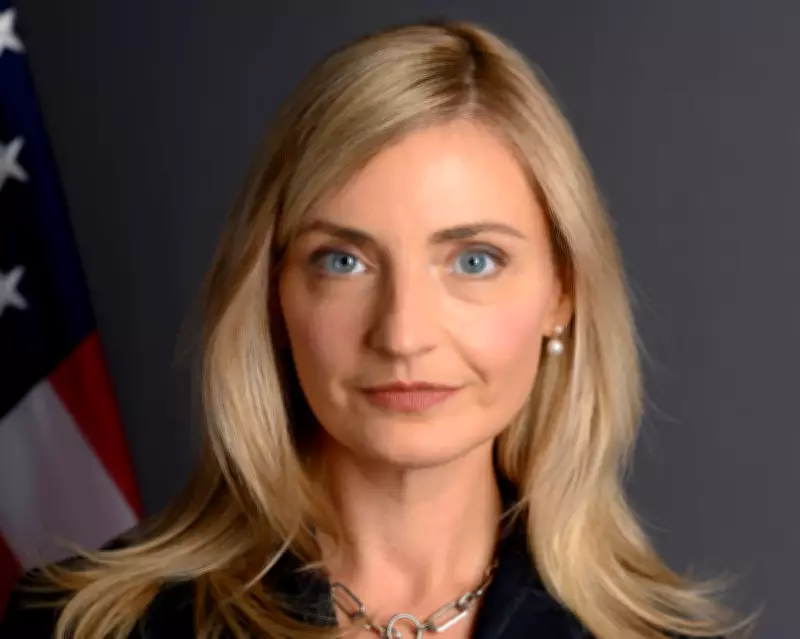
Sarah B. Rogers, the US Undersecretary of State for Public Diplomacy, has emerged as a prominent figure in the Trump administration's increasingly confrontational stance toward European liberal democracies. Since assuming her role in October, Rogers has engaged in a series of actions that critics argue are designed to bolster far-right political movements across the continent, marking a significant departure from traditional diplomatic norms.
Public Diplomacy with a Partisan Edge
The position of Undersecretary for Public Diplomacy was established in 1999 with the mission of fostering relationships between the American public and foreign populations. However, Rogers appears focused on appealing to a specific segment of foreign opinion. Her activity on social media platform X has included inflammatory rhetoric, such as characterizing certain migrants in Germany as a "barbarian rapist horde" and suggesting a link between Sweden's immigration policy and sexual violence.
When contacted by The Guardian for comment, Rogers defended her posts. Regarding the German migrants comment, she stated it was "reasonable" to describe the Cologne attackers in such terms and argued it "shouldn't be illegal to say." She clarified that her comment on Sweden was made in the context of debates about internet censorship, and by "official knowledge production," she referred to prestige media, academia, and key NGOs.

Building Bridges with the Alternative für Deutschland
Rogers has actively extended diplomatic overtures to Europe's far-right parties. In December, she met with Markus Frohnmaier, a parliamentarian from Germany's Alternative für Deutschland (AfD) party. Frohnmaier's social media post indicated the discussion centered on Washington seeking "a strong German partner." Rogers defended the meeting, stating Frohnmaier is the foreign policy spokesman for Germany's most popular political party and engaging with him is necessary to understand the AfD's positions.
This engagement occurs despite the AfD being designated as a "confirmed rightwing extremist" force by Germany's domestic intelligence agency, the BfV, a move criticized by senior Trump administration officials like Marco Rubio. Rogers' predecessor, Darren Beattie, who was fired from a previous Trump administration role after attending a white supremacist gathering, also met with Frohnmaier.
Amplifying Far-Right Narratives and Grievances
Rogers has used her platform to amplify narratives favored by far-right activists in the UK. In January, she commented on a Metropolitan Police decision regarding a march, posting, "As mass migration disrupts societies, liberal political freedoms lose out." The march was organized by UKIP, a party accused of Islamophobia.
She has also reposted content from figures like Jack Hadfield, a right-wing commentator whose arguments on immigration and crime have been criticized as based on disputed data. Hadfield was previously exposed as the administrator of a secret Facebook group containing racist and antisemitic material. Rogers stated she does not "excavate the undergraduate Facebook history of every reporter" she retweets.
Furthermore, Rogers has publicly defended individuals like Lucy Connolly, who served a prison sentence for stirring up racial hatred. On a podcast, Rogers characterized Connolly's inflammatory post as "unambiguously legal in the United States" and described her as a "bereaved mother."
Targeting the 'Censorship-Industrial Complex'
A key aspect of Rogers' role has been implementing visa sanctions against individuals she and Marco Rubio describe as part of a "censorship-industrial complex." In December, sanctions were announced against five individuals, including Imran Ahmed, CEO of the Centre for Countering Digital Hate (CCDH). Rogers accused Ahmed of collaborating with the previous Biden administration to "weaponize the government against U.S. citizens" and criticized European regulations like the Digital Services Act and the UK's Online Safety Act as efforts to "expand censorship."
Ahmed filed a lawsuit in response, naming Rogers as a defendant, and obtained a temporary restraining order against deportation. A Justice Department lawyer representing the administration has since moved to dispute the court's jurisdiction.

Expert Analysis: A Strategic Transatlantic Alignment
Academic observers interpret these actions as a deliberate strategy. Léonie de Jonge, a professor researching far-right extremism, stated the Trump administration has "a vested interest in strengthening anti-democratic movements abroad" to advance its own agenda and lend legitimacy to these actors.
Georgios Samaras, a lecturer in public policy, noted that Trump's "contempt for mainstream institutions" has hardened into a governing identity. He argues that warmth towards Europe's far right is a form of "culture export and power projection." Samaras suggests Rogers' outreach functions as a powerful form of legitimation for these parties and demonstrates a significant transatlantic alignment between the US and European far right, particularly poignant given Germany's historical context.
Samaras concludes that this approach represents an exportable version of a domestic political template: "Attack European governments, destabilise, cheer on the most reactionary forces, and you increase the odds of electoral change that benefits the far right." Through public statements, diplomatic meetings, and policy actions, Sarah B. Rogers is actively shaping a new, contentious chapter in US-European relations.