UK and France Forge International Coalition to Address Strait of Hormuz Crisis
Prime Minister Sir Keir Starmer and French President Emmanuel Macron are spearheading a coordinated international response to reopen the strategically critical Strait of Hormuz, following the implementation of Donald Trump's blockade against Iranian ports. The leaders have emphasized that any military mission to secure the waterway will only commence once hostilities between the United States and Iran have ceased.
Diplomatic Summit and Military Planning Underway
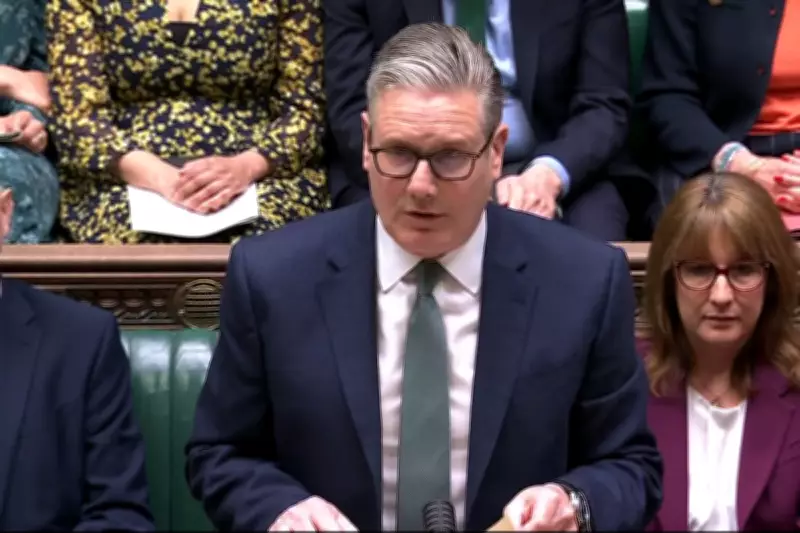
Speaking in the House of Commons, Sir Keir confirmed that the UK and France are leading both political and military preparations to restore unfettered access to the strait, which serves as a vital conduit for global oil and gas supplies from the Gulf region. He explicitly declined to endorse President Trump's blockade, instead advocating for guaranteed freedom of navigation.
"This is about safeguarding shipping and supporting freedom of navigation once the conflict ends," the Prime Minister told Parliament. He announced that a summit of world leaders scheduled for later this week will concentrate on diplomatic initiatives to achieve a "negotiated end to the conflict" and the reopening of what he described as a "running sore" for the international community.

President Macron echoed this stance, characterizing the proposed mission as "strictly defensive" and separate from the warring parties, intended for deployment "as soon as circumstances permit." The leaders are actively assembling an international coalition willing to contribute to efforts aimed at securing the strait.
Economic Fallout and Rising Tensions
The blockade has triggered immediate economic repercussions, with oil prices surging back to approximately $100 per barrel following the collapse of US-Iran negotiations. President Trump publicly threatened on his Truth Social platform to "immediately eliminate" any Iranian fast attack vessels that approach the US naval blockade, boasting about his previous actions against the Iranian navy.
In his Commons address, Sir Keir condemned President Trump's rhetoric as "wrong," particularly the threat to obliterate Iranian civilization. He also called for an immediate cessation of Israeli bombing in Lebanon, warning of its "devastating humanitarian consequences." The Prime Minister acknowledged the "significant" economic impacts of the conflict, which he predicted would outlast the hostilities themselves.
International Diplomacy and Domestic Concerns
Deputy Prime Minister David Lammy engaged in discussions with US Vice President JD Vance and Secretary of State Marco Rubio in Washington DC, emphasizing the UK's role in international endeavors to ensure unimpeded shipping through the strait. Meanwhile, President Trump asserted at an impromptu White House press conference that Iranian officials had expressed interest in negotiating a deal, while accusing Tehran of attempting to "blackmail or extort the world" through its control of the waterway.
The economic strain is already palpable domestically. Rising oil costs have driven up forecourt prices for motorists and increased operational expenses for businesses. Households face uncertainty over potential hikes in electricity and gas bills when the price cap expires in June. The Resolution Foundation think tank estimates that the average working-age household could be £480 worse off this year due to the conflict.
Sir Keir expressed profound concern about the war's impact on British citizens, stating, "I don't want them paying the price." When questioned about assigning blame for the economic damage, he attributed responsibility to Iran for restricting traffic through the Gulf in violation of international law, rather than directly faulting President Trump.
Iranian parliamentary speaker Mohammad Bagher Qalibaf, who led Tehran's negotiations with the US, issued a stark warning: "If you fight, we will fight." As the situation remains volatile, the international community watches closely, with the UK and France at the forefront of efforts to de-escalate tensions and restore stability to one of the world's most crucial maritime corridors.