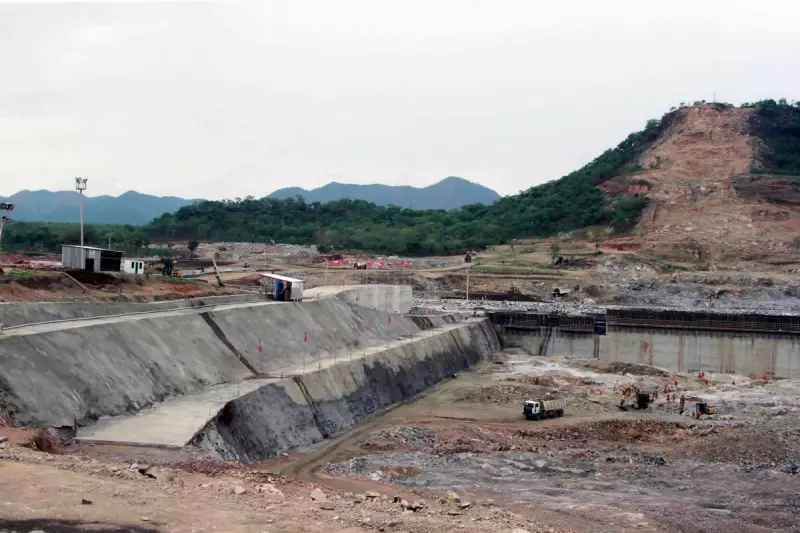
Egypt and Sudan have formally welcomed an offer from former US President Donald Trump to resume American mediation efforts in a protracted and highly sensitive dispute over a major dam on the Nile River. The move comes after years of stalled talks between the nations.
A Contentious Project on the Blue Nile
The core of the disagreement is the Grand Ethiopian Renaissance Dam (GERD), a $5 billion hydroelectric project that Ethiopia inaugurated last autumn. Situated on the Blue Nile near the Sudanese border, it is Africa's largest dam and is designed to generate over 5,000 megawatts, effectively doubling Ethiopia's electricity output. While Addis Ababa views the GERD as essential for development, providing power to millions, downstream nations hold grave concerns.
Egypt, a nation that is predominantly desert, relies on the Nile for almost all its fresh water, supporting a population of 110 million. Cairo has labelled the dam a "grave violation of international law" and an "existential threat," fearing it will drastically reduce the river's flow, with severe consequences for agriculture and other vital sectors. Sudan, meanwhile, seeks coordinated management of the dam's reservoir to protect its own water infrastructure from unexpected impacts.

Diplomatic Moves and Regional Reactions
The latest diplomatic movement began on Friday, 16 January 2026, when President Trump posted on social media a letter addressed to Egyptian President Abdel-Fattah el-Sissi. In it, he stated: "I am ready to restart U.S. mediation between Egypt and Ethiopia to responsibly resolve the question of 'The Nile Water Sharing' once and for all."
The offer was swiftly endorsed by leaders in Cairo and Khartoum. President el-Sissi responded via a social media post, valuing "President Trump’s attention to the central importance of the Nile River issue for Egypt." He affirmed Egypt's commitment to cooperation based on international law and expressed support for the renewed US efforts.
Similarly, General Abdel-Fattah Burhan, Chairman of Sudan's Sovereign Council, hailed Trump's initiative on X as a step toward finding "sustainable and satisfactory solutions that preserve everyone’s rights." There has been no immediate public comment from the Ethiopian government regarding the latest offer.
A Long-Standing Impasse and Key Sticking Points
Washington-led talks initially began during Trump's first term but effectively collapsed in 2020 when Ethiopia withdrew from the negotiations. Subsequent discussions under the auspices of the African Union have failed to produce a binding settlement.
The dispute now hinges on several critical technical and legal issues:
- The terms for filling the GERD's vast reservoir and its long-term operation.
- The amount of water Ethiopia would guarantee to release downstream during periods of prolonged drought.
- Establishing a clear mechanism for the three nations to resolve any future disagreements.
While Egypt and Sudan insist on a legally binding agreement, Ethiopia has thus far favoured non-binding guidelines. President el-Sissi has repeatedly stated that Egypt's share of Nile waters is "untouchable," yet he continues to advocate for a negotiated solution.
The re-engagement of the United States, a powerful external mediator, marks a significant new chapter in this complex regional issue. Whether it can break the years-long deadlock and reconcile Ethiopia's development ambitions with the water security fears of its neighbours remains the central question for the Nile Basin.