
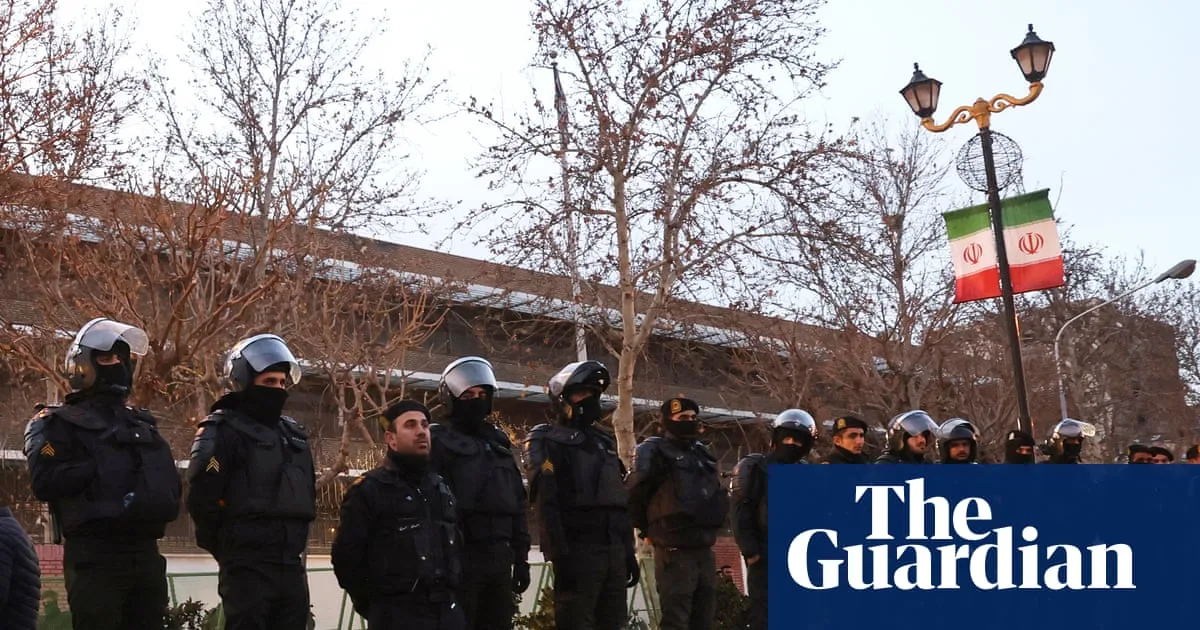
Donald Trump has temporarily pulled back from threats to strike Iran, saying he has been assured by Tehran that the killing of protesters has stopped and that no executions are planned. Speaking to reporters at the White House on Wednesday night, the US president said he had been told on “good authority” that lethal force against demonstrators had ceased, though he offered no evidence and said the claims had yet to be verified.
Mr Trump had spent recent days vowing to come to the aid of the Iranian people, warning that the US was “locked and loaded” if Iran fired on protesters. Despite reports that as many as 3,428 Iranians had been killed and that executions were imminent, he made no announcement of military action. It is understood he reviewed the full range of options but was unconvinced that any single strike would bring about a decisive change.
His decision followed strenuous lobbying by Middle Eastern leaders, who warned that strikes would almost certainly provoke Iranian counterstrikes on US bases. Israeli officials, who had braced for a possible American move, conveyed to Iran through Russia that Israel would not strike first if Iran did not, with Tehran reportedly reciprocating the understanding. The unrest, however, casts uncertainty over that informal arrangement.
According to reports, the Pentagon was preparing to stand down forces and allow troops to return to base by Wednesday evening, with one senior US military official describing the president’s remarks as “an off-ramp”. Long-range bombers that had been placed on alert for potential secondary strikes were quietly stood down by late afternoon, the New York Times reported.
Iran’s foreign minister, Abbas Araghchi, told Fox News that there was no plan to execute people in retaliation for the anti-government protests, saying “hanging is out of the question”. However, the judiciary chief, Gholam-Hossein Mohseni-Eje’i, was quoted as saying that if action were taken, it should be done quickly and at the right time. Erfan Soltani, the first protester sentenced to death since the unrest began, had been widely expected to be executed on Wednesday, but his family have been told the execution has been postponed.




