President Donald Trump has declared that he has been assured by "very important sources" that the Iranian regime has stopped killing protesters and will not carry out planned executions. The announcement comes amid intense international scrutiny over Tehran's violent crackdown on widespread unrest.
Diplomatic Assurances and Ongoing Tensions
Speaking at the White House, Trump stated, "They've said the killing has stopped and the executions won't take place." He added, "There were supposed to be a lot of executions today and that the executions won't take place – and we're going to find out." When questioned on whether threatened US military action was now off the table, the President replied that he would "watch it and see."
This claim was seemingly corroborated by Iranian Foreign Minister Abbas Araghchi, who told Fox News that executions were not taking place and there would be "no hanging today or tomorrow." In a significant development, the family of Erfan Soltani, the first protester sentenced to death since the current wave of demonstrations began, has been informed that his execution has been postponed.

International Response and Escalating Crisis
The international community is moving to address the situation. The United Nations Security Council is scheduled to meet for a briefing on Iran, a session requested by the United States. Concurrently, the G7 group of nations has warned it is "prepared to impose additional restrictive measures" on Iran over its handling of the protests, condemning the "deliberate use of violence, the killing of protesters, arbitrary detention and intimidation tactics."
On the ground, the crisis has prompted several nations to take precautionary steps. Some US and UK personnel have been evacuated from sites in the Middle East, and the British embassy in Tehran has been temporarily closed. Spain, Italy, and Poland have joined the United States in advising their citizens to leave Iran. The US had previously urged its citizens to depart, suggesting land routes to Turkey or Armenia.
Human Toll and Regional Uncertainty
The scale of the regime's response has been severe. According to the US-based Human Rights Activists news agency, the death toll in Iran stands at 2,571 people, with more than 18,100 arrested. Despite this, Foreign Minister Araghchi insisted the situation was "under control" and urged the US to engage in diplomacy, stating, "Now there's calm. We have everything under control, and let's hope that wisdom prevails."
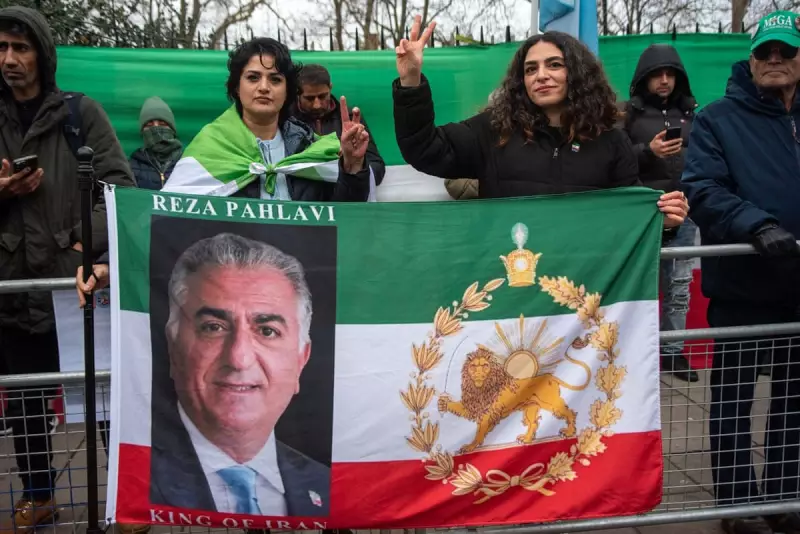
In other developments, Iran reopened its airspace after a near-five-hour closure that disrupted flights. Meanwhile, President Trump commented on Iranian opposition figure Reza Pahlavi, saying he "seems very nice" but expressing uncertainty about his potential support within Iran, remarking, "I don't know how he'd play within his own country."