
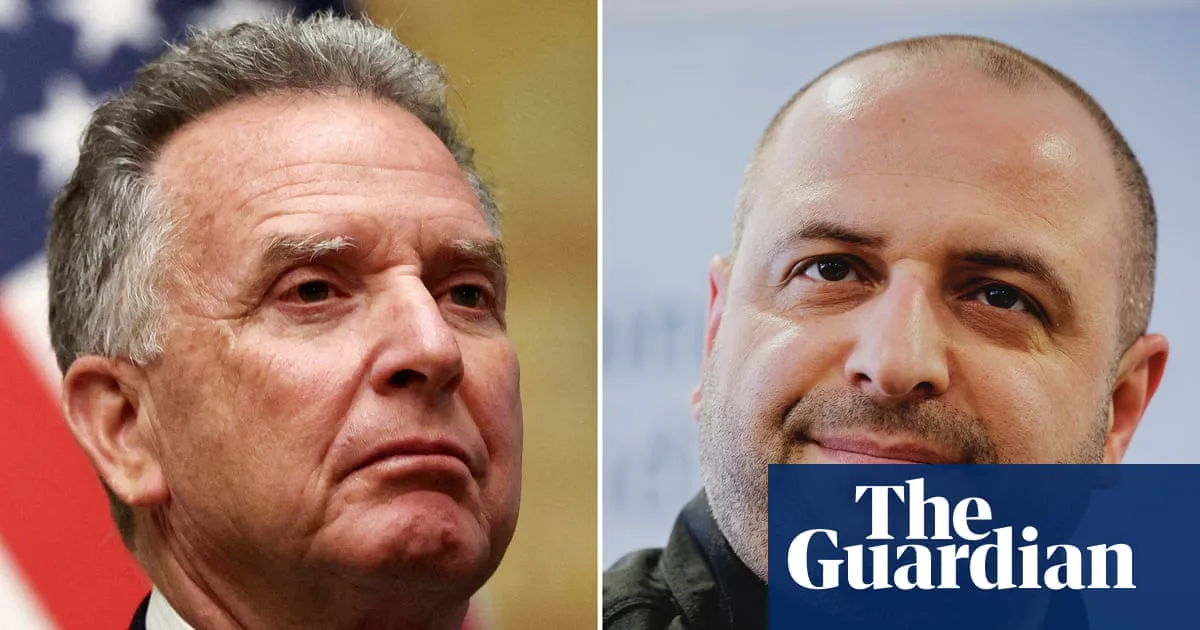
US special envoy Steve Witkoff is set to meet Ukraine's national security council chief, Rustem Umerov, in Miami on Thursday, as Washington intensifies diplomatic efforts to secure a peace deal in Ukraine. The meeting comes two days after Witkoff and Donald Trump's son-in-law Jared Kushner held five hours of talks with Vladimir Putin in Moscow, which Russia later said had not brought the sides closer to an agreement.
Trump described the Moscow discussions as 'reasonably good' but acknowledged the path ahead remained unclear. 'It does take two to tango,' he told reporters, adding that the US had 'something pretty well worked out' with Ukraine. However, Putin struck a belligerent tone on Thursday, telling India Today that Russia would seize full control of eastern Donbas by force unless Ukrainian troops withdrew—a demand Kyiv has rejected.
Ukraine's President Volodymyr Zelenskyy has ruled out giving up territory and said dialogue with Trump's representatives would continue. 'Only by taking Ukraine's interests into account is a dignified peace possible,' he said. Ukraine's foreign minister, Andrii Sybiha, urged Putin to 'stop wasting the world's time.'
Meanwhile, a leaked transcript of a high-level European call, published by Der Spiegel, revealed deep anxiety over Washington's role. Participants including Emmanuel Macron, Friedrich Merz, and Mark Rutte voiced fears that the US could abandon Ukraine. 'There is a possibility that the US will betray Ukraine on the issue of territory,' Macron warned. Merz urged Zelenskyy to be 'extremely careful,' adding: 'They are playing games, both with you and with us.'
Russia has sought to drive a wedge between Washington and European capitals, accusing European powers of trying to sink peace talks. European leaders, including UK foreign secretary Yvette Cooper, have accused Putin of feigning interest in peace. 'What we see is that Putin has not changed any course,' said Estonian foreign minister Margus Tsahkna. Nato's Rutte said Ukraine's partners would keep supplying military aid to maintain pressure on Moscow.




