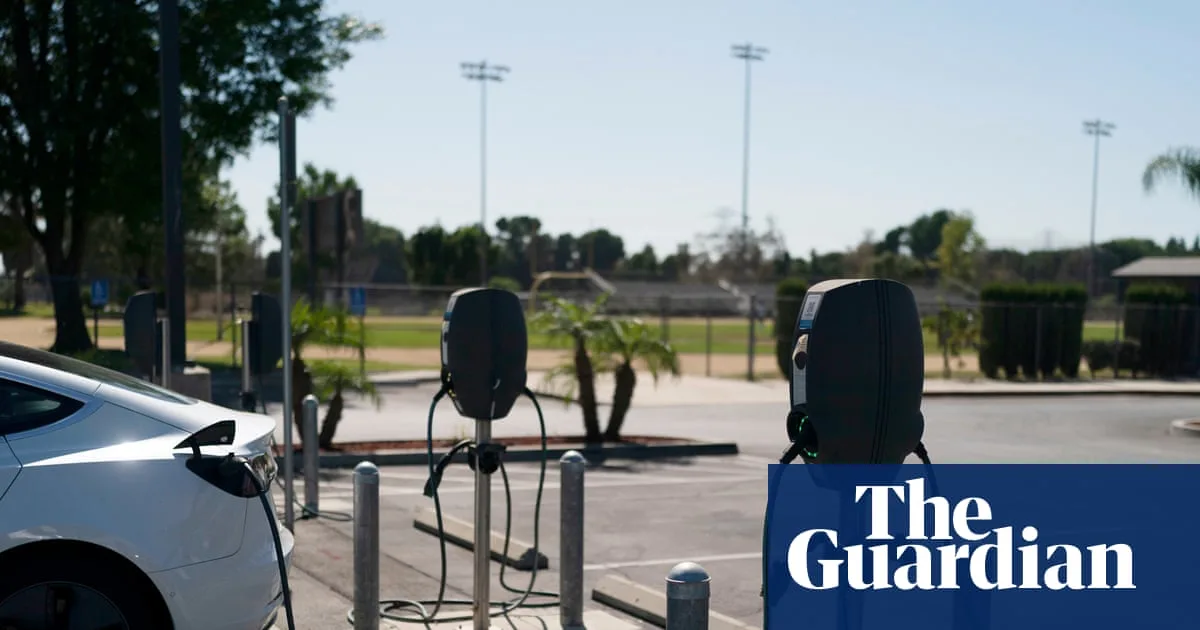
War-Driven Gas Price Surge Fuels Electric Vehicle Debate Among Drivers
Gas Price Spike from War Intensifies Electric Vehicle Consideration

War-Driven Gas Price Surge Fuels Electric Vehicle Debate Among Drivers

As the intensifying conflict in Iran and other global tensions disrupt oil supplies, gasoline prices are experiencing a sharp upward spike. This sudden increase has left many drivers across the nation questioning how long these elevated costs will persist and whether now is the time to transition to an electric vehicle.

Immediate Impact at the Pump

According to data from AAA, the national average price for a gallon of regular gasoline has jumped to $3.57 this week, a significant rise from $2.94 just one month ago. This volatility directly impacts drivers of traditional combustion engine vehicles, making their fuel costs highly susceptible to geopolitical instability.

"Electricity can go up, but it won't go up nearly as much as gas will and it won't go up nearly as fast, either," said Kevin Ketels, a 55-year-old assistant professor of global supply chain management at Wayne State University in Detroit. Ketels, who recently purchased an electric 2026 Chevrolet Blazer, noted his relief at no longer needing to fill his older gas-powered SUV.

The EV Insulation Argument

Experts highlight a key difference in how energy costs are transmitted to consumers. "Residential electricity prices are regulated and are much less volatile than gasoline prices," explained Erich Muehlegger, an economics professor at the University of California, Davis. "As a result, EV owners are largely unaffected by oil price shocks."

This regulatory framework typically sets electricity rates annually, shielding households from the month-to-month fluctuations seen in natural gas and oil markets. While electricity prices have been rising nationally due to factors like increased demand from data centers, the link to oil conflicts is less direct. "Is this the driver in electricity prices? I think probably not. But it's certainly a contributing factor," said Holt Edwards, a principal at Bracewell's Policy Resolution Group, referring to the inflationary pressure from the war.

Complex Grid Economics and Future Security

The cost of charging an electric vehicle also depends heavily on a local grid's energy mix, which can include natural gas, coal, nuclear, and renewables. "The energy component varies depending on the energy you're using and the price of the energy that you're using to generate electricity," said Pierpaolo Cazzola, an energy expert at Columbia University's Center on Global Energy Policy. He noted that price variation for this component is relatively smaller in the U.S. compared to other regions.

Persistent conflict could affect future electricity bills, strengthening the argument for a transition to cleaner power sources. "Clean power and electrification combined is what provides the most security," asserted Euan Graham, an analyst at the energy think tank Ember.

Consumer Response and Market Trends

Historical data suggests high gasoline prices correlate with increased consumer interest in electrified vehicles. Analysis from car-shopping resource Edmunds showed that for the week beginning March 2, following the outbreak of the Iran war, interest in hybrids, plug-in hybrids, and battery EVs accounted for 22.4% of all vehicle research on their site, up from 20.7% the previous week.

Similar surges were observed during the last major nationwide fuel price spikes in 2022. However, whether this interest translates into actual purchases depends on long-term savings expectations and vehicle affordability. The upfront cost remains a barrier; Kelley Blue Book reports the average price of a new EV was $55,300 last month, compared to $49,353 for all new vehicles.

Calculating the Long-Term Savings

Despite higher initial costs, the lifetime fuel savings for EV owners are substantial. "We're talking about thousands and thousands of dollars in savings," said Peter Zalzal, an attorney with the Environmental Defense Fund. "And as gas prices increase, those savings are only greater. Fuel costs are a big piece of overall vehicle costs, and increases in fuel prices have significant impacts on people."

Michael B. Klein, a 56-year-old software developer from Evanston, Illinois, has driven EVs for eight years. He values both the cost savings and environmental benefits, noting that improvements in grid efficiency, especially from added renewables, directly benefit him without needing a new vehicle.

Strategic and Policy Considerations

The debate extends beyond individual savings to national strategy. Some experts express concerns about supply chain dependence, particularly China's dominance in key EV components. Conversely, proponents like Professor Ketels argue that EVs and renewable energy represent a strategic priority, offering the potential for domestic production and reduced vulnerability to global market fluctuations.

Ketels criticized the withdrawal of federal incentives, stating, "I think it's been a terrible mistake to withdraw these incentives and to attack the sustainable energy industry. The war is just making it that much more obvious." Analysts like Graham suggest that a true "step change" would require governments to shift tax and tariff policies to further reduce fossil fuel dependence.

As gasoline prices remain elevated due to ongoing conflict, the calculus for drivers continues to evolve, weighing immediate pain at the pump against the long-term benefits and challenges of electric vehicle ownership.