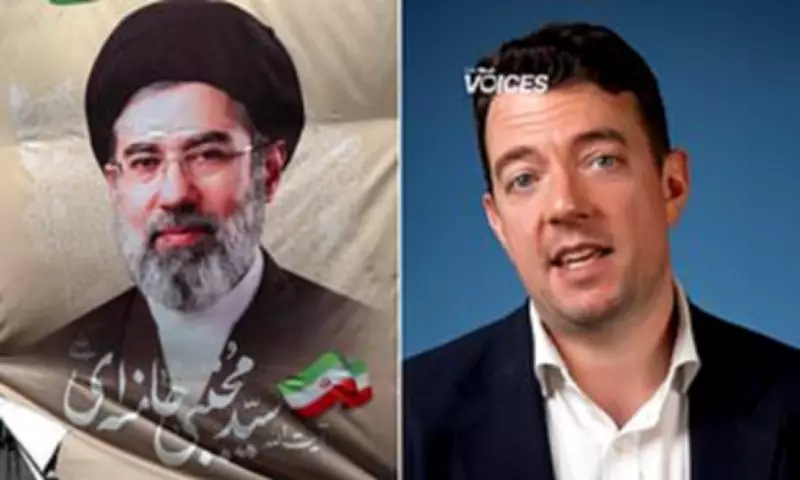
Chris Pleasance, a prominent commentator, has weighed in on former President Donald Trump's recent call for Iran to come to the negotiating table to end what he described as a 'terrible war.' In a detailed analysis, Pleasance questions who in Iran actually holds the authority to strike a deal, given the complex power dynamics within the country's political and religious hierarchy.
Trump's Call for Negotiation
Trump, during a recent public appearance, urged Iranian leaders to negotiate with the United States, stating that the ongoing conflict is devastating for both nations. He emphasized the need for a diplomatic resolution, but his remarks have sparked debate about whether Iran's leadership is capable of responding effectively.
Internal Power Struggles
Pleasance points out that Iran's decision-making process is fragmented. The Supreme Leader, Ayatollah Ali Khamenei, holds ultimate authority, but the president, Ebrahim Raisi, and the Islamic Revolutionary Guard Corps (IRGC) also wield significant influence. This diffusion of power makes it unclear who has the mandate to negotiate a comprehensive deal.

The Role of the IRGC
The IRGC, a powerful military and political entity, has its own interests and often acts independently. Pleasance suggests that any negotiations would require the IRGC's buy-in, which may be difficult given their hardline stance against the United States.
Historical Context
Past attempts at negotiation, such as the 2015 Iran nuclear deal (JCPOA), were marred by internal disagreements and external pressures. Pleasance argues that without a clear authority figure, any new deal risks being undermined by factions within Iran.
Public Sentiment
Meanwhile, the Iranian public is weary of economic sanctions and international isolation. Many Iranians support negotiation, but the government's opaque decision-making process leaves them uncertain about the future.
In conclusion, Pleasance emphasizes that Trump's call for negotiation is a step in the right direction, but the path to peace is fraught with obstacles. Identifying a reliable negotiating partner within Iran's power structure remains the biggest challenge.