Third Day of Airstrikes Rocks Tehran: AP Photos Reveal Capital Under Siege
Exclusive Associated Press photographs from inside Iran have emerged, depicting a capital city under sustained bombardment for a third consecutive day. The images and reports from Tehran on Monday, March 2, 2026, show streets largely empty, a stark contrast to the chaotic exodus and panic-buying witnessed just a day earlier.
Residents Describe Constant Explosions and Fear
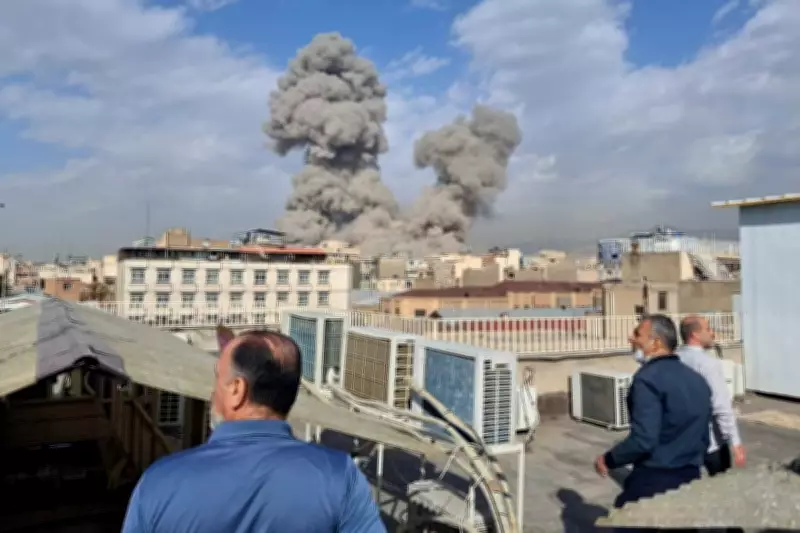
An elderly resident of northern Tehran, speaking on condition of anonymity due to fears of reprisals, described the visceral impact of the ongoing U.S.-Israeli airstrikes. "The explosion was so loud and strong, I felt it in my heart," she told the AP, detailing blasts that raised towering columns of smoke across the city.
Another woman in the capital, also anonymous, provided a harrowing account of the relentless assault. "Almost every five hours, large explosions are heard in Tehran and sometimes the building shakes," she reported. "There are huge plumes of smoke everywhere in Tehran." This testimony underscores the pervasive atmosphere of fear and disruption gripping the city.

Deserted Streets and Heightened Security
Monday presented a scene of eerie desolation. With most residents opting to stay indoors, Tehran's typically bustling highways were silent and empty. This followed a Sunday marked by frantic activity, as some citizens fled the city while others rushed to stockpile groceries, anticipating a protracted conflict.
In this vacuum, security forces have become a dominant presence. The woman interviewed reported that members of Iran's Revolutionary Guard and the paramilitary Basij had established checkpoints on numerous streets, meticulously checking vehicles. They were also seen gathering in public squares, playing a somber mix of mourning music and nationalist songs, a display likely linked to the recent death of Supreme Leader Ayatollah Ali Khamenei in the initial strikes.
Significant Infrastructure Damage Reported
The airstrikes have inflicted severe damage on key infrastructure. Strikes on Sunday night targeted a state television building, with collateral damage devastating the Gandhi Hospital located directly across the street. The hospital was forced to evacuate after its façade was shattered, with rubble from the walls spilling over hospital beds, illustrating the perilous conditions for civilians and medical services.
Authorities, meanwhile, organized mass gatherings in Tehran's main square and other locations on Sunday. These assemblies were convened to publicly mourn Ayatollah Khamenei, whose death has become a focal point of national grief and rhetoric amidst the ongoing military campaign.
This report, featuring a photo gallery curated by AP editors, includes contributions from Associated Press reporters Amir-Hussein Radjy and Lee Keath in Cairo, and Farnoush Amiri in New York.