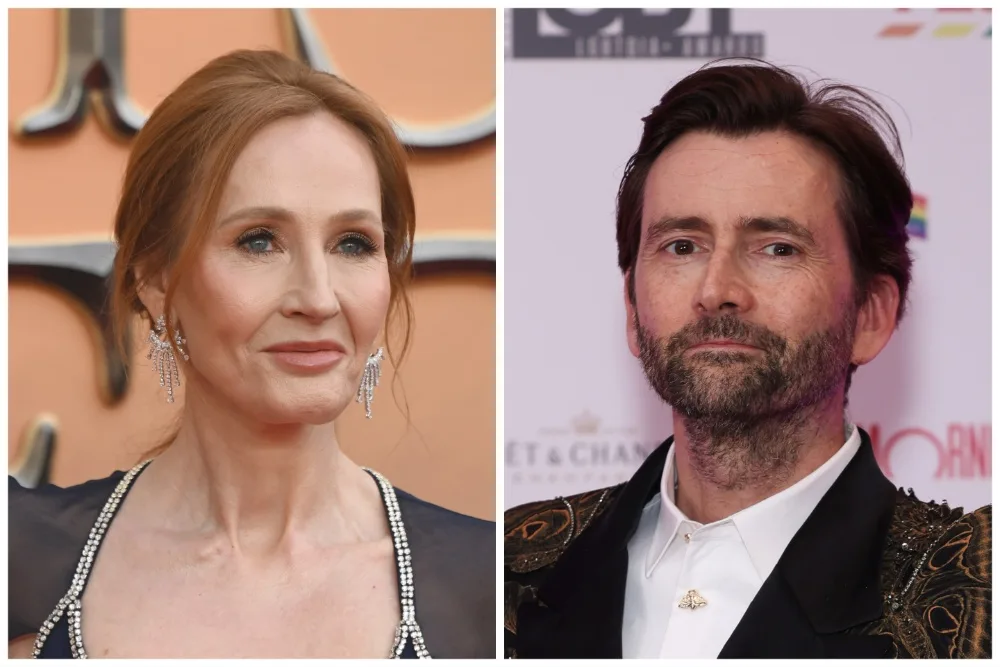
Ty Tennant Defends Father's LGBTQ+ Advocacy as Authentic
Ty Tennant, the 24-year-old son of acclaimed actor David Tennant, has robustly defended his father's vocal support for the LGBTQ+ community, asserting that it stems from genuine conviction rather than public posturing. This comes amid a highly publicised series of clashes involving the Doctor Who star, author JK Rowling, and prominent political figures.
A Legacy of Advocacy and Accolades
David Tennant, 54, renowned for his role as Bartemius Crouch Junior in Harry Potter and the Goblet of Fire (2005), has been a longstanding and outspoken ally. His commitment was formally recognised in 2024 when he received the 'Celebrity Ally' award at the British LGBT Awards. During his acceptance speech, Tennant expressed a degree of melancholy, stating he was "a little depressed" to be honoured simply for advocating that "everyone has the right to be who they want to be."
His advocacy has, however, placed him at the centre of a contentious cultural debate. He has directly challenged JK Rowling, urging her to "get out of people's way," while clarifying he bears her "no ill will." This stance has garnered significant fan support but also drawn criticism from Rowling, Conservative leader Kemi Badenoch, and former Prime Minister Rishi Sunak.
Political Firestorm and Familial Support
The controversy intensified when Sunak appeared to label Tennant as "the problem" in the trans rights debate. This followed Tennant's remarks at the awards, where he said he wished Badenoch would "shut up" and envisioned a world where she "doesn’t exist anymore." Badenoch retaliated, branding him a "bigot" and a "bully." Rowling further escalated the conflict, describing Tennant online as part of a "Gender Taliban."
Amid this storm, Ty Tennant has publicly endorsed his father's position. In an interview with Attitude magazine, Ty, who recently starred in Every Time I See a Yellow Car, emphasised the authenticity of his father's actions. "It’s not for show… it’s a clear translation of his character," he stated. He praised his father's bravery in using his platform to speak out, regardless of criticism.
Ty also shared his personal dismay at the lack of societal acceptance for LGBTQ+ individuals. "My thing has always been, do whatever you want, just don’t get in the way of anyone else," he said. "The idea that people can’t be themselves is... really disappointing. I don’t understand why there’s so much outrage about it."
Historical Context and Broader Industry Rifts
David Tennant has rooted his allyship in historical context, citing the controversial Section 28 law from the Thatcher era, which prohibited the "promotion" of homosexuality in schools. He has drawn parallels, stating the current demonisation of the trans community is "exactly the same."
This rift extends beyond Tennant. The upcoming HBO Harry Potter TV series has become a flashpoint. Veteran actor John Lithgow, cast as Albus Dumbledore, faced calls from fans to boycott the project due to Rowling's involvement and her views on trans rights. Lithgow acknowledged it was a "hard" decision but chose to proceed, praising the production team while finding Rowling's personal views "ironic and inexplicable."
The discord has also engulfed the original film cast. Rowling has issued scathing criticisms of Emma Watson, Daniel Radcliffe, and Rupert Grint for their support of trans rights, accusing them of "cosying up to a movement intent on eroding women's hard-won rights" and using their Harry Potter association as a platform.
A Persistent Cultural Divide
The ongoing debate highlights a deep and persistent cultural divide. Figures like David Tennant and his son Ty frame the issue as one of fundamental human rights and acceptance, while critics, including Rowling and some politicians, focus on concerns regarding women's rights and safeguarding. As Ty Tennant's defence makes clear, for the Tennant family, this advocacy is portrayed not as a fashionable stance but as a principled and integral part of their character, facing down significant opposition from literary, political, and public spheres.






