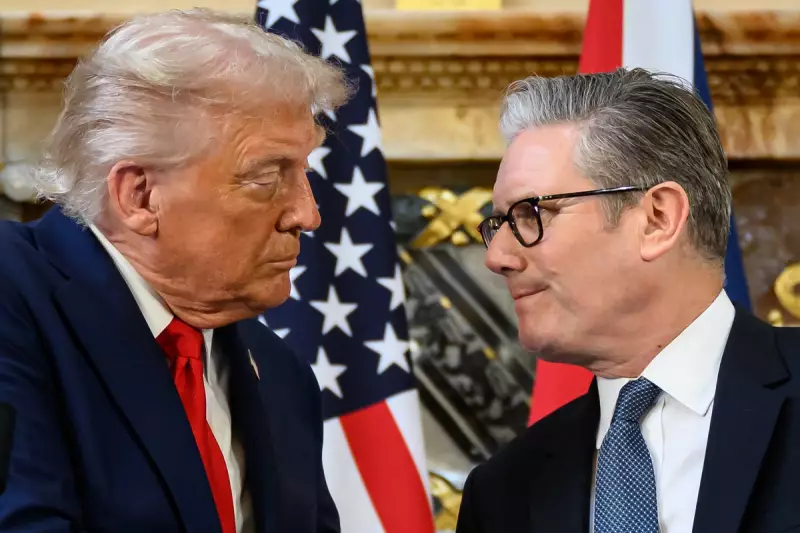
Prime Minister Sir Keir Starmer is confronting a profound foreign policy crisis, forced to choose between Britain's cherished 'special relationship' with the United States and its essential ties to Europe following aggressive new tariffs from Donald Trump.
A Transatlantic Crisis Over Greenland
The diplomatic landscape shifted dramatically when former US President Donald Trump, now in his second term, threatened punishing trade tariffs against Denmark and its European supporters over their refusal to discuss the sale of Greenland. In a move that caught Westminster off-guard, the UK was not spared from these punitive measures, instantly transforming a distant territorial issue into an immediate British problem.
This escalation follows a fortnight of diplomatic tension. The UK government had previously adopted an equivocal stance over the US's controversial transfer of Venezuelan President Nicolas Maduro to a New York prison in January 2026, an act widely condemned as a breach of international law. Ministers argued no tears should be shed for Maduro, while deferring judgement on the legality to Washington—a calculated move to protect the UK's investment in its US relationship.

The Cost of Courting Washington
Sir Keir's administration had pursued the 'special relationship' with notable vigour, both politically and personally. This included personally presenting an invitation for Trump's 'unprecedented' second UK state visit. The strategy appeared to yield dividends: Britain avoided the worst of earlier Trump trade tariffs, securing a initially more favourable deal than the European Union, and faced less pressure on specific defence spending pledges compared to continental allies.
Further efforts to bolster the alliance included British military support for a US capture of a Russia-flagged tanker in the Northeast Atlantic and joint raids on ISIS bases in Syria. Plans were even advancing for a Royal visit to mark the 250th anniversary of US independence.
Brexit's Bitter Legacy and a Stark Choice
The Greenland tariff ultimatum has brutally exposed the fragility of Britain's post-Brexit positioning. Leaving the EU prompted a strategic pivot towards closer US alignment, particularly in defence and security—the very areas now at the heart of the US-European confrontation. Britain cannot side with the US against Europe on this issue, yet its years of diplomatic manoeuvring have left it isolated and exposed.
While Sir Keir has expressed a desire for closer EU relations—stopping short of rejoining a customs union—this process is slow and fraught with domestic political division. Meanwhile, the US moves ever further from European norms. The combination of Brexit and the Trump presidency has left the UK 'more desperately marooned mid-Atlantic' than many predicted, with few palatable options.
Potential escape routes are limited. A change in the US political climate—perhaps from the 2026 mid-term elections or a Supreme Court ruling against the tariffs—might offer respite. Alternatively, the UK could consider a decisive turn towards a formal European defence alliance, such as the strategic autonomy long championed by French President Emmanuel Macron. However, this would raise thorny questions about the future of the UK's nuclear deterrent and NATO, an alliance now implicitly questioned by Trump's Greenland claims.
The government, not noted for its speed or surefootedness, now faces a dilemma requiring both. Sir Keir's previous policy of flattery and fence-sitting over Venezuela appears, in hindsight, a costly misstep that has eroded national dignity without securing lasting favour. The Greenland crisis has stripped away Britain's diplomatic pretences, presenting the Prime Minister with his most severe test yet on the global stage.