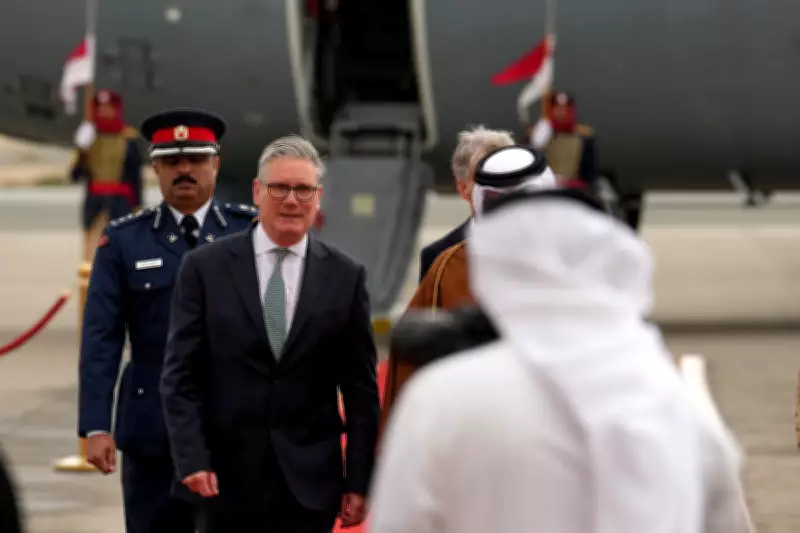
Prime Minister Sir Keir Starmer has underscored that achieving a lasting peace between the United States and Iran will necessitate far more than diplomatic statements, highlighting the precarious nature of the current ceasefire during his official visit to Gulf nations.
Discussions on Fragile Ceasefire with Gulf Allies
Sir Keir arrived in Bahrain on Thursday afternoon as part of a two-day regional tour, which also included stops in Saudi Arabia and the United Arab Emirates. This visit comes at a critical juncture, with the ceasefire already showing signs of strain. The Prime Minister engaged in talks with key leaders, including Saudi Crown Prince Mohammed Bin Salman and UAE President Sheikh Mohammed bin Zayed Al Nahyan, focusing on the volatile situation.
In remarks to broadcasters, Sir Keir conveyed the prevailing sentiment among Gulf allies. "I think the mood is very much one of shock that they were attacked in the first place, because of course they weren't attacking Iran, and the intensity of some of the attacks," he stated. "Relief that there's now a ceasefire. I think a general sense that it's fragile, that there's work to do in relation to it."

Reflection on Collective Defence Efforts
The discussions also involved a thorough review of the collaborative defence measures undertaken over the past six to seven weeks. Gulf nations have faced significant retaliation from Tehran, with thousands of Iranian missiles and drones targeting US military installations and energy infrastructure in the region.
Sir Keir took the opportunity to express gratitude to British personnel stationed in the area, noting that many pilots had been operational within two hours of the conflict's onset. He emphasized the importance of standing with long-standing allies and demonstrating solidarity during this turbulent period.
Strait of Hormuz Closure and Economic Implications
A central issue in the ceasefire negotiations is the status of the Strait of Hormuz, a vital oil shipping channel. Tehran has reclosed the strait in response to Israeli attacks on the Hezbollah militant group in Lebanon, effectively blocking maritime traffic. This closure has led to a surge in oil and gas prices, exacerbating cost-of-living concerns in the UK and globally.
The two-week pause in fighting, part of US President Donald Trump's bombing campaign, is contingent on the strait reopening. However, Iran shut it again on Wednesday night, complicating diplomatic efforts. Tehran has further stirred controversy by demanding the right to collect tolls as a precondition for reopening the channel.
International Criticism and Diplomatic Stance
Foreign Secretary Yvette Cooper has been vocal in her criticism of Iran's toll demands, asserting that it is "crucial" Iran is not permitted to impose such fees in the strait. Sir Keir echoed this stance during a regional defence call in Abu Dhabi, warning that Iran must not "hold the Strait of Hormuz to ransom."
The Prime Minister reiterated that ensuring the ceasefire becomes permanent and the strait remains open requires sustained action. "And that takes more than just words. It takes a lot of action," he affirmed, stressing the need for tangible steps to secure stability in the region.
As diplomatic efforts continue, the international community watches closely, aware that the fragility of the ceasefire and the strategic importance of the Strait of Hormuz make this a pivotal moment in Middle Eastern geopolitics.