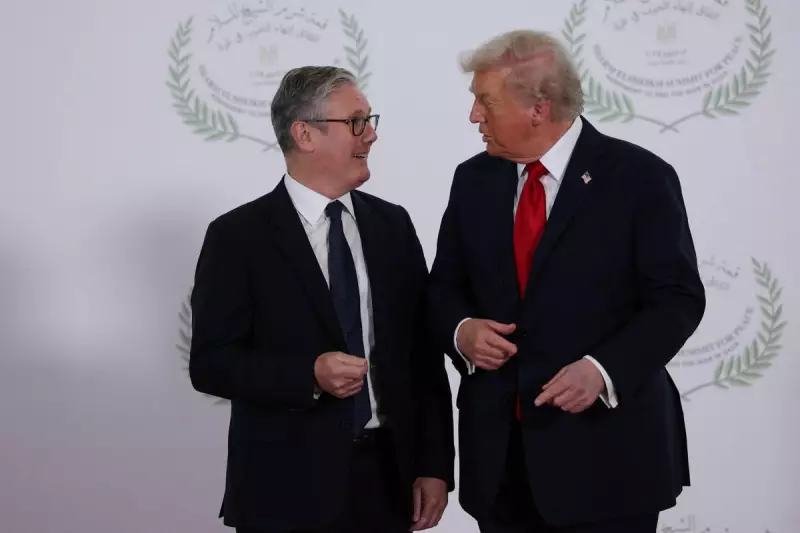
Prime Minister Sir Keir Starmer has issued a sharp rebuke to former US President Donald Trump, labelling his plan to impose punitive tariffs on the United Kingdom and several European allies as "completely wrong." The controversial move is linked to Trump's renewed ambition for the United States to purchase Greenland from Denmark.
Details of the Tariff Threat and European Backlash
In a post on his Truth Social platform on Saturday, 17 January 2026, Donald Trump declared that the UK, Denmark, Norway, Sweden, France, Germany, the Netherlands, and Finland would face a 10% tariff "on any and all goods" exported to the United States starting 1 February 2026. He stated this would escalate dramatically to 25% from 1 June 2026. The tariffs, he said, would remain in place until Washington secures a deal for the "Complete and Total purchase of Greenland."
Trump accused the nations of having "journeyed to Greenland, for purposes unknown," creating a risk to global peace. He asserted that "China and Russia want Greenland, and there is not a thing that Denmark can do about it," positioning the US purchase as a necessary security measure.

The announcement reportedly caught the targeted countries by surprise, with no prior warning given. The response from European capitals has been one of unified defiance. French President Emmanuel Macron vowed not to bow to "intimidation," drawing parallels with the conflict in Ukraine, and promised a united European response. Swedish Prime Minister Ulf Kristersson stated bluntly, "We will not let ourselves be blackmailed."
UK's Firm Stance and Domestic Political Reaction
Speaking from Downing Street, Sir Keir Starmer set out the UK's clear position. "Our position on Greenland is very clear – it is part of the Kingdom of Denmark and its future is a matter for the Greenlanders and the Danes," he stated. The Prime Minister emphasised the broader context of Arctic security within NATO, arguing that allies should collaborate more to counter Russian threats in the region.
"Applying tariffs on allies for pursuing the collective security of NATO allies is completely wrong," Starmer declared. "We will of course be pursuing this directly with the US administration." This diplomatic push follows increased UK discussions on Arctic security since the start of the year, with Starmer raising concerns in calls with Trump, Danish PM Mette Frederiksen, and NATO Secretary-General Mark Rutte.
The tariff threat has also sparked cross-party condemnation within the UK over fears for the economy. Tory leader Kemi Badenoch agreed the move was "completely wrong," warning it would become a "burden for businesses across our country." Reform leader Nigel Farage cautioned the measures would "hurt" the UK, while Liberal Democrat leader Sir Ed Davey accused Trump of "punishing" the nation.
Groundswell of Opposition in Greenland and Denmark
The geopolitical manoeuvring coincides with significant public demonstrations in the Arctic. On Saturday, hundreds gathered in Greenland's capital, Nuuk, for a rally supporting greater self-governance. Simultaneously, thousands protested across Denmark, voicing strong opposition to any potential US takeover of the vast autonomous territory.
The situation presents a major early test for the Starmer government's diplomatic strategy with the US, balancing a crucial trade and security relationship against a fundamental principle of sovereignty and alliance solidarity. The coming weeks will see intensive coordination among European partners as the 1 February deadline for the initial tariffs looms.