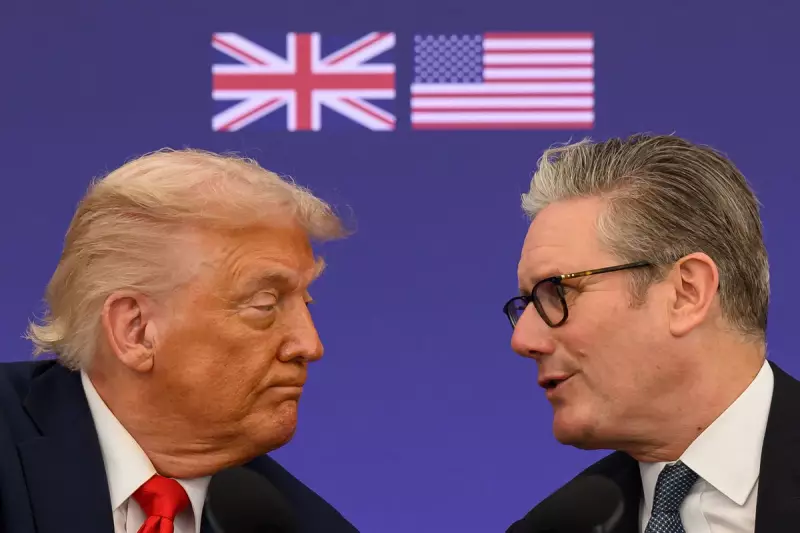
Prime Minister Sir Keir Starmer has issued a firm rebuke to US President Donald Trump after the American leader threatened to impose punishing tariffs on the United Kingdom and key European allies.
Trump's Tariff Ultimatum Over Arctic Territory
The controversy centres on the semi-autonomous Danish territory of Greenland. President Trump announced plans to impose an initial 10 per cent tariff on the UK and several European nations. He has threatened to escalate this to a 25 per cent tariff from 1 June 2026 if they continue to oppose a proposed US takeover of the vast Arctic island.
Justifying the drastic economic measure, President Trump claimed that "world peace" is at stake. He argued that only American control can prevent rivals China and Russia from gaining influence over Greenland's strategic location and resources.

UK and European Leaders Unite in Condemnation
In a swift response, Sir Keir Starmer condemned the tariff threat as an attack on allied solidarity. "Applying tariffs to allies for pursuing the collective security of NATO allies is completely wrong," the Prime Minister stated. He emphasised that Greenland's future is a matter for its people and Denmark alone.
The European Union has called an emergency meeting, with leaders including French President Emmanuel Macron and the EU Council strongly rejecting the US threats. The bloc has vowed to uphold European sovereignty and is expected to coordinate a collective response. This stance echoes the reaction in 2019 when President Trump first expressed interest in acquiring Greenland, an idea Denmark's government at the time dismissed as "absurd".
A Test for Transatlantic Relations
This escalating dispute presents a significant diplomatic and economic challenge. The threat of tariffs targeting key trading partners marks a severe strain on post-Brexit UK-US relations and tests the unity of the NATO alliance. All eyes are now on the 1 June 2026 deadline, with European capitals preparing potential countermeasures should the US proceed with its tariff plan.
The situation underscores the ongoing geopolitical scramble for influence in the Arctic, a region becoming increasingly accessible and contested due to climate change. How the UK government navigates this clash between a major ally and its European partners will be a critical early test of Sir Keir Starmer's foreign policy.