Intelligence Warnings Ignored as China's Mega-Embassy Gets Green Light
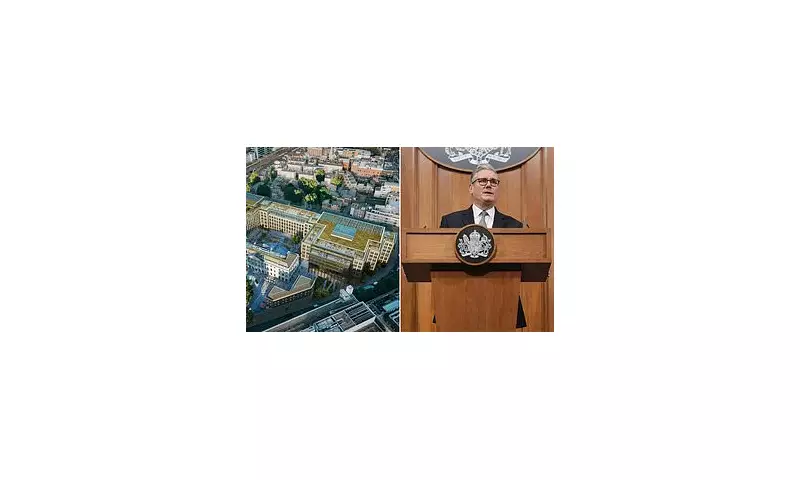
Prime Minister Keir Starmer is confronting intense political fury following the controversial approval of China's new mega-embassy in London, despite explicit warnings from Britain's top intelligence chiefs about significant national security risks. The decision, granted just days before Starmer's scheduled meeting with President Xi Jinping, has sparked accusations that the government is sacrificing security for improved trade relations with Beijing.
Security Concerns Over Sensitive Data Infrastructure
In an unprecedented public intervention, the heads of Britain's domestic intelligence agencies have admitted they cannot eliminate the espionage dangers posed by what will become Europe's largest diplomatic mission. The embassy site at the former Royal Mint building near Tower Bridge sits directly above crucial telecoms cables that transmit millions of pieces of sensitive financial data to City of London businesses.
Ministers have now acknowledged taking action to 'increase the resilience' of these vulnerable cables following security assessments. The proximity of the embassy to this critical infrastructure has raised particular alarm among security experts and parliamentarians.

Planning Process Controversy and Legal Challenges
The approval represents a dramatic reversal of fortune for China's embassy plans, which were initially rejected by Tower Hamlets Council in 2018 after Beijing purchased the Royal Mint site for £250 million. China resubmitted its application in July 2024, shortly after Labour's election victory, with President Xi personally raising the matter during a phone call with Sir Keir.
Housing Secretary Steve Reed approved the application yesterday in what was described as a 'quasi-judicial' decision, despite mounting opposition from Labour MPs, international allies including the White House, and various campaign groups. Local residents and opponents of the Chinese Communist Party are now preparing legal challenges that could tie the decision up in courts for years.
Intelligence Community's Cautious Stance
In a jointly published letter to the Home Secretary and Foreign Secretary, MI5 director general Sir Ken McCallum and GCHQ director Anne Keast-Butler stated: 'For the Royal Mint Court site, as with any foreign embassy on UK soil, it is not realistic to expect to be able wholly to eliminate each and every potential risk.'
However, they emphasized that MI5 possesses 'over 100 years of experience' managing security risks associated with foreign diplomatic premises and claimed the package of security measures 'deals acceptably with a wide range of sensitive national security issues, including cabling.' The intelligence chiefs also noted potential security advantages in consolidating China's seven current diplomatic sites across London into one building.
Parliamentary Scrutiny and Dissenting Voices
Parliament's Intelligence and Security Committee expressed significant concerns about the planning process, with chairman Lord Beamish stating: 'It has proved more difficult than it should have been to get straightforward answers to our basic questions.' The committee highlighted confusion about how national security considerations influence planning decisions and noted that advice was prepared without access to all key facts.
In the Commons, security minister Dan Jarvis revealed that extensive measures had been developed to protect national security, including actions to increase cable resilience and an agreement that the embassy's publicly accessible forecourt would not enjoy diplomatic immunity. Jarvis acknowledged China's threats to UK security but maintained that 'it is only through engagement that we can directly challenge China on its malicious activity.'
Political Backlash and Human Rights Concerns
Opposition MPs have condemned the decision in strong terms. Reform MP Robert Jenrick, a former Home Office minister, described it as 'a spineless decision that will compromise our security for decades,' while Shadow Foreign Secretary Chris Philp accused the government of 'trading national security for economic links.'

Conservative MP Mark Francois characterized the approval as 'appeasement of communist China for economic gain,' and Sir Iain Duncan Smith questioned government assurances about lawful embassy use, stating: 'Nothing about the Chinese is lawful here in the United Kingdom.'
Labour's Alex Sobel warned that the decision would send 'a chilling effect' through Tibetan, Hong Kong, Uyghur, and other Chinese dissident communities in Britain. Christopher Mung, who fled Hong Kong for the UK, expressed that the decision 'has struck fear into our hearts' and made many question Britain's promise of safety.
Ongoing Controversy and Future Implications
The controversy has been further fueled by revelations about previously secret blueprints showing hidden chambers and tunnels in the embassy design, positioned alongside the sensitive fibre-optic cables. Campaigners are raising funds for a judicial review that could force disclosure of private discussions between the UK government and Chinese officials.
Luke de Pulford of the Inter-Parliamentary Alliance on China warned: 'If it emerges that the UK Government gave assurances to the Chinese that they would get their embassy, then those assurances would have been unlawful.' The decision continues to generate significant debate about the balance between diplomatic engagement, economic interests, and fundamental national security protections.