Spain Blocks US Use of Joint Bases for Iran Strikes, Defying European Allies
Spain Blocks US Use of Bases for Iran Strikes, Defying Allies

In a significant diplomatic move, Spain has formally denied the United States permission to use their shared military installations for launching offensive operations against Iran. This decision places Madrid at odds with several of its major European allies and underscores a deepening rift over the international response to recent military actions in the Middle East.

Spanish Leadership Condemns US and Israeli Actions

Spain's socialist Prime Minister, Pedro Sanchez, issued a strong condemnation of the strikes conducted by Israel and the United States against Iran, which resulted in the death of Ayatollah Ali Khamenei. In a clear statement of policy, Sanchez articulated Madrid's firm rejection of what he described as 'the unilateral military action by the United States and Israel, which represents an escalation and contributes to a more uncertain and hostile international order'.

Sanchez further clarified that Spain 'likewise' rejects the actions of the Iranian regime itself, indicating a balanced critique of all parties involved in the escalating conflict.

Foreign and Defence Ministers Reinforce the Stance

Foreign Minister José Manuel Albares provided additional context, emphasising Spain's desire for 'democracy, freedom and fundamental rights for the Iranian people'. However, he was unequivocal in stating that this humanitarian concern would not translate into military support via Spanish territory. 'I want to be very clear and very plain. The bases are not being used, nor will they be used, for anything that is not in the agreement [with the US], nor for anything that isn’t covered by the UN charter,' Albares declared.

Defence Minister Margarita Robles echoed this position, referencing the existing bilateral agreement with the United States concerning the bases. 'There is a deal with the US over these bases, but our understanding of the deal is that operations have to comply with international legal frameworks and that there has to be international support for them,' Robles explained, highlighting the Spanish interpretation that the current US-led strikes lack the requisite multilateral endorsement.

A Breach with European Partners

This decisive action by the Spanish government creates a notable divergence from the position held by other key European nations. On Sunday, the United Kingdom, France, and Germany jointly announced their intention to defend their interests in the region through defensive actions aimed at degrading Iran's capacity to launch missiles and drones.

NATO Secretary General Mark Rutte expressed strong support for the US-led efforts, telling Germany's ARD television that Europe is 'absolutely supportive' of the action. 'It's really important what the US is doing here, together with Israel, because it is taking out, degrading the capacity of Iran to get its hands on nuclear capability, the ballistic missile capability,' Rutte stated.

Military Movements and Continued Diplomatic Tensions

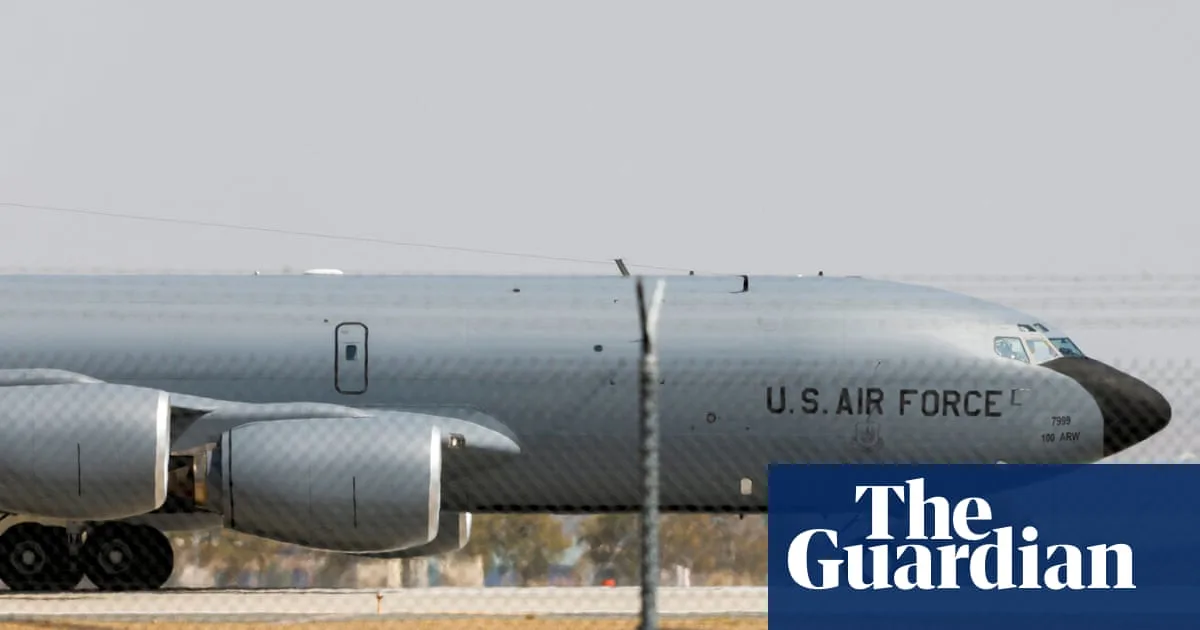
Despite the Spanish prohibition, several US aircraft have been observed departing the joint Rota and Morón military bases in southern Spain in recent days. At least seven of these jets were confirmed to have landed at Germany's Ramstein airbase, indicating ongoing military repositioning in the region.

Prime Minister Sanchez reiterated his criticism in a speech delivered in Barcelona on Sunday. 'Today, more than ever, it’s vital to remember that you can be against a hateful regime, as Spanish society is as a whole when it comes to the Iranian regime, and, at the same time, against an unjustified and dangerous military intervention that is outside international law,' he asserted.

Meanwhile, European Union leaders issued a joint statement on Saturday calling for restraint and advocating for regional diplomacy to ensure nuclear safety, reflecting a broader, more cautious institutional approach compared to the defensive postures of some member states.

Contrasting UK Position and International Reactions

The Spanish stance presents a stark contrast to the evolving position of the United Kingdom. Initially, Prime Minister Keir Starmer refused to grant the US permission to use UK bases for strikes. However, on Sunday, he reversed this decision, stating he would allow 'defensive strikes' to be launched.

Sir Keir claimed the UK had learned from 'the mistakes of Iraq' and would only permit strikes for the 'limited specific defensive purpose' of defending British allies. 'It is my duty to protect British lives' from Iranian 'scorched earth strikes,' he said, while ruling out participation in pre-emptive offensive actions. He faced criticism for what some termed a 'pathetic' initial refusal to explicitly support the US strikes, with the Prime Minister clarifying that the UK 'remains the case' is not involved in strikes on Iran and will 'not join offensive action now'.

US President Donald Trump expressed his disappointment with the British Prime Minister's initial hesitation, stating he was 'very disappointed' and that Sir Keir 'took far too long' to change his mind, highlighting the diplomatic pressures at play among Western allies.

The Spanish refusal, centred on the Moron Air Base and other installations, thus marks a critical point of contention within the Western alliance, balancing national interpretations of international law against collective security interests in a highly volatile geopolitical landscape.




