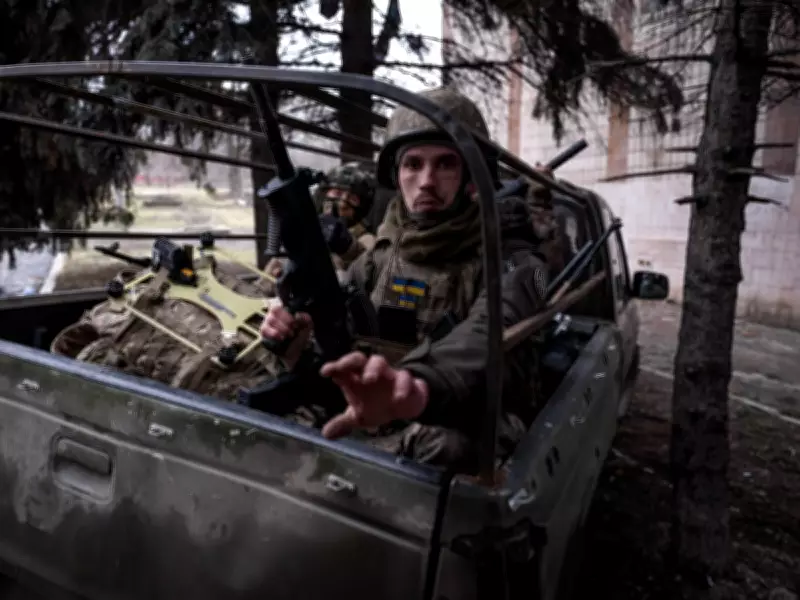
Ukrainian soldiers were seen riding in the back of a truck in the frontline town of Druzhkivka, located in the Donetsk region, highlighting the ongoing conflict's intensity. New data analysis reveals a significant slowdown in Russia's military progress, marking a pivotal moment in the protracted war.
Russia's Slowest Advance Since 2024
According to an analysis of data from the Institute for the Study of War, Russia's army recorded its slowest advance on the Ukrainian frontline in nearly two years during February. The slowdown coincided with Moscow's forces struggling after Elon Musk cut their access to Starlink internet terminals, which had been crucial for communication and coordination.
Agence France-Presse conducted the analysis, showing that Russia advanced by a total of 123 square kilometres (48 square miles) in February, the lowest figure since April 2024. In contrast, Ukrainian troops managed several localised breakthroughs, including a 61 square-kilometre gain on 15 February and gains exceeding 50 square kilometres on 21 and 23 February.

Frontline Dynamics Shift
Kyiv's forces experienced most success along the southern frontline, pushing Russian troops back in the Dnipropetrovsk region. Meanwhile, Moscow has been grinding forward in the east, moving closer towards key hubs such as Kramatorsk and Sloviansk in Ukraine's eastern Donetsk region. Currently, Russia occupies just over 19% of Ukraine's territory.
Drone Attacks Disrupt Russian Oil Terminal
In a significant development, Russia's Sheskharis oil terminal suspended oil loadings on Monday following a Ukrainian drone attack. The strike injured five people, damaged 20 buildings, and set a fuel terminal on fire, according to Russian and Ukrainian officials and three trade sources.
The Sheskharis terminal in Novorossiysk is Russia's major oil outlet in the Black Sea, loading 700,000 barrels per day of crude oil. An official at Ukraine's security service, the SBU, stated that Ukrainian drones struck the terminal, hitting six of its seven loading facilities, and also targeted Russian warships.
Ukraine's general staff added that the drones struck a naval base and an S-400 surface-to-air missile defence system. Russia made no mention of any damage to its military assets, and Reuters could not independently verify the extent of the strikes.
Civilian Casualties Mount
Russian strikes killed at least eight people in Ukraine on Monday, including during an attack on a civilian passenger train. Three people died in the eastern city of Kramatorsk, a Ukrainian stronghold that Russian forces are advancing towards. Additionally, the head of the wider Donetsk region reported two deaths and 13 wounded in Druzhkivka.
Diplomatic Moves and EU Accession Talks
Ukrainian President Volodymyr Zelenskyy announced on Monday that US-brokered talks between Russia and Ukraine, expected later this week, may take place in Switzerland or Turkey if a planned meeting in Abu Dhabi is not possible due to the war in the Middle East. He also noted that western countries have given no indication that their delivery of vital air defence missiles to Kyiv could be disrupted by commitments to Middle East defence.
Peace talks have appeared deadlocked in recent weeks over Russia's insistence that Ukraine hand over the remaining part of its eastern Donbas region, which Moscow does not control.
EU Accession Progress and Obstacles
Zelenskyy stated that Ukraine will complete the technical work needed to open negotiations on all topics for its EU accession process within days. He urged the EU to agree on a firm date for Ukraine to join the bloc, emphasising that this would provide an important guarantee of the country's future security.
"We are ready, but not all leaders of the European Union are ... I mean, not everyone is ready to give Ukraine this opportunity," Zelenskyy said. Ukraine became a formal EU candidate country in the early days after Russia's invasion in February 2022, but progress has been held up by Hungary, which has blocked the unanimous approval required to open each of the six accession "clusters."

Regional Energy Disputes
Slovak Prime Minister Robert Fico said on Monday that Slovakia wants to initiate a meeting with EU Commission President Ursula von der Leyen, ideally together with Ukraine and Hungary, to restart oil flows along the Druzhba pipeline as quickly as possible. Slovakia and Hungary have blamed Ukraine for delays in restarting supplies of Russian crude through the pipeline, although Kyiv cites repairs needed after a Russian attack on pumping stations in western Ukraine in late January.
"This has now become a European-Ukrainian problem and Europe must decide on which side it stands," Fico asserted, highlighting the broader geopolitical tensions surrounding energy security in the region.